 Librería Samer Atenea
 Kálamo Books
 Librería Elías (Asturias)
 Librería Kolima (Madrid)
 Librería Proteo (Málaga)
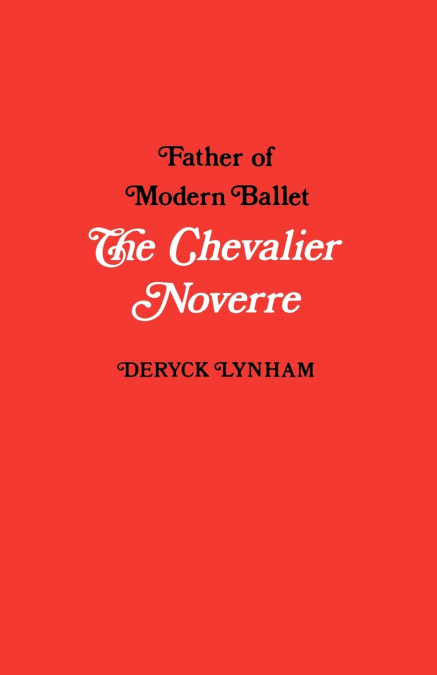
The name of Jean Georges Noverre stands forth in bold relief agains the background of the history of the art of ballet. His Lettres sur la Danse have been translated into almost every European language and yet, although the idea that he was largely responsible for creating the ballet d’action, or dramatic ballet, has gained general acceptance and his name is one of the most frequently quoted in the literature of the dance, scant light has been shed on his life and work. This biography, first published in 1950, was then and remains now the only major study of him.He was born in Paris on April 29th, 1727, and was destined to a military career and given a liberal education, but he showed little aptitude for tactical exercises or army discipline and was nightly to be found haunting the theatres of Paris, where he was fired with the ambition to become a dancer. By 1743 he was a dancer at the Paris Opera Comique, and he produced his first ballet there in 1749. He foresaw and advocated most of the reforms which were to be carried out a century later by Laban, Fokine and Jooss. His ideas, however, met with such opposition that he had to seek their realization outside his own country, and it was in Germany, Austria, and London that he staged his greatest ballets. He set out his ideas in his Lettres sur la danse (Stuttgart 1760) which, although today much of their content is taken for granted, when they were written and indeed until the beginning of the twentieth century, were revolutionary. At a time when the court ballet had degenerated into a meaningless succession of conventional dances, to miscellaneous airs hastily strung together, and selected to display the virtuosity of the leading dancer, Noverre advocated unity of design and a logical progression from introduction to climax in which the whole was not sacrificed to the part and all that was unnecessary to the theme was eliminated. Movement, he felt, should be defined by the tone and time of the music and he compared the relationship of music to dancing to that of words to song, but he criticized much of the ballet music of his time (which was still based on the work of Lully) as old fashioned and of too slow a tempo. He told choreographers to abandon entrechats, cabrioles, and overcomplicated steps, and turn to nature for natural means of expression which could be understood by all and not merely by a small elite, which is no more or less than has been done by the exponents of the Modern Dance Movement. His efforts to bring about a reform of costume were successful and he lived to see masks, full-bottomed wigs, and cumbersome hooped and panniered dresses abandoned in favour of attire better suited to the roles portrayed. None of Noverre’s 150 ballets has been handed down to us, but it has been given to few to have so great and lasting an influence on the art of ballet, and it can be said without exaggeration that he is the grandfather of the ballet as we know it today.