
The Birth of Hedonism

The Birth of Hedonism

Kurt Lampe

43,11 €
IVA incluido
Disponible
Editorial:
Princeton University Press
Año de edición:
2017
Materia
Filosofía occidental: antigua, hasta c. 500
ISBN:
9780691176383
43,11 €
IVA incluido
Disponible

Selecciona una librería:

  • Librería Samer Atenea
  • Librería Aciertas (Toledo)
  • Kálamo Books
  • Librería Perelló (Valencia)
  • Librería Elías (Asturias)
  • Donde los libros
  • Librería Kolima (Madrid)
  • Librería Proteo (Málaga)

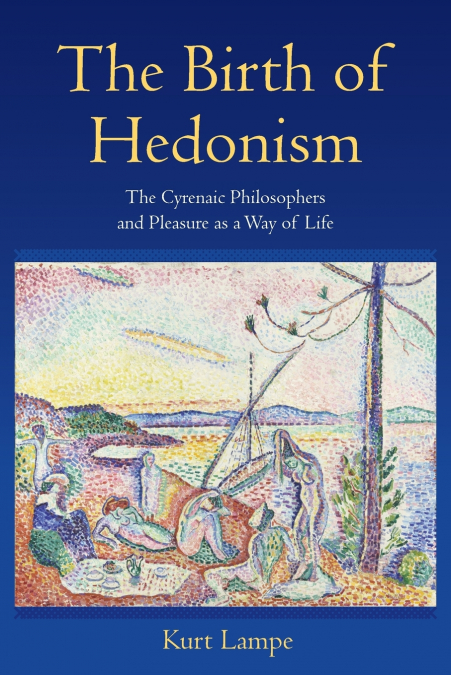
According to Xenophon, Socrates tried to persuade his associate Aristippus to moderate his excessive indulgence in wine, women, and food, arguing that only hard work can bring happiness. Aristippus wasn’t convinced. Instead, he and his followers espoused the most radical form of hedonism in ancient Western philosophy. Before the rise of the better known but comparatively ascetic Epicureans, the Cyrenaics pursued a way of life in which moments of pleasure, particularly bodily pleasure, held the highest value. In The Birth of Hedonism, Kurt Lampe provides the most comprehensive account in any language of Cyrenaic ideas and behavior, revolutionizing the understanding of this neglected but important school of philosophy.The Birth of Hedonism thoroughly and sympathetically reconstructs the doctrines and practices of the Cyrenaics, who were active between the fourth and third centuries BCE. The book examines not only Aristippus and the mainstream Cyrenaics, but also Hegesias, Anniceris, and Theodorus. Contrary to recent scholarship, the book shows that the Cyrenaics, despite giving primary value to discrete pleasurable experiences, accepted the dominant Greek philosophical belief that life-long happiness and the virtues that sustain it are the principal concerns of ethics. The book also offers the first in-depth effort to understand Theodorus’s atheism and Hegesias’s pessimism, both of which are extremely unusual in ancient Greek philosophy and which raise the interesting question of hedonism’s relationship to pessimism and atheism. Finally, the book explores the 'new Cyrenaicism' of the nineteenth-century writer and classicist Walter Pater, who drew out the enduring philosophical interest of Cyrenaic hedonism more than any other modern thinker.

Artículos relacionados

  • The Nature of Things
    Lucretius Lucretius
    De rerum natura (On the Nature of Things) is a 1st century BC didactic poem by the Roman poet and philosopher Lucretius with the goal of explaining Epicurean philosophy to a Roman audience. Lucretius presents the principles of atomism; the nature of the mind and soul; explanations of sensation and thought; the development of the world and its phenomena; and explains a variety o...
  • Pompeii
    Fergus Mason
    Pompeii was one of most advanced cities of its time; it had a complex water system, gymnasium, and an amphitheater. Despite it's advancements, there was one thing it wasn't ready for: Mount Vesuvius—the volcano that led to its ultimate doom.  The 79 AD eruption of Mount Vesuvius was one of the worst disasters in all of European history. In a near instant, over 15,000 p...
    Disponible

    10,36 €

  • Middle Platonism and Neoplatonism, Volume 1
    Stephen Gersh
    'It is generally agreed that those types of philosophy that are loosely called ’Platonic’ and ’Neoplatonic’ played a crucial role in the history of European culture during the centuries between antiquity and the Renaissance. However, until now no scholar has attempted to describe the evolution of these forms of thought in a single comprehensive academic study.' So writes Stephe...
  • Middle Platonism and Neoplatonism, Volume 2
    Stephen Gersh
    It is generally agreed that those types of philosophy that are loosely called 'Platonic' and 'Neoplatonic' played a crucial role in the history of European culture during the centuries between antiquity and the Middle Ages. However, until now no scholar has attempted to describe the evolution of these forms of thought in a single comprehensive academic study. Middle Platonism a...
  • Porphyry’s Commentary on Ptolemy’s Harmonics
    Andrew Barker
    ...
    Disponible

    77,17 €

  • The Roots of Platonism
    John Dillon
    ...
    Disponible

    25,29 €