
Inicio > Sociedad y ciencias sociales > Sociología y antropología > Antropología > The Bioarchaeology of Societal Collapse and Regeneration in Ancient Peru
The Bioarchaeology of Societal Collapse and Regeneration in Ancient Peru

The Bioarchaeology of Societal Collapse and Regeneration in Ancient Peru

Danielle Shawn Kurin

68,45 €
IVA incluido
Disponible
Editorial:
Springer Nature B.V.
Año de edición:
2018
Materia
Antropología
ISBN:
9783319803463
68,45 €
IVA incluido
Disponible

Selecciona una librería:

  • Librería Samer Atenea
  • Librería Aciertas (Toledo)
  • Kálamo Books
  • Librería Perelló (Valencia)
  • Librería Elías (Asturias)
  • Donde los libros
  • Librería Kolima (Madrid)
  • Librería Proteo (Málaga)

This book explores how individuals, social groups, and entire populations are impacted by the tumultuous collapse of ancient states and empires. Through meticulous study of the bones of the dead and the molecules embedded therein, bioarchaeologists can reconstruct how the reverberations of traumatic social disasters permanently impact human bodies over the course of generations. In this case, we focus on the enigmatic civilizations of ancient Peru. Around 1000 years ago, the Wari Empire, the first expansive, imperial state in the highland Andes, abruptly collapsed after four centures of domination. Several hundred years later, the Inca rose to power, creating a new highland empire running along the spine of South America. But what happened in between? According to Andean folklore, two important societies, known today as the Chanka and the Quichua, emerged from the ashes of the ruined Wari state, and coalesced as formidable polities despite the social, political, and economic chaos that characterized the end of imperial control. The period of the Chanka and the Quichua, however, produced no known grand capital, no large, elaborate cities, no written or commercial records, and left relatively little by way of tools, goods, and artwork. Knowledge of the Chanka and Quichua who thrived in the Andahuaylas region of south-central Peru, ca. 1000 - 1400 A.D., is mainly written in bone-found largely in the human remains and associated funerary objects of its population. This book presents novel insights as to the nature of society during this important interstitial era between empires-what specialists call the 'Late Intermediate Period' in Andean pre-history. Additionally, it provides a detailed study of Wari state collapse, explores how imperial fragmentation impacted local people in Andahuaylas, and addresses how those people reorganized their society after this traumatic disruption. Particular attention is given to describing how Wari collapse impacted rates and types of violence, altered population demographic profiles, changed dietary habits, prompted new patterns of migration, generated novel ethnic identities, prompted innovative technological advances, and transformed beliefs and practices concerning the dead.
Artículos relacionados

  • The jewish community in new england
    Keith Warwick
    The purpose of The Jewish Community in New England is to inform readers about the Jewish community in each of the six New England States: Rhode Island, Connecticut, Maine, Massachusetts, New Hampshire, and Vermont. Factual, inspirational, and poetic, it serves as a scholarly guide to institutions of Jewish life in this dynamic American region. Stocked with valuable information ...
  • Warfare in the Russian arctic
    Alexander K Nefedkin / Richard L Bland
    Alexander Nefedkin’s highly original new book, translated by the noted American scholar Richard L. Bland, is devoted to the understudied topic of the military and military-political history of Chukotka, the far northeastern region of the Russian Federation, separated from Alaska by Bering Strait. This study is based on primary sources, including archaeological, folkloric, and d...
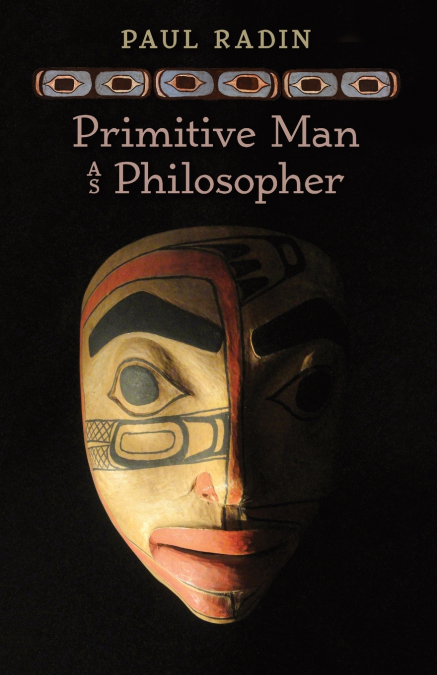
  • Primitive Man as Philosopher
    Paul Radin
    First published in 1927, Primitive Man as Philosopher represents a landmark in early anthropological studies. In this work, Paul Radin demonstrates the problematic nature of distinguishing between 'primitive' and 'civilized' cultures. He traces such ideas as the nature of Goodness and Truth, the meaning of life, and the reality of death across various cultures, highlighting how...
    Disponible

    24,38 €

  • The Economics of Population Growth
    Julian Lincoln Simon
    Comparison with stationary and very fast rates of population growth shows modern population grwoth to have long-run positive effects on the standards of living. This is Julian Simon’s contention, and he provides support for its validity in both more and less-developed countries. He notes that since each person constitutes a burden in the short run, whether population growth is ...
    Disponible

    153,61 €

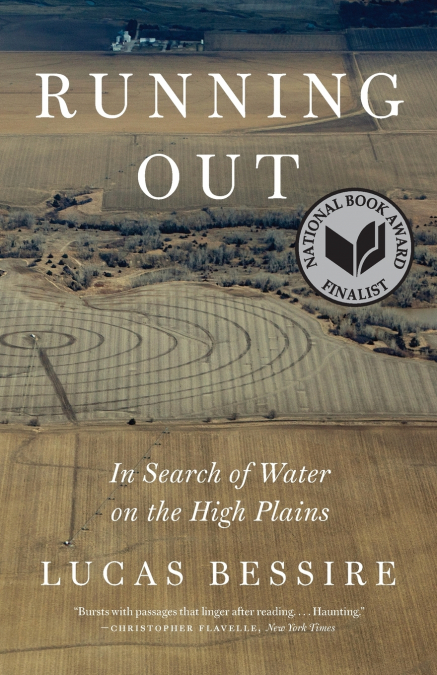
  • Running Out
    Lucas Bessire
    Finalist for the National Book AwardAn intimate reckoning with aquifer depletion in America’s heartlandThe Ogallala aquifer has nourished life on the American Great Plains for millennia. But less than a century of unsustainable irrigation farming has taxed much of the aquifer beyond repair. The imminent depletion of the Ogallala and other aquifers around the world is a defining...
    Disponible

    25,19 €

  • The Nation and Its Fragments
    Partha Chatterjee
    In this book, the prominent theorist Partha Chatterjee looks at the creative and powerful results of the nationalist imagination in Asia and Africa that are posited not on identity but on difference with the nationalism propagated by the West. Arguing that scholars have been mistaken in equating political nationalism with nationalism as such, he shows how anticolonialist nation...
    Disponible

    72,17 €

Otros libros del autor

  • The Bioarchaeology of Societal Collapse and Regeneration in Ancient Peru
    Danielle Shawn Kurin
    This book explores how individuals, social groups, and entire populations are impacted by the tumultuous collapse of ancient states and empires. Through meticulous study of the bones of the dead and the molecules embedded therein, bioarchaeologists can reconstruct how the reverberations of traumatic social disasters permanently impact human bodies over the course of generations...