 Librería Samer Atenea
 Kálamo Books
 Librería Elías (Asturias)
 Librería Kolima (Madrid)
 Librería Proteo (Málaga)
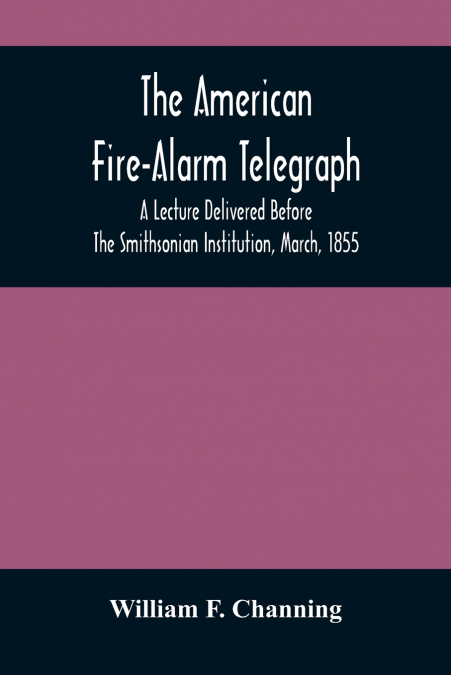
Before skyscrapers and sprinklers, cities relied on bells and luck. A city burns; seconds matter. In March 1855, physician-inventor William F. Channing set out, in a Smithsonian Institution lecture, to prove that electricity could turn panic into organised response. The American Fire-Alarm Telegraph is an engineering lecture transcript with the urgency of a street-level problem and the clarity of a working plan, describing early fire alarm telegraphy and the logic of linking stations, street boxes, and central control into reliable electrical signalling networks.Republished by Alpha Editions in a careful modern edition, this volume preserves the spirit of the original while making it effortless to enjoy today - a heritage title prepared for readers and collectors alike.Read it as a historical technology pamphlet from the antebellum United States, and as a primer on 1850s American innovation that helped shape urban fire safety systems. Channing speaks to municipal budgets, human behaviour, and the need for standardised signals - concerns that still echo wherever alarms and dispatch shape the rhythm of city life day and night. For historians, it is a concise artefact for history of technology research, illuminating how telegraph principles migrated from commerce to civic protection. For general readers, it offers a vivid glimpse of how a modern city was imagined, engineered, and defended. For collectors, it sits naturally within a telegraph history collection and stands as a historical reprint edition worth keeping close: a firefighting history reference that connects invention, infrastructure, and the everyday stakes of public safety.