Librería Samer Atenea
 Kálamo Books
 Librería Elías (Asturias)
 Librería Kolima (Madrid)
 Librería Proteo (Málaga)
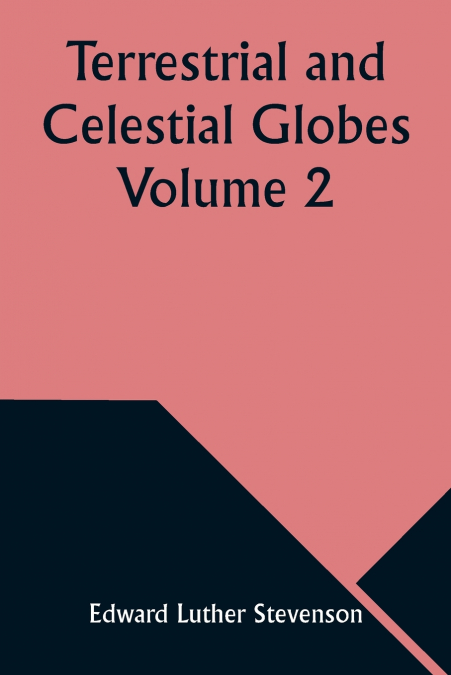
Where map meets model, an instrument becomes a story. Tools that mapped the heavens. Edward Luther Stevenson’s Terrestrial and Celestial Globes lays out the history of globes and the practical methods behind their making, marrying technical clarity with historical sweep. Part scientific reference book and part geography and astronomy guide, the work explains the construction of celestial globes while tracing the wider traditions of historical cartography. It treats globes not only as educational objects but as manufactured instruments, set alongside other antique scientific instruments and examined for provenance, form and function. Stevenson writes with the deliberate authority of a period specialist; his descriptions are precise enough for students and scholars yet accessible to anyone drawn to nineteenth century science or to the tactile evidence of the past. Throughout, he attends to why these spheres mattered as astronomy study aids and classroom tools, and how their manufacture and decoration reveal changing ideas about the Earth and sky.Republished by Alpha Editions in a careful modern edition, this volume preserves the spirit of the original while making it effortless to enjoy today - a heritage title prepared for readers and collectors alike. As an educational globe history it serves both as an academic geography resource and as a practical companion for collectors of scientific antiques and those assembling a vintage globe collection. Casual readers will appreciate the clear narratives of technique and taste; classic-literature collectors and institutional libraries will value the book’s documentary worth and its place in histories of exploration, printing and instrument-making. More than mere antiquarian interest, Stevenson’s study stands as a record of changing methods and minds - a readable, authoritative bridge between the lab bench, the lecture room and the collector’s study.Accessible for the curious and exacting for specialists, Stevenson’s narrative enriches both the study of maps and the practice of collecting. For casual readers and classic-literature collectors, it offers enduring insight into the tools that shaped knowledge.