 Librería Samer Atenea
 Kálamo Books
 Librería Elías (Asturias)
 Librería Kolima (Madrid)
 Librería Proteo (Málaga)
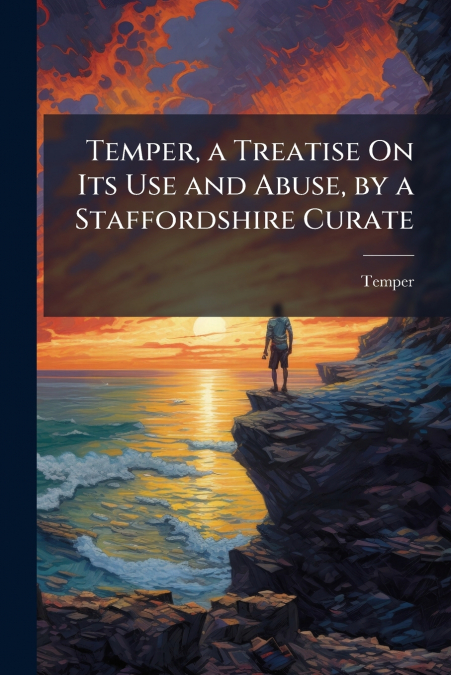
'Temper, a Treatise On Its Use and Abuse, by a Staffordshire Curate,' offers a thoughtful exploration of the concept of temperance and its profound impact on personal and social well-being. Written in the 19th century, this book delves into the nature of temper, distinguishing between its beneficial and detrimental manifestations. The author, a Staffordshire Curate, provides guidance on cultivating self-control and managing one’s emotions effectively. The treatise examines the consequences of uncontrolled temper, highlighting its potential to disrupt relationships, hinder personal growth, and undermine moral character. Through insightful analysis and practical advice, readers are encouraged to develop a more balanced and virtuous approach to life. This timeless work offers valuable lessons applicable to individuals seeking to improve their emotional intelligence and foster harmonious interactions with others.This work has been selected by scholars as being culturally important, and is part of the knowledge base of civilization as we know it. This work was reproduced from the original artifact, and remains as true to the original work as possible. Therefore, you will see the original copyright references, library stamps (as most of these works have been housed in our most important libraries around the world), and other notations in the work.This work is in the public domain in the United States of America, and possibly other nations. Within the United States, you may freely copy and distribute this work, as no entity (individual or corporate) has a copyright on the body of the work.As a reproduction of a historical artifact, this work may contain missing or blurred pages, poor pictures, errant marks, etc. Scholars believe, and we concur, that this work is important enough to be preserved, reproduced, and made generally available to the public. We appreciate your support of the preservation process, and thank you for being an important part of keeping this knowledge alive and relevant.