
Teleology of Action in Plato’s Republic

Teleology of Action in Plato’s Republic

Andrew Payne

120,30 €
IVA incluido
Consulta disponibilidad
Editorial:
Oxford University Press
Año de edición:
2017
Materia
Filosofía occidental: antigua, hasta c. 500
ISBN:
9780198799023

Selecciona una librería:

  • Librería Samer Atenea
  • Librería Aciertas (Toledo)
  • Kálamo Books
  • Librería Perelló (Valencia)
  • Librería Elías (Asturias)
  • Donde los libros
  • Librería Kolima (Madrid)
  • Librería Proteo (Málaga)

In many discussions of ancient philosophy, teleology is acknowledged as an important theme. How do we act for a particular end or purpose? One common answer describes humans as acting with the intention of achieving a goal. A person selects particular actions with the thought that these actions will lead to that goal. Andrew Payne accepts that this is one good answer to our question but proposes that it is not the only one. In Plato’s Republic, Socrates appeals to a different understanding of how humans act for the sake of ends as they live together in political communities and pursue knowledge. As they carry out activities that are necessary for human flourishing, their actions can produce unintended results that signal the full completion of human capacities. For example, performing the actions of a just individual can help promote the establishment of a just society as an unintended result. Such unintended results qualify as ends or purposes of human action. This volume fully explores this functional teleology of action in Plato’s Republic.

Artículos relacionados

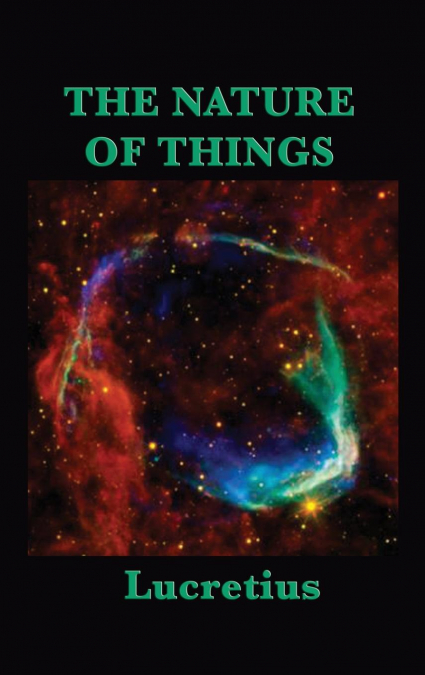
  • The Nature of Things
    Lucretius Lucretius
    De rerum natura (On the Nature of Things) is a 1st century BC didactic poem by the Roman poet and philosopher Lucretius with the goal of explaining Epicurean philosophy to a Roman audience. Lucretius presents the principles of atomism; the nature of the mind and soul; explanations of sensation and thought; the development of the world and its phenomena; and explains a variety o...
  • Pompeii
    Fergus Mason
    Pompeii was one of most advanced cities of its time; it had a complex water system, gymnasium, and an amphitheater. Despite it's advancements, there was one thing it wasn't ready for: Mount Vesuvius—the volcano that led to its ultimate doom.  The 79 AD eruption of Mount Vesuvius was one of the worst disasters in all of European history. In a near instant, over 15,000 p...
    Disponible

    10,36 €

  • Middle Platonism and Neoplatonism, Volume 1
    Stephen Gersh
    'It is generally agreed that those types of philosophy that are loosely called ’Platonic’ and ’Neoplatonic’ played a crucial role in the history of European culture during the centuries between antiquity and the Renaissance. However, until now no scholar has attempted to describe the evolution of these forms of thought in a single comprehensive academic study.' So writes Stephe...
  • Middle Platonism and Neoplatonism, Volume 2
    Stephen Gersh
    It is generally agreed that those types of philosophy that are loosely called 'Platonic' and 'Neoplatonic' played a crucial role in the history of European culture during the centuries between antiquity and the Middle Ages. However, until now no scholar has attempted to describe the evolution of these forms of thought in a single comprehensive academic study. Middle Platonism a...
  • Porphyry’s Commentary on Ptolemy’s Harmonics
    Andrew Barker
    ...
    Disponible

    77,17 €

  • The Roots of Platonism
    John Dillon
    ...
    Disponible

    25,29 €

Otros libros del autor

  • The Meeting
    Andrew Payne
    Stratton and Cole are waiting to meet Jack so they can seal the deal that will make or break their careers. But Jack isn’t coming to the meeting, he’s been dragged out of the building by security following an ’incident’ with a female colleague. Now they have to negotiate with his deputy - a woman. The men can’t quite believe their luck. But far from being a soft touch, Jack’s s...
    Disponible

    19,05 €