
Inicio > Tecnología, ingeniería, agricultura > > Química industrial > Technologies et infrastructures d’adduction d’eau au Cameroun
Technologies et infrastructures d’adduction d’eau au Cameroun

Technologies et infrastructures d’adduction d’eau au Cameroun

Fonyuy Carlos Bintar

71,90 €
IVA incluido
Disponible
Editorial:
KS OmniScriptum Publishing
Año de edición:
2026
Materia
Química industrial
ISBN:
9786630244113
71,90 €
IVA incluido
Disponible

Selecciona una librería:

  • Librería Samer Atenea

  • Kálamo Books
  • Librería Elías (Asturias)
  • Librería Kolima (Madrid)
  • Librería Proteo (Málaga)

L’eau est au cœur du développement durable et revêt une importance cruciale pour le développement socio-économique, la santé des écosystèmes et la survie même de l’humanité. Elle est essentielle pour réduire la charge mondiale de morbidité et améliorer la santé, le bien-être et la productivité des populations. La croissance démographique et l’urbanisation continues, l’industrialisation rapide, ainsi que l’expansion et l’intensification de la production alimentaire exercent toutes une pression sur les ressources en eau et augmentent les rejets d’eaux polluées à l’intérieur et au-delà des frontières nationales. Les infrastructures et les technologies liées à l’eau présentent des disparités en fonction des zones rurales ou urbaines, de la population, des ressources financières et des parties prenantes. Le Cameroun a mis en œuvre de nombreuses techniques et infrastructures pour répondre à la demande en eau sans cesse croissante, allant des systèmes d’adduction à grande échelle (CamWater/CDE pour les zones urbaines) à ceux de moyenne échelle (zones périurbaines et rurales), en passant par les petits réseaux (communautaires et entre pairs) et les systèmes individuels. Ces technologies et infrastructures sont confrontées à un large éventail de menaces et de défis qui entravent les initiatives du gouvernement et d’autres institutions visant à atteindre les OMD et à concrétiser la vision Cameroun 2035 en tant que pays émergent.

Artículos relacionados

  • Quantitative Structure-Activity Relationships in Drug Design, Predictive Toxicology, and Risk Assessment
    Kunal Roy
    Quantitative structure-activity relationships (QSARs) represent predictive models derived from the application of statistical tools correlating biological activity or other properties of chemicals with descriptors representative of molecular structure and/or property. Quantitative Structure-Activity Relationships in Drug Design, Predictive Toxicology, and Risk Assessment discus...
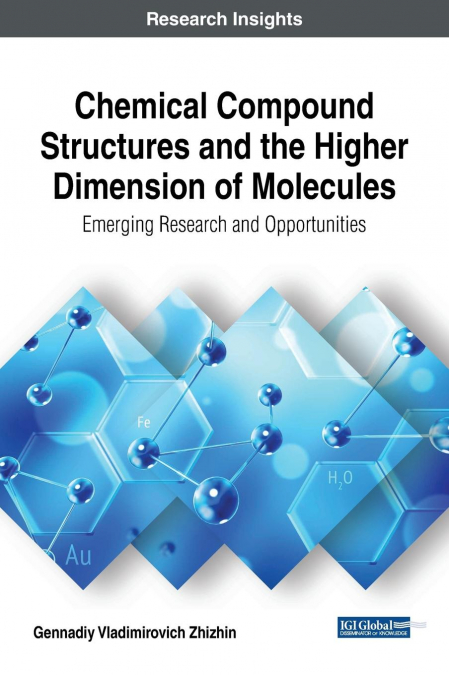
  • Chemical Compound Structures and the Higher Dimension of Molecules
    Gennadiy Vladimirovich Zhizhin
    Originally, scientists believed that molecules were three-dimensional; however, studies have proven that geometric dimensions are continuous. Therefore, molecules are able to have higher dimensions which influences how they interact with other molecules leading to advances in various fields including nanomedicine, nanotoxicology and quantum biology. Chemical Compound Structures...
  • CHEMICAL THERMODYNAMICS, 2ND EDITION
    Byung Chan Eu / BYUNG CHAN EU & MAZEN AL-GHOUL / EU BYUNG CHAN / Mazen Al-Ghoul
    This book enables the reader to learn, in a single volume, equilibrium and nonequilibrium thermodynamics as well as generalized forms of hydrodynamics for linear and nonlinear processes applied to various hydrodynamic flow processes — including chemical oscillation phenomena and pattern formations, shock wave phenomena, sound wave propagations, and Liesegang pattern formation, ...
  • CARBOHYDRATE CHEMISTRY
    ALEN RAIMO / Raimo Alen
     This book presents a comprehensive approach to the versatile and fascinating field of carbohydrate chemistry. It covers, besides the colorful historical perspective within the utilization of carbohydrates and their derivatives, all modern aspects on their properties, nomenclature, uses, and natural occurrence as such or as residues in a variety of biologically active molecules...
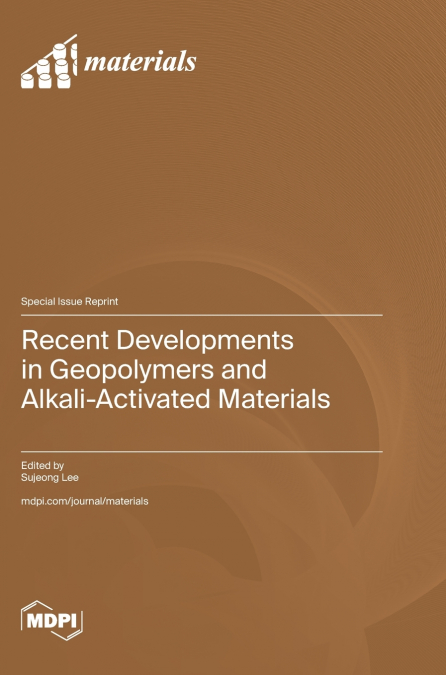
  • Recent Developments in Geopolymers and Alkali-Activated Materials
    Sujeong Lee
    We are compiling and publishing a collection of the latest research papers in the fields of Geopolymer and Alkali-Activated Materials (AAM). This compilation includes eight original research and two review papers covering a diverse range of topics, including various raw materials, manufacturing processes, and applications in the realms of Geopolymer and AAM. The publication aim...
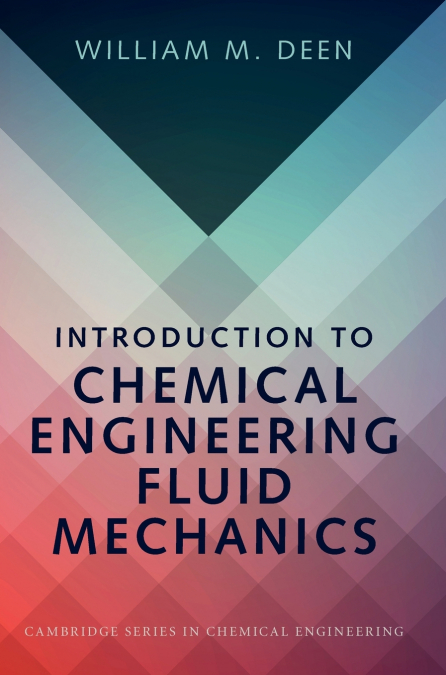
  • Introduction to Chemical Engineering Fluid Mechanics
    William M. Deen
    ...