Te Rii ni Banaba

Te Rii ni Banaba

Raobeia Ken Sigrah / Stacey M. King

29,41 €
IVA incluido
Consulta disponibilidad
Editorial:
Banaban Vision Publications
Año de edición:
2019
Materia
Historia social y cultural
ISBN:
9780648546245

Selecciona una librería:

  • Librería Samer Atenea
  • Librería Aciertas (Toledo)
  • Kálamo Books
  • Librería Perelló (Valencia)
  • Librería Elías (Asturias)
  • Donde los libros
  • Librería Kolima (Madrid)
  • Librería Proteo (Málaga)

Te Rii ni Banaba - backbone of Banaba, is a history of Banaba, situated in the Central Pacific, once known as Ocean Island.  By recording genealogies, myths, legends, customs, culture, magic rituals and the long-kept secrets of the te Aka clan reveals the uniqueness of Banaban identity. The arrival of the I-Matang (Europeans), beachcombers, blackbirders, whalers, missionaries, and the miners in 1900, with the discovery of phosphate (guano) and a heartbreaking trail of loss, exploitation and environmental degradation from mining.  The toll of  World War II atrocities suffered during the Japanese invasion, and the subsequent forced exile of the Banabans from their homeland.  The recorded names of those tragically killed on Banaba during the War and displaced Banaban survivors who were exiled on Rabi, Fiji in 1945.Te Rii ni Banaba - backbone of Banaba, brings to light new research, including the long-kept secrets of the mysterious te Aka clan, and the successive invasions of Banaba. Then the I-Matang (Europeans) arrived - beachcombers, blackbirders, whalers, missionaries, miners and an occupying Japanese military force during World War II. 1900 was a turning point in this sequence of events with the discovery of phosphate (guano) and a tragic trail of loss and environmental degradation from mining. The Banaban people, who were exiled from their homeland - first during the Pacific War, then to Rabi (Fiji) afterward. The names of all those Banabans tragically killed on Banaba during the War and the names of the displaced Banaban survivors who arrived on Rabi in 1945 are recorded. Although always remote and now decimated by mining, Banaba remains in the hearts of all Banabans. A key narrative in Te Rii Ni Banaba - backbone of Banaba, is the struggle by Banabans to discover their culture and identity, and the authors write, fearful that due to pressure from Fijian, I-Kiribati and western influences, future generations will no longer know or identify as Banaban.This second edition includes additional photographs, the discovery of the missing link of the Toakira, the search for Teimanaia’s skull, identification of the landowners from the first agreements in 1900, and insights into the famous 1975 Banaban Court Case.  It also provides details of villages lost to mining for future generations to trace their genealogies and land rights.  Although remote and now decimated by mining, Banaba remains in the hearts of all Banabans.

Artículos relacionados

  • Arizal
    Raphael Afilalo
    The Ari overflowed with Torah. He was expert in Scripture, Mishnah, Talmud, Midrash, Maaseh Bereishit and Maaseh Merkavah. About all the different levels of prophecy, their details and from which level the prophets had their revelations.  He understood the whistling of the trees, the grass and stones, the language of the birds and other animals, the conversations of angels, the...
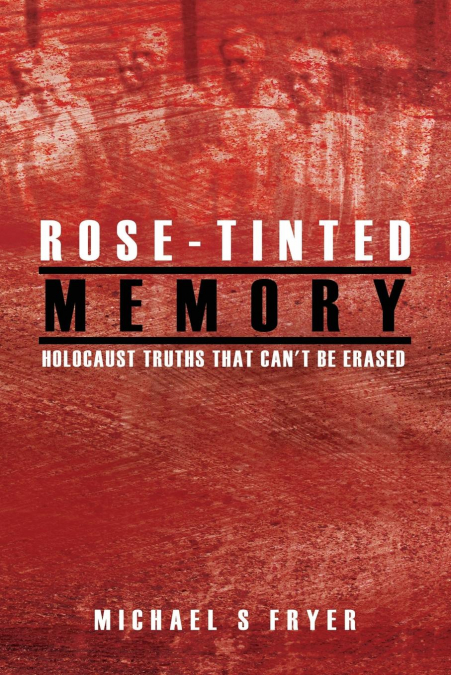
  • Rose-tinted Memory
    Michael S Fryer
    “Those who deny Auschwitz would be ready to remake it”.  ~ Primo Levi, Holocaust survivor and author Seventy years after the mass murder of the Jews of Europe, Holocaust denial and Holocaust revisionism are creeping into our overall perception of what actually happened.Christendom has not ‘denied’ Holocaust, but it has attempted to create a memory of Holocaust which suggests th...
    Disponible

    8,84 €

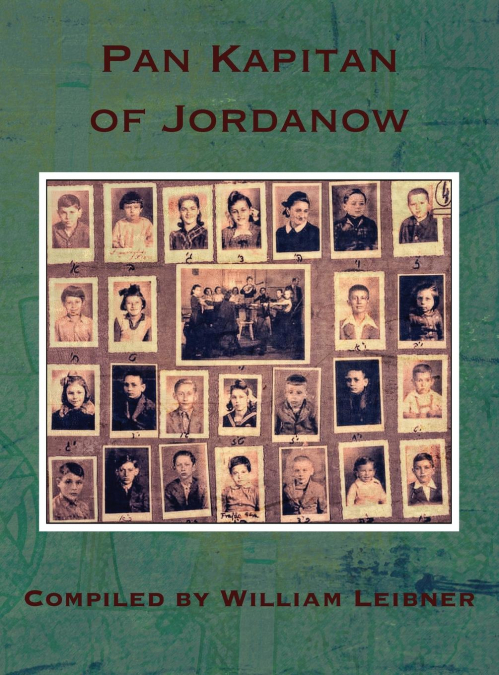
  • Pan Kapitan of Jordanow
    William Leibner
    Yeshayahu Drucker devoted a good part of his life to rescuing Jewish children from non-Jewish homes. Many parents had given their children to Polish neighbors for safekeeping during the war. Unfortunately most of the parents did not survive the Shoah. At the end of the war, there was no one to claim the children and they remained with the “adopted” Polish families. Following hi...
  • Holy Dissent
    Glenn Dynner
    BThe religious communities of early modern Eastern Europe—particularly those with a mystical bent—are typically studied in isolation. Yet the heavy Slavic imprint on Jewish popular mysticism and pervasive Judaizing tendencies among Christian dissenters call into question the presumed binary quality of Jewish-Christian interactions. In Holy Dissent: Jewish and Christian Mystics ...
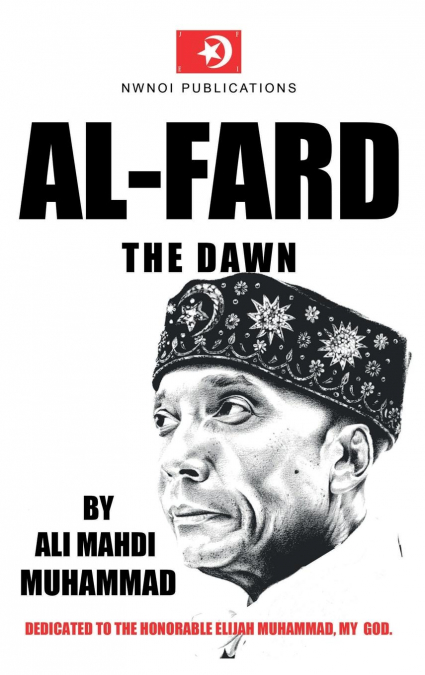
  • AL-FARD
    Ali Mahdi Muhammad
    The Al-Fard, or the The Dawn, has captured the early rays of Our history. This history is essential if we are to be brought face to face with the One true and living God of the universe. The purpose of this writing is to bring the reader step by step, one degree at a time to the reality of God in person. The teachings of Our Father elevates the believer to the level of Godhood ...
  • Wild Things. Nature and the Social Imagination
    HISTORIES OF HUMAN CONSTRUCTIONS OF NATUREWild Things: Nature and the Social Imagination assembles eleven substantive and original essays on the cultural and social dimensions of environmental history. They address a global cornucopia of social and ecological systems, from Africa to Europe, North America and the Caribbean, and their temporal range extends from the 1830s into th...

Otros libros del autor

  • Banaban Cultural Identity
    Raobeia Ken Sigrah / Stacey M. King
    For years, scholars and colonial administrators have linked the Banabans to the I-Kiribati race, shaping the prevailing societal and political landscape of the Banaban people. Nevertheless, true historical accounts and origins have remained closely guarded secrets. Te Aka clan have been notoriously secretive about their identity, keeping their heritage hidden from outsiders. Th...
    Disponible

    9,07 €