
Taming Anger

Taming Anger

Kostas Kalimtzis

259,06 €
IVA incluido
Consulta disponibilidad
Editorial:
Bloomsbury Publishing plc
Año de edición:
2012
Materia
Filosofía occidental: antigua, hasta c. 500
ISBN:
9780715640791

Selecciona una librería:

  • Librería Samer Atenea
  • Librería Aciertas (Toledo)
  • Kálamo Books
  • Librería Perelló (Valencia)
  • Librería Elías (Asturias)
  • Donde los libros
  • Librería Kolima (Madrid)
  • Librería Proteo (Málaga)

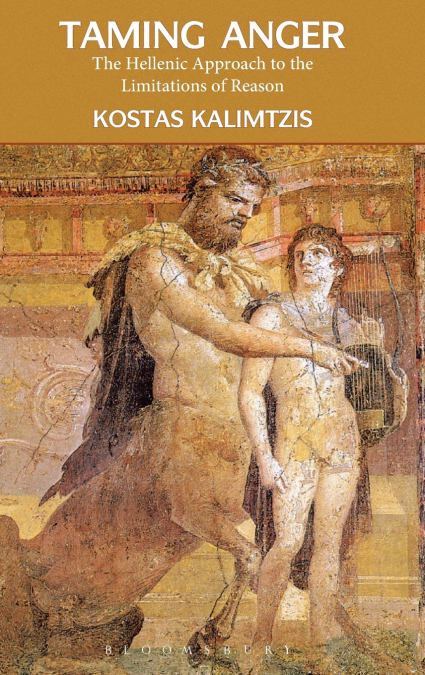
From Homer to Aristotle, understanding anger and harnessing its power was at the core of Hellenic civilization. Homer created the framework for philosophical inquiries into anger, one that persisted until it was overturned by Stoicism and Christianity. Plato saw anger as the guardian of justice and Aristotle conceived of it as bound to friendship. Yet both showed that anger can become a guardian of injustice and a defender of our psychological abnormalities. Plato claimed that reason is a tertiary factor in controlling anger and Aristotle argued that non-cognitive powers can issue commands for anger’s arousal - findings that shed light as to why cognitive therapeutic approaches often prove to be ineffective. Both proposed nurturing the thumos, the receptacle of anger and the seat of self-esteem. Aristotle’s view of public anger as an early warning sign of social dissolution continues to be relevant to this day. In this carefully argued study, Kostas Kalimtzis examines the theories of anger in the context of the ancient world with an eye to their implications for the modern predicament.


Artículos relacionados

  • The Nature of Things
    Lucretius Lucretius
    De rerum natura (On the Nature of Things) is a 1st century BC didactic poem by the Roman poet and philosopher Lucretius with the goal of explaining Epicurean philosophy to a Roman audience. Lucretius presents the principles of atomism; the nature of the mind and soul; explanations of sensation and thought; the development of the world and its phenomena; and explains a variety o...
  • Pompeii
    Fergus Mason
    Pompeii was one of most advanced cities of its time; it had a complex water system, gymnasium, and an amphitheater. Despite it's advancements, there was one thing it wasn't ready for: Mount Vesuvius—the volcano that led to its ultimate doom.  The 79 AD eruption of Mount Vesuvius was one of the worst disasters in all of European history. In a near instant, over 15,000 p...
    Disponible

    10,36 €

  • Middle Platonism and Neoplatonism, Volume 1
    Stephen Gersh
    'It is generally agreed that those types of philosophy that are loosely called ’Platonic’ and ’Neoplatonic’ played a crucial role in the history of European culture during the centuries between antiquity and the Renaissance. However, until now no scholar has attempted to describe the evolution of these forms of thought in a single comprehensive academic study.' So writes Stephe...
  • Middle Platonism and Neoplatonism, Volume 2
    Stephen Gersh
    It is generally agreed that those types of philosophy that are loosely called 'Platonic' and 'Neoplatonic' played a crucial role in the history of European culture during the centuries between antiquity and the Middle Ages. However, until now no scholar has attempted to describe the evolution of these forms of thought in a single comprehensive academic study. Middle Platonism a...
  • Porphyry’s Commentary on Ptolemy’s Harmonics
    Andrew Barker
    ...
    Disponible

    77,17 €

  • The Roots of Platonism
    John Dillon
    ...
    Disponible

    25,29 €

Otros libros del autor

  • An Inquiry into the Philosophical Concept of Scholê
    Kostas Kalimtzis
    Though the ancient Greek philosophical concept of scholê is usually translated as ’leisure’, there is a vast difference between the two. Leisure, derived from Latin licere, has its roots in Roman otium and connotes the uses of free time in ways permitted by the status quo. Scholê is the actualization of mind and one’s humanity within a republic that devotes its culture to makin...
    Disponible

    61,57 €

  • An Inquiry into the Philosophical Concept of Scholê
    Kostas Kalimtzis
    Though the ancient Greek philosophical concept of scholê is usually translated as ’leisure’, there is a vast difference between the two. Leisure, derived from Latin licere, has its roots in Roman otium and connotes the uses of free time in ways permitted by the status quo. Scholê is the actualization of mind and one’s humanity within a republic that devotes its culture to makin...
  • Taming Anger
    Kostas Kalimtzis
    From Homer to Aristotle, understanding anger and harnessing its power was at the core of Hellenic civilization. Homer created the framework for philosophical inquiries into anger, one that persisted until it was overturned by Stoicism and Christianity. Plato saw anger as the guardian of justice and Aristotle conceived of it as bound to friendship. Yet both showed that anger can...
    Disponible

    67,00 €