 Librería Samer Atenea
 Kálamo Books
 Librería Elías (Asturias)
 Librería Kolima (Madrid)
 Librería Proteo (Málaga)
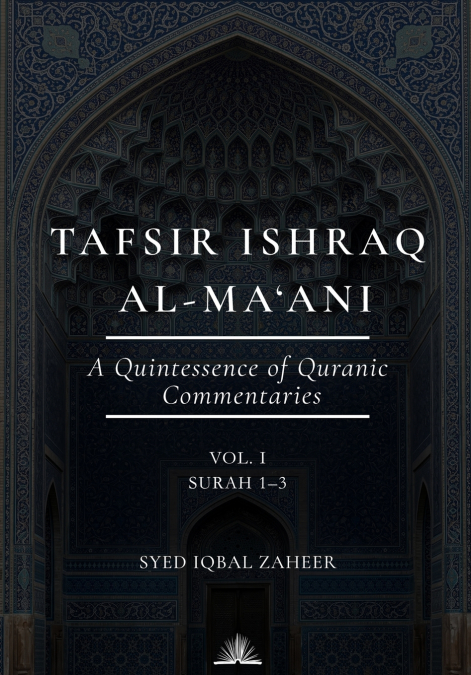
Tafsir Ishraq Al-Ma`ani, Vol. I presents an extensive English commentary on the opening three sūrahs of the Qur’ān: al-Fātiḥah, al-Baqarah, and Āl ʿImrān. Its stated purpose is to convey, principally, the meaning of the Qur’ān as understood by the classical scholars through the Qur’ān itself, the traditions of the Prophet ﷺ, and the statements of the Companions and their Followers. The volume begins with a substantial preparatory study of Qur’ānic guidance, language, translation, methods of tafsīr, the place of ḥadīth, and the interpretive authority of the early generations. It distinguishes transmitted commentary from opinion-based interpretation and discusses the linguistic limitations inherent in rendering Qur’ānic Arabic into another language.In constructing the commentary, Syed Iqbal Zaheer draws upon major exegetical authorities including al-Ṭabarī, Ibn Kathīr, al-Shawkānī, al-Qurṭubī, al-Rāzī, al-Zamakhsharī, and others. The author also addresses the authentication of reports, seeking the judgments of hadith specialists where necessary and stating that he sought, as a general rule, not to cite material below the level of ḥasan except in qualified circumstances. Key areas include:Tafsīr of Sūrahs 1-3 Qur’ān explained through Qur’ān and Sunnah Interpretations of the Companions and early Followers Arabic linguistic and semantic analysis Ḥadīth sourcing and authenticity Fiqh, akhlāq, worship, and spiritual instruction Classical exegetical disagreements Historical and comparative material The distinction between transmitted tafsīr and personal interpretation The author describes the work as an 'aid for understanding the Qur’ān' and makes extensive use of earlier scholarship while incorporating explanatory material for English-reading students. A substantial reference work for students of Qur’ānic studies, Islamic theology, tafsīr, ḥadīth, fiqh, Arabic-Islamic intellectual history, scholars, seminaries, and academic or Islamic libraries.