
Inicio > Matemáticas y ciencia > Química > Química orgánica > Synthetic Organic Photochemistry
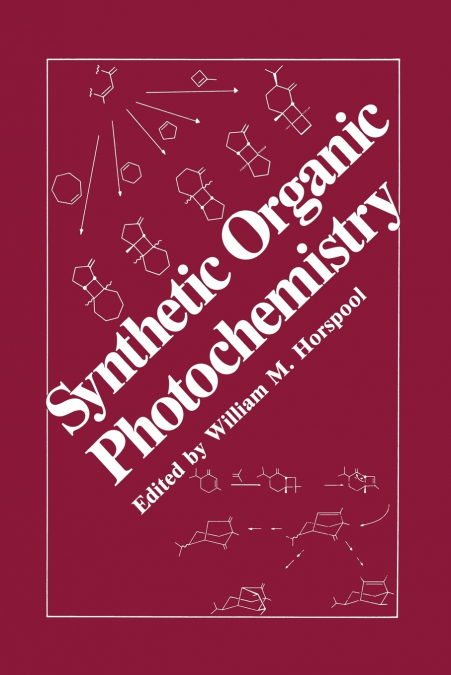
Synthetic Organic Photochemistry

Synthetic Organic Photochemistry

W. M. Horspool

403,17 €
IVA incluido
Disponible
Editorial:
Springer Nature B.V.
Año de edición:
2011
Materia
Química orgánica
ISBN:
9781461296683
403,17 €
IVA incluido
Disponible

Selecciona una librería:

  • Librería Samer Atenea
  • Librería Aciertas (Toledo)
  • Kálamo Books
  • Librería Perelló (Valencia)
  • Librería Elías (Asturias)
  • Donde los libros
  • Librería Kolima (Madrid)
  • Librería Proteo (Málaga)

Of all major branches of organic chemistry, I think none has undergone such a rapid, even explosive, development during the past twenty-five years as organic photochemistry. Prior to about 1960, photochemistry was still widely regarded as a branch of physical chemistry which might perhaps have oc­ casional applications in the generation of free radicals. Strangely enough, this attitude to the subject had developed despite such early signs of promise as the photodimerization of anthracene first observed by Fritzsche in 1866, and some strikingly original pioneering work by Ciamician and Silber in the early years of this century. These latter workers first reported such varied photo­ reactions as the photoisomerization of carvenone to carvone camphor, the photodimerization of stilbene, and the photoisomerization of o-nitrobenzal­ dehyde to o-nitrosobenzoic acid; yet organic chemists continued for another fifty years or so to rely almost wholly on thermal rather than photochemical methods of activation in organic synthesis-truly a dark age. When my colleagues and I first began in the 1950s to study the synthetic possibilities of photoexcitation in the chemistry of benzene and its derivatives, virtually all the prior reports had indicated that benzene was stable to ultraviolet radiation. Yet I think it fair to say that more different types of photoreactions than thermal reactions of the benzene ring are now known. Comparable growth of knowledge has occurred in other branches of organic photochemistry, and photochemical techniques have in particular made possible or simplified the synthesis of numerous highly strained organic molecules.

Artículos relacionados

  • Organic Chemistry Problems and Solutions
    G.R. Vijayagopal / V. Raman K.
    In the competitive world of entrance examinations for premier engineering and medical institutions, mastering the art of problem-solving is crucial. This book serves as a beacon for students aiming to secure their places in prestigious institutions such as IITs, CSIR laboratories, IISc, and top medical colleges through examinations like IIT-JEE, AIEEE, JIPMER, JAM, CSIR, NET, G...
    Disponible

    46,17 €

  • CHEMISTRY OF NATURAL PRODUCTS
    K. Anand Solomon
    'Chemistry of Natural Products' opens a window to the profound impact that natural products, derived from both plant and animal origins, have on human life. This book is meticulously crafted to illuminate the fascinating journey from the isolation and characterization of these natural compounds to understanding their biological and pharmacological activities. Aimed at students ...
    Disponible

    23,96 €

  • QUALITATIVE AND QUANTITATIVE ANALYSIS OF PHYTOCHEMICALS
    Mital Soni / Vijay Ram
    Kachchh district’s unique geographic features, situated near the Tropic of Cancer and encompassing one of Gujarat’s Gulfs, result in diverse environmental conditions throughout the year. The region, predominantly rural, is rich in traditional plant-based folk medicine, reflecting its high biodiversity and ecological value. Understanding the therapeutic potential of medicinal pl...
    Disponible

    54,25 €

  • The Emergence of Life
    Pier Luigi Luisi
    ...
  • Understanding Organic Reaction Mechanisms
    Adam Jacobs
    ...
    Disponible

    147,51 €

  • Synthese von (-) -Pyrenophorol, Bewertung von Heterozyklen gegen Krebs
    PERUGU EDUKONDALU
    Die Totalsynthese von (-)-Pyrenophorol mit hoher Enantioselektivität wurde durchgeführt, wobei die Stereozentren durch hydrolytische kinetische Jacobsen-Auflösung und asymmetrische Sharpless-Dihydroxylierung etabliert wurden und die Zyklisierung durch intermolekulare Mitsunobu-Zyklisierung erreicht wurde. Die Verbindung 90b mit der elektronenspendenden 3,4,5-Trimethoxygruppe am...
    Disponible

    84,90 €