
Inicio > Tecnología, ingeniería, agricultura > > Química industrial > Synthesis, Characterization, and Theory of Polymeric Networks and Gels
Synthesis, Characterization, and Theory of Polymeric Networks and Gels

Synthesis, Characterization, and Theory of Polymeric Networks and Gels

Shaul M. Aharoni

68,31 €
IVA incluido
Disponible
Editorial:
Springer Nature B.V.
Año de edición:
2012
Materia
Química industrial
ISBN:
9781461363149
68,31 €
IVA incluido
Disponible

Selecciona una librería:

  • Librería Samer Atenea
  • Librería Aciertas (Toledo)
  • Kálamo Books
  • Librería Perelló (Valencia)
  • Librería Elías (Asturias)
  • Donde los libros
  • Librería Kolima (Madrid)
  • Librería Proteo (Málaga)

Polymer science is a technology-driven science. More often than not, technological breakthroughs opened the gates to rapid fundamental and theoretical advances, dramatically broadening the understanding of experimental observations, and expanding the science itself. Some of the breakthroughs involved the creation of new materials. Among these one may enumerate the vulcanization of natural rubber, the derivatization of cellulose, the giant advances right before and during World War II in the preparation and characterization of synthetic elastomers and semi­ crystalline polymers such as polyesters and polyamides, the subsequent creation of aromatic high-temperature resistant amorphous and semi-crystal­ line polymers, and the more recent development of liquid-crystalline polymers mostly with n~in-chain mesogenicity. other breakthroughs involve the development of powerful characterization techniques. Among the recent ones, the photon correlation spectroscopy owes its success to the advent of laser technology, small angle neutron scattering evolved from n~clear reactors technology, and modern solid-state nuclear magnetic resonance spectroscopy exists because of advances in superconductivity. The growing need for high modulus, high-temperature resistant polymers is opening at present a new technology, that of more or less rigid networks. The use of such networks is rapidly growing in applications where they are used as such or where they serve as matrices for fibers or other load­ bearing elements. The rigid networks are largely aromatic. Many of them are prepared from multifunctional wholly or almost-wholly aromatic kernels, while others contain large amount of stiff difunctional residus leading to the presence of many main-chain 'liquid-crystalline' segments in the 'infinite' network.

Artículos relacionados

  • Quantitative Structure-Activity Relationships in Drug Design, Predictive Toxicology, and Risk Assessment
    Kunal Roy
    Quantitative structure-activity relationships (QSARs) represent predictive models derived from the application of statistical tools correlating biological activity or other properties of chemicals with descriptors representative of molecular structure and/or property. Quantitative Structure-Activity Relationships in Drug Design, Predictive Toxicology, and Risk Assessment discus...
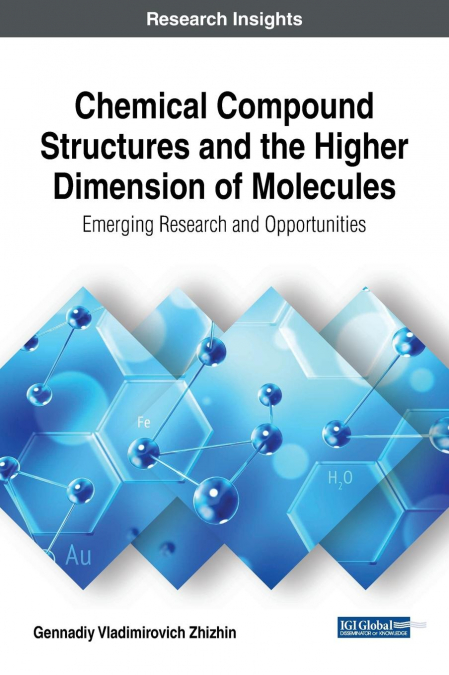
  • Chemical Compound Structures and the Higher Dimension of Molecules
    Gennadiy Vladimirovich Zhizhin
    Originally, scientists believed that molecules were three-dimensional; however, studies have proven that geometric dimensions are continuous. Therefore, molecules are able to have higher dimensions which influences how they interact with other molecules leading to advances in various fields including nanomedicine, nanotoxicology and quantum biology. Chemical Compound Structures...
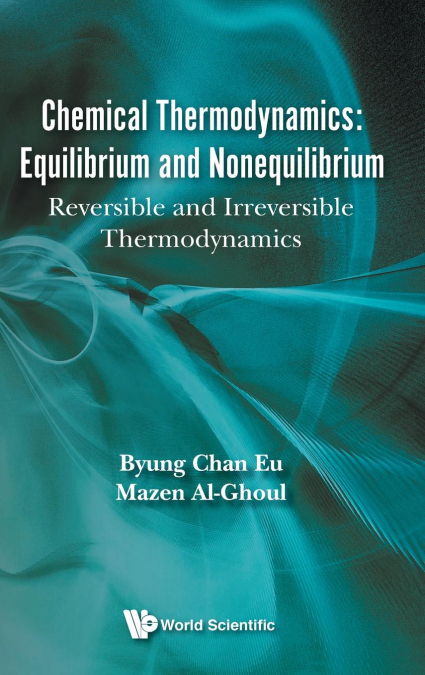
  • CHEMICAL THERMODYNAMICS, 2ND EDITION
    Byung Chan Eu / BYUNG CHAN EU & MAZEN AL-GHOUL / EU BYUNG CHAN / Mazen Al-Ghoul
    This book enables the reader to learn, in a single volume, equilibrium and nonequilibrium thermodynamics as well as generalized forms of hydrodynamics for linear and nonlinear processes applied to various hydrodynamic flow processes — including chemical oscillation phenomena and pattern formations, shock wave phenomena, sound wave propagations, and Liesegang pattern formation, ...
  • CARBOHYDRATE CHEMISTRY
    ALEN RAIMO / Raimo Alen
     This book presents a comprehensive approach to the versatile and fascinating field of carbohydrate chemistry. It covers, besides the colorful historical perspective within the utilization of carbohydrates and their derivatives, all modern aspects on their properties, nomenclature, uses, and natural occurrence as such or as residues in a variety of biologically active molecules...
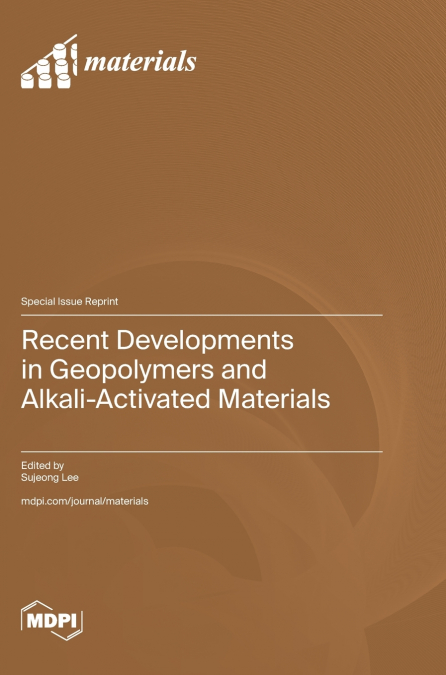
  • Recent Developments in Geopolymers and Alkali-Activated Materials
    Sujeong Lee
    We are compiling and publishing a collection of the latest research papers in the fields of Geopolymer and Alkali-Activated Materials (AAM). This compilation includes eight original research and two review papers covering a diverse range of topics, including various raw materials, manufacturing processes, and applications in the realms of Geopolymer and AAM. The publication aim...
  • Introduction to Chemical Engineering Fluid Mechanics
    William M. Deen
    ...

Otros libros del autor

  • Synthesis, Characterization, and Theory of Polymeric Networks and Gels
    Shaul M. Aharoni
    Fractal Aspects of Polymer Networks and Gels: Fractal Properties of Branched Polymers (M. Daoud). Novel Network Structures (T.A. Vilgis). The Fractal Nature of OneStep Rigid Networks and their Gels (S.M. Aharoni). Rigid and Semiflexible Networks and Gels: Phase Transitions in Liquid Crystal Polymers (S.F. Edwards). OneStep and TwoStep Rigid Polyamide Networks and Gels (S.M...