
Inicio > > Ciencias de la computación > Inteligencia artificial > Syntactic Networks-Kernel Memory Approach
Syntactic Networks-Kernel Memory Approach

Syntactic Networks-Kernel Memory Approach

Tetsuya Hoya

194,73 €
IVA incluido
Consulta disponibilidad
Editorial:
Springer Nature B.V.
Año de edición:
2024
Materia
Inteligencia artificial
ISBN:
9783031573118

Selecciona una librería:

  • Librería Samer Atenea
  • Librería Aciertas (Toledo)
  • Kálamo Books
  • Librería Perelló (Valencia)
  • Librería Elías (Asturias)
  • Donde los libros
  • Librería Kolima (Madrid)
  • Librería Proteo (Málaga)

This book proposes a novel connectionist approach to a challenging topic of language modeling within the context of kernel memory and artificial mind system, both proposed previously by the author in the very first volume of the series, Artificial Mind System-Kernel Memory Approach: Studies in Computational Intelligence, Vol. 1. The present volume focuses on how syntactic structures of language are modeled in terms of the respective composite connectionist architectures, each embracing both the nonsymbolic and symbolic parts. These two parts are developed via inter-module processes within the artificial mind system and eventually integrated under a unified framework of kernel memory. The data representation by the networks embodied within the kernel memory principle is essentially local, unlike conventional artificial neural network models such as the pervasive multilayer perceptron-based neural networks. With this locality principle, kernel memory inherently bears many attractive features, such as topologically unconstrained network formation, straightforward network growing, shrinking, and reconfiguration, no requirement of arduous iterative parameter tuning, construction of transparent and hierarchical data structures, and multimodal and temporal data processing via the network representation. Exploiting these multifacet properties of kernel memory with interweaving the notion of inter-module processing within the artificial mind system provides coherent accounts for concept formation and how various linguistic phenomena, viz. word compoundings, morphologies, and multiword constructions, are modeled. The description is then extended to more intricate network models of context-dependent lexical network and syntactic-oriented processing, the latter being the central theme of the present study, and further to those representing a hybrid of nonverbal and verbal thinking, and semantic and pragmatic aspects of sentential meaning. The book is intended for general readers engaging in various areas of study in cognitive science, computer science, engineering, linguistics, philosophy, psycholinguistics, and psychology.
Artículos relacionados

  • Artificial Cognition Systems
    ...
  • Cross-Disciplinary Applications of Artificial Intelligence and Pattern Recognition
    Vijay Kumar Mago
    The need for intelligent machines in areas such as medical diagnostics, biometric security systems, and image processing motivates researchers to develop and explore new techniques, algorithms, and applications in this evolving field. Cross-Disciplinary Applications of Artificial Intelligence and Pattern Recognition: Advancing Technologies provides a common platform for researc...
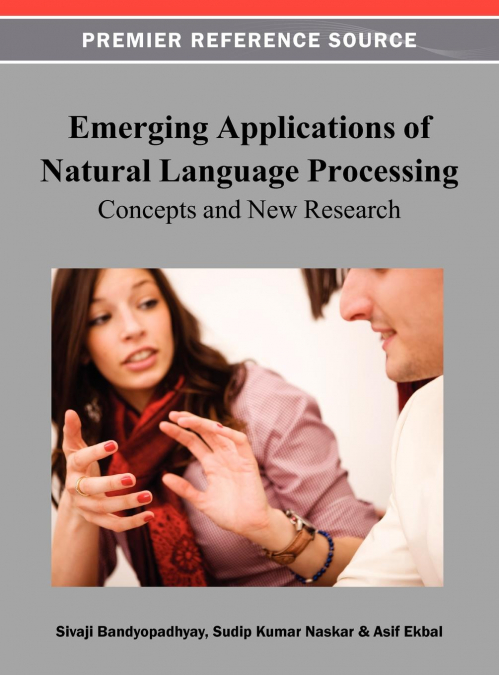
  • Emerging Applications of Natural Language Processing
    Over the last few years, the area of Natural Language Processing has drastically grown in recognition, not only within the research and development community, but also with industry professionals. As NLP continues to be discussed and researched, certain areas continue to grow and mature. As a result, the need for advanced research and information is in high demand. Emerging App...
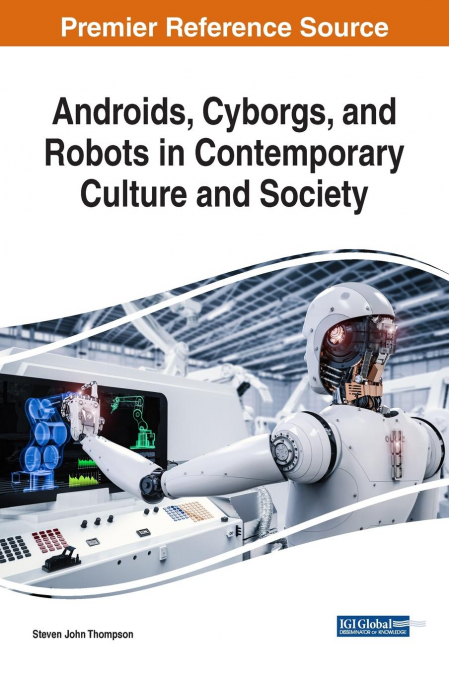
  • Androids, Cyborgs, and Robots in Contemporary Culture and Society
    Steven John Thompson
    Mankind’s dependence on artificial intelligence and robotics is increasing rapidly as technology becomes more advanced. Finding a way to seamlessly intertwine these two worlds will help boost productivity in society and aid in a variety of ways in modern civilization. Androids, Cyborgs, and Robots in Contemporary Culture and Society is an essential scholarly resource that delve...
  • Deep Learning Innovations and Their Convergence With Big Data
    The expansion of digital data has transformed various sectors of business such as healthcare, industrial manufacturing, and transportation. A new way of solving business problems has emerged through the use of machine learning techniques in conjunction with big data analytics. Deep Learning Innovations and Their Convergence With Big Data is a pivotal reference for the latest sc...
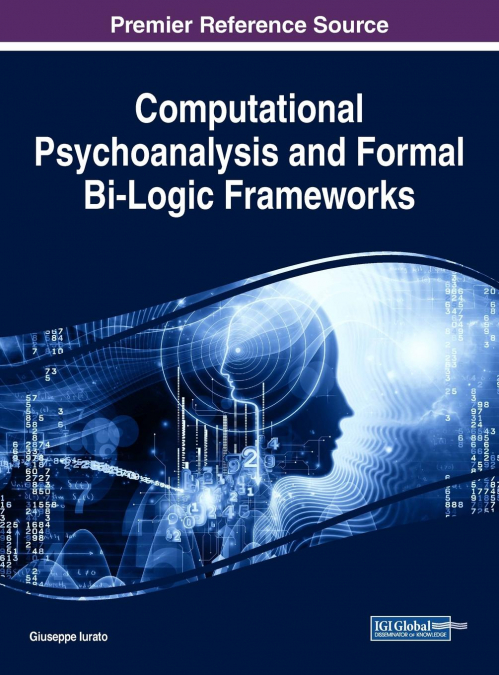
  • Computational Psychoanalysis and Formal Bi-Logic Frameworks
    Giuseppe Iurato
    Computational psychoanalysis is a new field stemming from Freudian psychoanalysis. The new area aims to understand the primary formal structures and running mechanisms of the unconscious while implementing them into computer sciences. Computational Psychoanalysis and Formal Bi-Logic Frameworks provides emerging information on this new field which uses psychoanalysis and the unc...

Otros libros del autor

  • Artificial Mind System
    Tetsuya Hoya
    This book is written from an engineer’s perspective of the mind. 'Artificial Mind System' exposes the reader to a broad spectrum of interesting areas in general brain science and mind-oriented studies. In this research monograph a picture of the holistic model of an artificial mind system and its behaviour is drawn, as concretely as possible, within a unified context, which cou...
    Disponible

    133,89 €

  • Artificial Mind System
    Tetsuya Hoya
    This book is written from an engineer’s perspective of the mind. 'Artificial Mind System' exposes the reader to a broad spectrum of interesting areas in general brain science and mind-oriented studies. In this research monograph a picture of the holistic model of an artificial mind system and its behaviour is drawn, as concretely as possible, within a...