
Inicio > Sociedad y ciencias sociales > Educación pedagogía > Syntactic Change in Medieval French
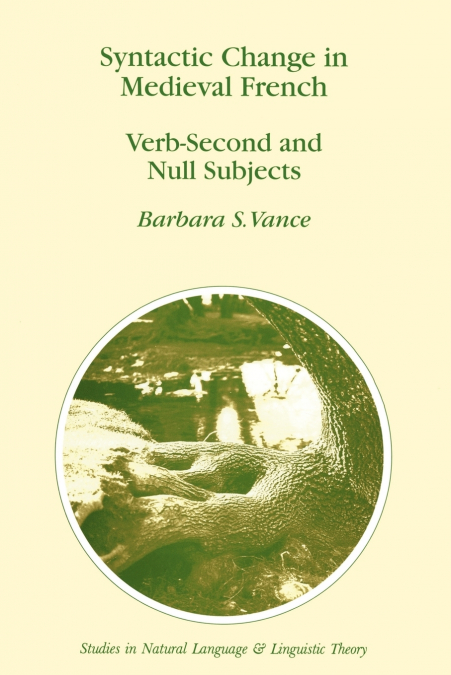
Syntactic Change in Medieval French

Syntactic Change in Medieval French

Barbara Vance

207,10 €
IVA incluido
Disponible
Editorial:
Springer Nature B.V.
Año de edición:
2010
Materia
Educación pedagogía
ISBN:
9789048148868
207,10 €
IVA incluido
Disponible

Selecciona una librería:

  • Librería Samer Atenea
  • Librería Aciertas (Toledo)
  • Kálamo Books
  • Librería Perelló (Valencia)
  • Librería Elías (Asturias)
  • Donde los libros
  • Librería Kolima (Madrid)
  • Librería Proteo (Málaga)

1. 0. V2 AND NULL SUBJECTS IN THE HIS TORY OF FRENCH The prototypical Romance null subject language has certain well­ known characteristics: verbal inflection is rich, distinguishing six per­ sonlnumber forms; subject pronouns are generally emphatic; and, when there is no need to emphasize the subject, the pronoun is not expressed at all. Spanish and Italian, for example, fit this description rather weIl. Modem French, however, provides a striking contrast to these lan­ guages; it does not allow subjects to be missing and, not unexpectedly, it has a verbal agreement system with few overt endings and subject pronouns which are not emphatic. One of the goals of the present work is to examine null subjects in two dialects of Romance that fit neither the Italian nor the French model: later Old French (12th-13th centriries) and MiddIe French (14th- 15th centuries). Old French has null subjects only in contexts where the subject would be postverbal if expressed (cf. Foulet (1928)), and Mid­ dIe French has null subjects in a wider range of syntactic contexts but does not freely allow a11 persons of the verb to be null. The work of Vanelli, Renzi and Beninca (1985) (along with many other works by these authors individually) shows that a number of other geographically proximate medieval dialects had similar systems, though it appears that there are significant differences in detail among them.

Artículos relacionados

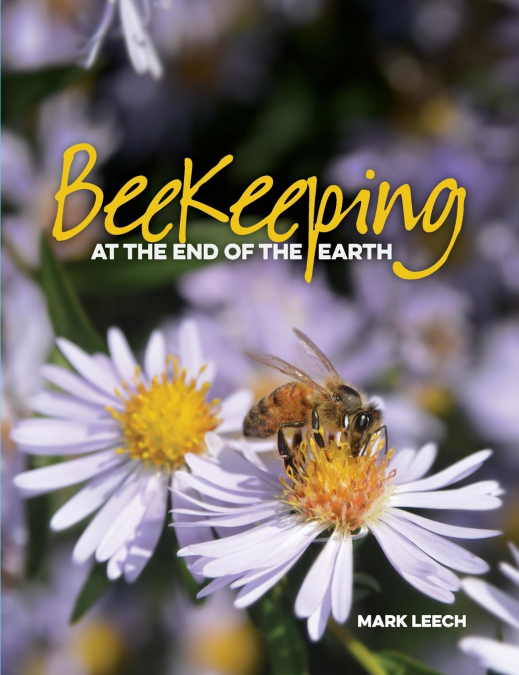
  • Beekeeping At The End Of The Earth
    Mark David Leech
    Beekeeping at the End of the Earth, an essential read for learning about beekeeping in a cool temperate climate with a focus on Tasmania our island home.  One hundred beekeepers one hundred different ways to keep bees.Beekeeping At The End Of The Earth is a practical insight into cool climate beekeeping with a focus on Tasmania, our island home.Richly illustrated with unique di...
    Disponible

    45,16 €

  • Be the One for Kids
    Ryan Sheehy
    One person can make a difference.That person can be you. “I want to show others that one person can make the difference in a child’s life. I want all educators, parents, coaches, and everyone in between to know they have power to Be the One for Kids.” —Ryan Sheehy If you ever feel like you’re all alone or think that no one gets you, just imagine how your students feel. Kids wan...
    Disponible

    27,99 €

  • Handbook of Research on E-Learning Standards and Interoperability
    As the e-learning industry continues to expand and the methods and tools necessary to create and maintain content and infrastructure applications become more complicated, there is an inherent need for these applications to interoperate and exchange data in order to better support the needs of learners and educators. Handbook of Research on E-Learning Standards and Interoperabil...
  • Teaching in the Knowledge Society
    Antonio Cartelli
    ...
  • Enhancing Learning Through Human Computer Interaction
    Elspeth McKay
    ...
  • Learning Objects for Instruction
    Pamela Taylor Northrup
    ...

Otros libros del autor

  • Syntactic Change in Medieval French
    Barbara Vance
    1. 0. V2 AND NULL SUBJECTS IN THE HIS TORY OF FRENCH The prototypical Romance null subject language has certain well­ known characteristics: verbal inflection is rich, distinguishing six per­ sonlnumber forms; subject pronouns are generally emphatic; and, when there is no need to emphasize the subject, the pronoun is not expressed at all. Spanish and ...