 Librería Desdémona
 Librería Samer Atenea
 Librería Aciertas (Toledo)
 Kálamo Books
 Librería Perelló (Valencia)
 Librería Elías (Asturias)
 Donde los libros
 Librería Kolima (Madrid)
 Librería Proteo (Málaga)
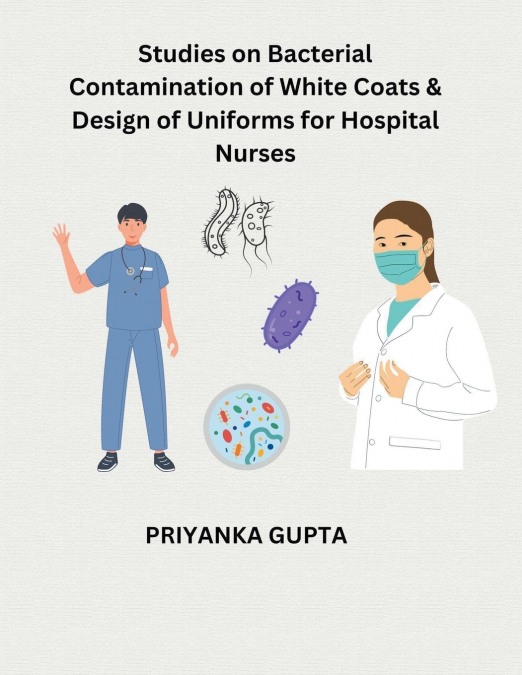
Rising incidence of hospital infections is a matter of great concern in India. This growth is often attributed to the absence of effective infection control strategies in healthcare facilities. Varieties of textiles are used in a hospital including bed linen, patients' uniforms, doctors' uniforms, curtains and upholstery. Research has shown that these can act as vectors of microbial infections. However, hardly any studies have been conducted in India in a hospital setting to estimate the extent and nature of bacterial contamination on hospital textiles.Nurses in India traditionally wear a white coat over their uniform. Due to exposure to body fluids, the white coats can become colonised with disease causing microbes and may transmit the same to patients, peers, or environmental surfaces within the healthcare facility. Sampling of contaminated textiles in a hospital setting is quite challenging and few effective methods are available for the same. In this thesis, a prospective non-destructive sampling technique, based on use of a detachable fabric patch, to assess the bacterial contamination in a government hospital in Delhi was developed. The method allows samples to be collected in an actual hospital environment without any limit on the number of variants. It does not require any specialized equipment, and the chances of error are reduced compared with the contact plate method.Fabric patches attached to the abdominal region of nurses' white coats were evaluated for total bacterial load and for seven common bacterial genus (staphylococci, Salmonella, streptococci, Pseudomonas aerugenosa, vancomycin resistant enterococci, Klebsiella and Escherichia coli). Results show that type of fabric used to make the coat can affect the extent of contamination, as total bacterial contamination was nearly 59% higher on polyester cotton blended fabric as compared to 100% polyester fabric. Bacterial growth was found to increase with the duration of use of coat from first to second shift.