 Librería Samer Atenea
 Kálamo Books
 Librería Elías (Asturias)
 Librería Kolima (Madrid)
 Librería Proteo (Málaga)
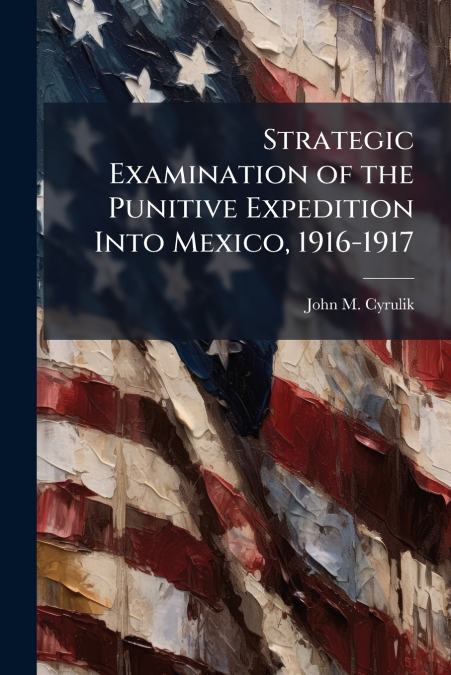
This thesis examines the strategy of the United States Army’s Punitive Expedition into Mexico following the raid on Columbus, New Mexico, by Francisco 'Pancho' Villa and his followers on 9 March 1916. In analyzing this topic, the thesis focuses on the roles and inter-relationship of the three men most responsible for the strategic direction of the campaign. President Woodrow Wilson, Secretary of War Newton Diehl Baker, and Chief of Staff of the Army Hugh Scott all played essential roles in the formation, conduct, and ultimate outcome of the expedition. This study analyzes the orders authorizing the expedition, and the limitations placed on the actions of the U.S. forces in Mexico by President Wilson and War Department officials. This study concludes that the Punitive Expedition, although largely an operational success, was a strategic miscalculation and the potential benefits of the operation did not outweigh the risks of triggering a general war with Mexico. A major war with Mexico was narrowly averted on two occasions by the actions of Major General Scott and the steadfast determination of President Wilson.This work has been selected by scholars as being culturally important, and is part of the knowledge base of civilization as we know it. This work was reproduced from the original artifact, and remains as true to the original work as possible. Therefore, you will see the original copyright references, library stamps (as most of these works have been housed in our most important libraries around the world), and other notations in the work.This work is in the public domain in the United States of America, and possibly other nations. Within the United States, you may freely copy and distribute this work, as no entity (individual or corporate) has a copyright on the body of the work.As a reproduction of a historical artifact, this work may contain missing or blurred pages, poor pictures, errant marks, etc. Scholars believe, and we concur, that this work is important enough to be preserved, reproduced, and made generally available to the public. We appreciate your support of the preservation process, and thank you for being an important part of keeping this knowledge alive and relevant.