Stem Cell Proliferation and Differentiation

Stem Cell Proliferation and Differentiation

Alan S. Perelson / Catherine Macken

67,07 €
IVA incluido
Disponible
Editorial:
Springer Nature B.V.
Año de edición:
1988
Materia
Zoología y ciencias animales
ISBN:
9783540501831
67,07 €
IVA incluido
Disponible

Selecciona una librería:

  • Librería Samer Atenea
  • Librería Aciertas (Toledo)
  • Kálamo Books
  • Librería Perelló (Valencia)
  • Librería Elías (Asturias)
  • Donde los libros
  • Librería Kolima (Madrid)
  • Librería Proteo (Málaga)

The body contains many cellular systems that require the continuous production of new, fully functional, differentiated cells to replace cells lacking or having limited self-renewal capabilities that die or are damaged during the lifetime of an individual. Such systems include the epidermis, the epithelial lining of the gut, and the blood. For example, erythrocytes (red blood cells) lack nuclei and thus are incapable of self-replication. They have a life span in the circulation of about 120 days. Mature granulocytes, which also lack proliferative capacity, have a much shorter life span - typically 12 hours, though this may be reduced to only two or three hours in times of serious tissue infection. Perhaps a more familiar example is the outermost layer of the skin. This layer is composed of fully mature, dead epidermal cells that must be replaced by the descendants of stem cells lodged in lower layers of the epidermis (cf. Alberts et al. , 1983). In total, to supply the normal steady-state demands of cells, an average human must produce approximately 3. 7 x 10¹¹ cells a day throughout life (Dexter and Spooncer, 1987). Common to each of these cellular systems is a primitive (undifferentiated) stem cell which replenishes cells through the production of offspring, some of which proliferate and gradually differentiate until mature, fully functional cells are produced.

Artículos relacionados

  • Animaltown
    Urban space constitutes a place where people and animals live together in close proximity with each other, creating changing landscapes of co-existence, conflict, mutual dependencies and exploitation. The medieval animals found in the articles of Animaltown: Beasts in Medieval Urban Space, appear in text and image, as well as archaeological find materials in the form of butcher...
    Disponible

    109,24 €

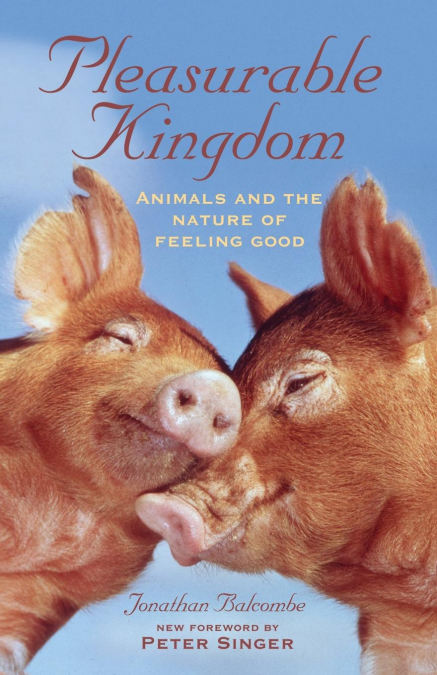
  • Pleasurable Kingdom
    Jonathan Balcombe
    Pleasurable Kingdom presents new evidence that animals--like humans--enjoy themselves. From birds to baboons, insects to iguanas, animals feel good thanks to play, sex, touch, food, anticipation, comfort, aesthetics, and more. Combining rigorous evidence, elegant argument and amusing anecdotes, leading animal behavior researcher Jonathan Balcombe shows that the possibility of p...
    Disponible

    18,96 €

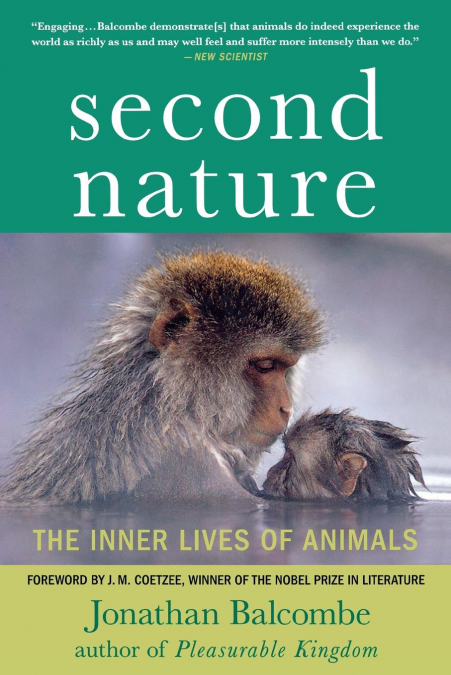
  • SECOND NATURE
    Jonathan Balcombe
    ...
    Disponible

    16,52 €

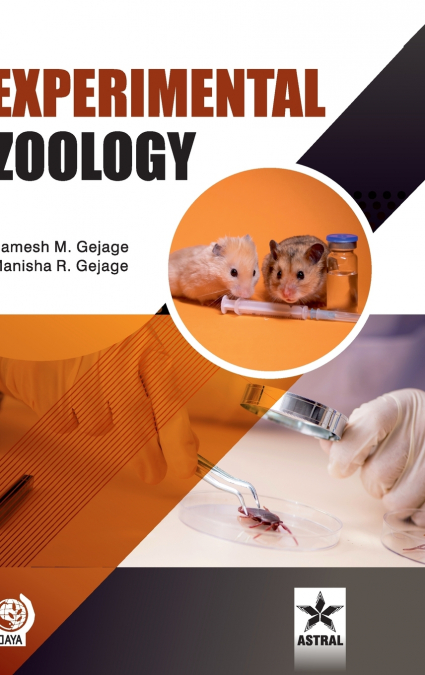
  • Experimental Zoology
    Manisha R Gejage / Ramesh M Gejage
    The goal of the book is to present the practical knowledge of Zoology. Animal diversity, venomous and non-venomous snakes, study of birds, brain of fowl and hyoid apparatus, sclerotic plates, pecten and collumella of fowl, scales of fishes, biochemical tests, activity of salivary amylase, estimation of total protein and lipid, DNA isolation and estimation of uric acid are given...
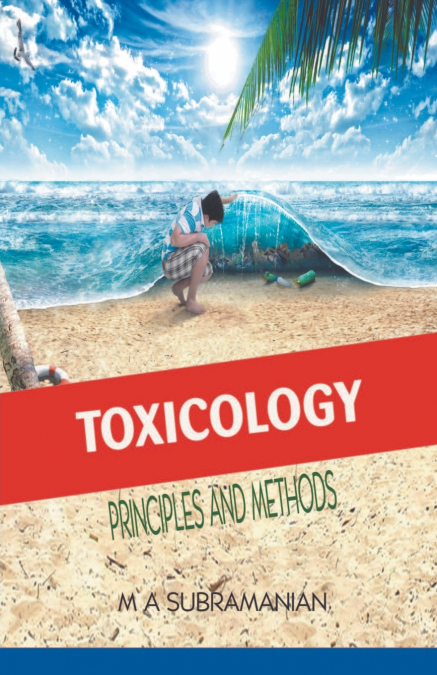
  • TOXICOLOGY
    M A SUBRAMANIAN
    In an era defined by burgeoning human populations, rampant industrialization, cutting-edge technological progress, and expanding urban landscapes, the integrity of our natural environment faces unprecedented challenges. The relentless march of progress has ushered in a flood of chemicals, seeping into the very fabric of our ecosystems and posing insidious threats to biological ...
    Disponible

    23,69 €

  • Leaders in Animal Behavior
    Donald Dewsbury / Lee Drickamer
    ...
    Disponible

    64,68 €

Otros libros del autor

  • Branching Processes Applied to Cell Surface Aggregation Phenomena
    Alan S. Perelson / Catherine Macken
    Aggregation processes are studied within a number of different fields--c- loid chemistry, atmospheric physics, astrophysics, polymer science, and biology, to name only a few. Aggregation pro ces ses involve monomer units (e. g. , biological cells, liquid or colloidal droplets, latex beads, molecules, or even stars) that join together to form polymers ...
    Disponible

    67,52 €