
Sophist

Sophist

Plato

16,50 €
IVA incluido
Disponible
Editorial:
Brian Westland
Año de edición:
2023
Materia
Filosofía occidental: antigua, hasta c. 500
ISBN:
9781774419946
16,50 €
IVA incluido
Disponible

Selecciona una librería:

  • Librería Desdémona
  • Librería Samer Atenea
  • Librería Aciertas (Toledo)
  • Kálamo Books
  • Librería Perelló (Valencia)
  • Librería Elías (Asturias)
  • Donde los libros
  • Librería Kolima (Madrid)
  • Librería Proteo (Málaga)

Sophist is a Platonic dialogue from the philosopher’s late period, most likely written in 360 BC. In it the interlocutors, led by Eleatic Stranger employ the method of division in order to classify and define the sophist and describe his essential attributes and differentia vis a vis the philosopher and statesman. Like its sequel, the Statesman, the dialogue is unusual in that Socrates is present but plays only a minor role. Instead, the Eleatic Stranger takes the lead in the discussion. Because Socrates is silent, it is difficult to attribute the views put forward by the Eleatic Stranger to Plato, beyond the difficulty inherent in taking any character to be an author’s 'mouthpiece'.The main objective of the dialogue is to identify what a sophist is and how a sophist differs from a philosopher and statesman. Because each seems distinguished by a particular form of knowledge, the dialogue continues some of the lines of inquiry pursued in the epistemological dialogue, Theaetetus, which is said to have taken place the day before. Because the Sophist treats these matters, it is often taken to shed light on Plato’s Theory of Forms and is compared with the Parmenides, which criticized what is often taken to be the theory of forms.In Cratylus, contemporary or slightly preceding the Republic, Plato poses the problem, decisive for the use of dialectics for cognitive purposes, of the relationship between name and thing, between word and reality. Thus the ’Sophist’ has its major background in the Cratylus. This dialogue is resolved in a contrast between the thesis of Hermogenes, who considers the name a simple sequence of sounds conventionally chosen to refer to an object, and the thesis of Cratylus, a pupil of the old Heraclitus, who supported the full expression of the essence of the 'nominatum' in the name, and who considered the names as expressions forged by an Onomaturge, capable of expressing the essence of the thing named. Following this research, all the ’Sophist’ is dedicated to find the right definition of the name 'sophist'.
Artículos relacionados

  • The Nature of Things
    Lucretius Lucretius
    De rerum natura (On the Nature of Things) is a 1st century BC didactic poem by the Roman poet and philosopher Lucretius with the goal of explaining Epicurean philosophy to a Roman audience. Lucretius presents the principles of atomism; the nature of the mind and soul; explanations of sensation and thought; the development of the world and its phenomena; and explains a variety o...
    Disponible

    36,76 €

  • Pompeii
    Fergus Mason
    Pompeii was one of most advanced cities of its time; it had a complex water system, gymnasium, and an amphitheater. Despite it's advancements, there was one thing it wasn't ready for: Mount Vesuvius—the volcano that led to its ultimate doom.  The 79 AD eruption of Mount Vesuvius was one of the worst disasters in all of European history. In a near instant, over 15,000 p...
    Disponible

    10,36 €

  • Middle Platonism and Neoplatonism, Volume 1
    Stephen Gersh
    'It is generally agreed that those types of philosophy that are loosely called ’Platonic’ and ’Neoplatonic’ played a crucial role in the history of European culture during the centuries between antiquity and the Renaissance. However, until now no scholar has attempted to describe the evolution of these forms of thought in a single comprehensive academic study.' So writes Stephe...
    Disponible

    179,17 €

  • العرض المتحفى للاثار العضوية فى ظل التغيرات المناخية
    شعبان محمد محم الامير / وائل جمال حسام الدين
    تعتبرالمقتنيات الاثرية العضوية داخل المتاحف اكثر عرضة لتاثيرالتغيرات المناخية او ما يعرف بالعوامل المناخية المختلفة والتى بدورها تؤدى الى تلف تلك الاثار العضوية مما يدفعنا فى هذ البحث الى دراسة هذة العوامل وكيفية قياسها وطرق التحكم فى العوامل المناخية المختلفة وكيفية تكييفها لكى تناسب صيانة المقتنى العضوى على المدى الطويل أكثر منها على المدى القصير حفاظا على تلك المقتنيات الاثر...
  • Middle Platonism and Neoplatonism, Volume 2
    Stephen Gersh
    It is generally agreed that those types of philosophy that are loosely called 'Platonic' and 'Neoplatonic' played a crucial role in the history of European culture during the centuries between antiquity and the Middle Ages. However, until now no scholar has attempted to describe the evolution of these forms of thought in a single comprehensive academic study. Middle Platonism a...
    Disponible

    215,18 €

  • Porphyry’s Commentary on Ptolemy’s Harmonics
    Andrew Barker
    ...
    Disponible

    77,17 €

Otros libros del autor

  • Large Print - Five Dialogues - Grand Type Collector’s Edition - Matte Hardcover with Dust Jacket
    Plato
    Experience timeless classics like never before in this Grand Type Collector’s EditionWith clear, easy-to-read formatting, this edition is designed for readers who prefer or require larger text without sacrificing the excitement of the original.Large Print Features:18-point font: Generously sized text for maximum readability and comfort.Sans-serif font: Clean, modern typeface de...
    Disponible

    65,70 €

  • The Republic
    Plato
    The Republic by Plato is one of the most influential works in Western philosophy, a profound dialogue that explores justice, the ideal state, and the nature of the human soul. Written around 380 BCE, the text presents Socrates in conversation with various interlocutors as they examine the meaning of justice and envision a perfectly just society governed by philosopher-kings. Th...
    Disponible

    41,44 €

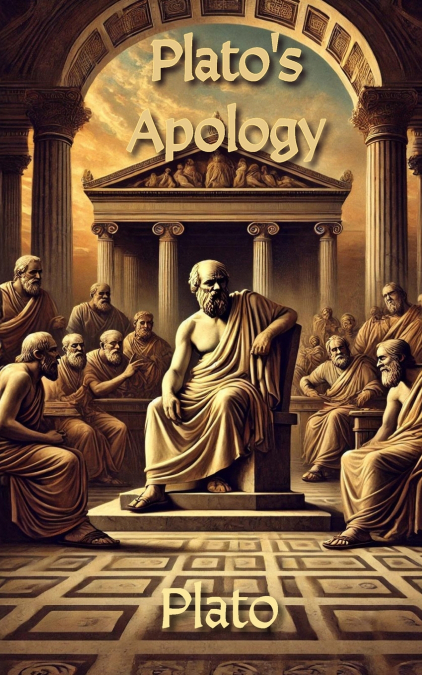
  • Plato’s Apology
    Plato
    Plato’s Apology - A Riveting Defense of Philosophy and the Pursuit of TruthStep into the courtroom of ancient Athens and witness a moment that forever shaped the course of Western thought. Plato’s 'Apology' is not an apology in the modern sense but a powerful and eloquent defense of philosophy, virtue, and the examined life, as spoken by Socrates himself.In this timeless dialog...
    Disponible

    13,22 €

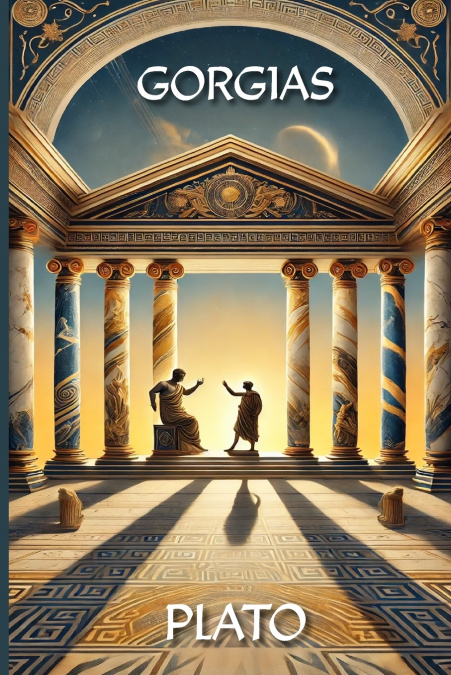
  • Gorgias
    Plato
    A Timeless Debate on Power, Justice, and the Pursuit of TruthPlato’s Gorgias is a masterful exploration of rhetoric, morality, and the essence of a just life. Through a dynamic dialogue led by Socrates, this philosophical classic dives into the art of persuasion and its role in politics and society.As Socrates engages with the influential sophist Gorgias and others, readers are...
    Disponible

    22,18 €

  • Phaedrus
    Plato
    The Phaedrus,written by Plato, is a dialogue between Plato’s protagonist, Socrates, and Phaedrus, an interlocutor in several dialogues. The Phaedrus was presumably composed around 370 BCE, about the same time as Plato’s Republic and Symposium. Although ostensibly about the topic of love, the discussion in the dialogue revolves around the art of rhetoric and how it should be pra...
    Disponible

    14,42 €

  • Euthydemus
    Plato
    Euthydemus presents a discussion that questions the nature of wisdom, learning, and personal development. The work unfolds through a lively exchange in which two speakers use clever arguments designed to confuse rather than enlighten. A returning figure describes an encounter with these skillful debaters, who claim to possess the ability to teach virtue quickly and effortlessly...
    Disponible

    10,68 €