Inicio > Artes > Arquitectura > Solving the Dynamic Complexity Dilemma
Solving the Dynamic Complexity Dilemma

Solving the Dynamic Complexity Dilemma

Maurice J. Perks / Nabil Abu el Ata

99,43 €
IVA incluido
Disponible
Editorial:
Springer Nature B.V.
Año de edición:
2016
Materia
Arquitectura
ISBN:
9783662514948
99,43 €
IVA incluido
Disponible

Selecciona una librería:

  • Librería Samer Atenea
  • Librería Aciertas (Toledo)
  • Kálamo Books
  • Librería Perelló (Valencia)
  • Librería Elías (Asturias)
  • Donde los libros
  • Librería Kolima (Madrid)
  • Librería Proteo (Málaga)

Dynamic complexity results from hidden, un­known factors-or more precisely, interactions between factors-that can unexpectedly im­pact the perfor­mance of systems. When the influences of dynamic complexity are not meas­ured and understood, new never-seen-before behaviors can come as unwelcomed surprises, which disrupt the performance of systems. Left alone, processes that were once prized for their effi­ciency unexpectedly begin to degrade-costs increase, while volumes and quality decline. Evidence of problems may come too late for effective resolution as technology advance­ments induce rapid change and compress the time available to react to that change. The results of dynamic complexity are always negative and unmanaged dynamic complexity can bring business or global systems to the point of sudden chaos. The 2009 H1N1 pandemic, 2008 Credit Crunch and 2011 Fukushima Daiichi nuclear disaster are global examples of the dangers of undiagnosed dynamic complexity.With increasing frequency executive leaders today are discovering that their business and IT system performance levels are not meeting expectations. In most cases these performance deficiencies are caused by dynamic complexity, which lies hidden like a cancer until the symptoms reveal themselves-often when it is too late to avoid negative impacts on business outcomes. This book examines the growing business problem of dynamic complexity and presents a path to a practical solution. To achieve better predictability, organizations must be able to expose new, dangerous patterns of behavior in time to take corrective actions and know which actions will yield the optimal results. The book authors promote new methods of risk management that use data collection, analytics, machine learning and automation processes to help organizations more accurately predict the future and take strategic actions to improve performance outcomes. The presented means of achieving this goal are based upon the authors’ practical experiences, backed by scientific principles, and results achieved through consulting engagements with over 350 global organizations.
Artículos relacionados

  • Selected Papers from Building A Better New Zealand (BBNZ 2014) Conference
    This Special Issue includes expanded academic papers selected from the forthcoming BBNZ 2014 Conference.The 2014 Building a Better New Zealand conference was held at The Rendezvous Hotel, Auckland, from 3 September 2014 to 5 September 2014.Themes:•Achieving Better Buildings•Improving the Performance of Materials•Improving the performance of existing buildings•Sustainability•Pro...
  • An Architect’s Guide to Construction
    Brian Palmquist
    After more than 35 years 'in the trenches' as an architect, specialist consultant and now quality director for a large North American construction company, Brian Palmquist has written An Architect’s Guide to Construction in order to share a balanced wealth of knowledge and experience about the construction phase of building projects.Considering both the consultant and contracto...
    Disponible

    19,68 €

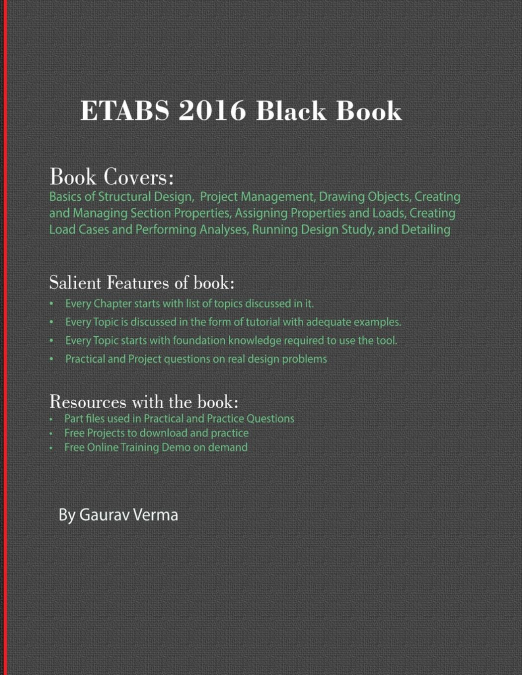
  • ETABS 2016 Black Book
    Gaurav Verma
    The ETABS 2016 Black Book, is written to help beginners learn the basics of ETABS structure modeling and analysis. The book follows a step by step methodology. This book explains the designing of structure, assigning various properties to structure, applying different load conditions, and performing analyses. This book also covers the basics of detailing in ETABS. The book cove...
    Disponible

    66,22 €

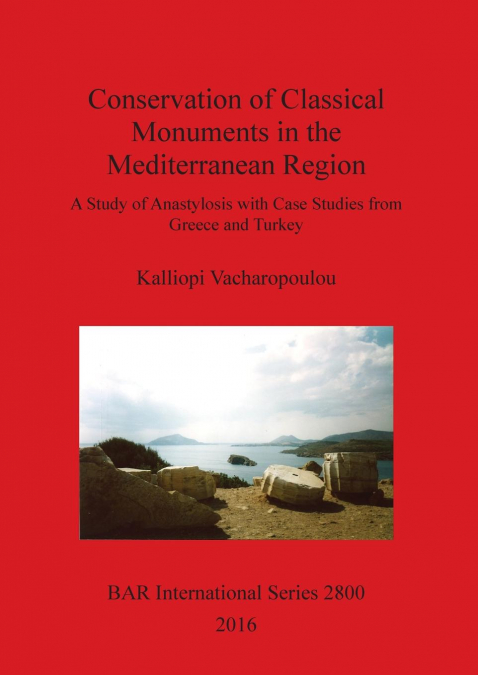
  • Conservation of Classical Monuments in the Mediterranean Region
    Kalliopi Vacharopoulou
    This work studies the conservation of classical monuments in the Mediterranean region. It focuses on a specific method, anastylosis, and its application to classical monuments. The terminology, philosophy, theoretical principles and technical issues of anastylosis are explored within the wider context of cultural heritage management, through case studies from Greece and Turkey,...
    Disponible

    128,17 €

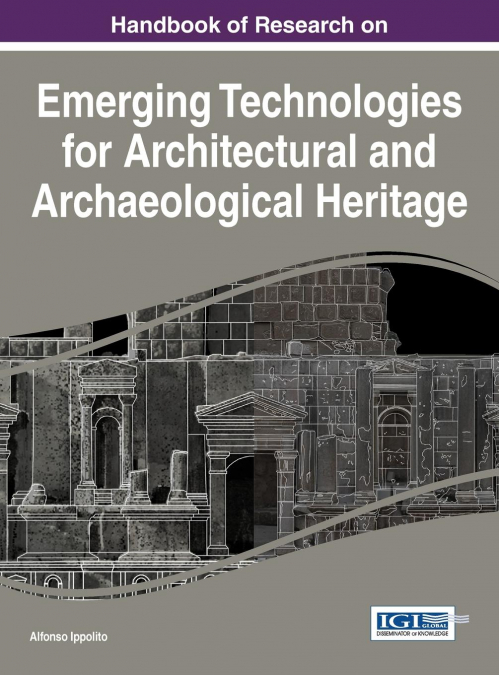
  • Handbook of Research on Emerging Technologies for Architectural and Archaeological Heritage
    Alfonso Ippolito
    Cultural heritage is a vital, multifaceted component of modern society. To better protect and promote the integrity of a culture, certain technologies have become essential tools. The Handbook of Research on Emerging Technologies for Architectural and Archaeological Heritage is an authoritative reference source for the latest scholarly research on the use of technological assis...
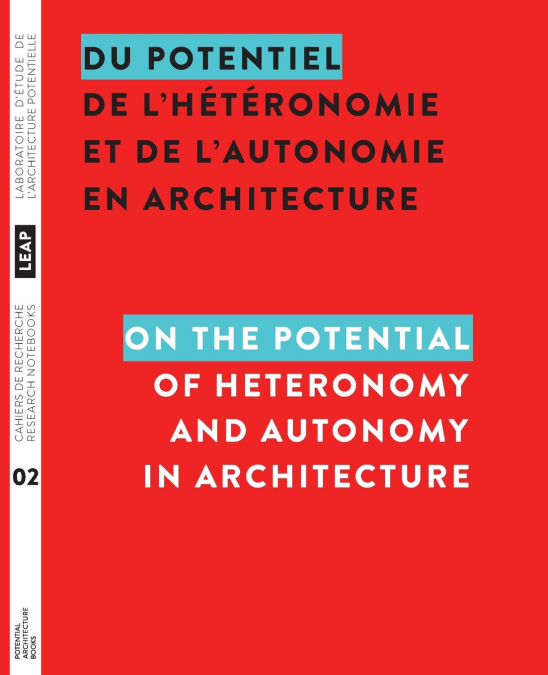
  • Du potentiel de l’hétéronomie et de l’autonomie en architecture / On the Potential of Heteronomy and Autonomy in Architecture
    Cette deuxième édition des Cahiers du Laboratoire d’Étude de l’Architecture Potentielle propose une réflexion sur l’un des problèmes centraux du Mouvement moderne et de la critique postmoderne : la tension entre l’hétéronomie et l’autonomie en architecture.Abordé à l’aide d’un texte peu connu de Stanford Anderson, le thème invitait chacun, chacune à penser l’architecture entre ...
    Disponible

    32,66 €