 Librería Samer Atenea
 Kálamo Books
 Librería Elías (Asturias)
 Librería Kolima (Madrid)
 Librería Proteo (Málaga)
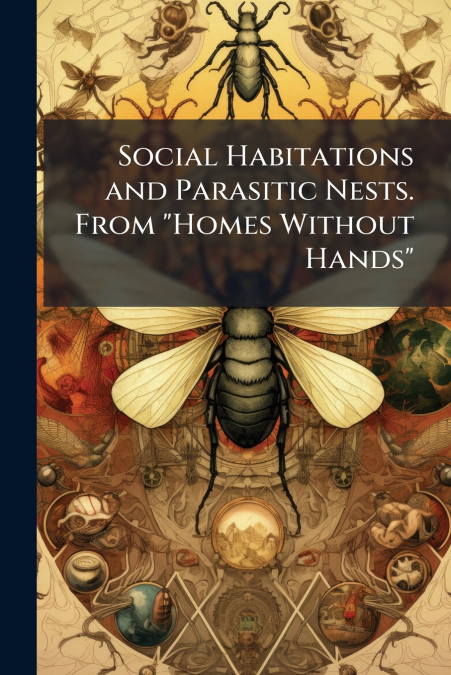
Explore the fascinating world of insect societies and parasitic relationships in 'Social Habitations and Parasitic Nests,' extracted from the classic work 'Homes Without Hands.' This detailed study, originally published in 1893, delves into the intricate structures and behaviors of various insect communities, highlighting the ingenious ways different species build their homes and interact with one another. The book provides rich descriptions of social insects, their complex social structures, and the diverse methods they employ for survival and propagation. Special attention is given to those species that engage in parasitic behaviors, invading and exploiting the nests of others. Discover the amazing adaptations and evolutionary strategies that define these creatures’ lives, offering a timeless glimpse into the wonders of the natural world and animal behavior. This work has been selected by scholars as being culturally important, and is part of the knowledge base of civilization as we know it. This work was reproduced from the original artifact, and remains as true to the original work as possible. Therefore, you will see the original copyright references, library stamps (as most of these works have been housed in our most important libraries around the world), and other notations in the work.This work is in the public domain in the United States of America, and possibly other nations. Within the United States, you may freely copy and distribute this work, as no entity (individual or corporate) has a copyright on the body of the work.As a reproduction of a historical artifact, this work may contain missing or blurred pages, poor pictures, errant marks, etc. Scholars believe, and we concur, that this work is important enough to be preserved, reproduced, and made generally available to the public. We appreciate your support of the preservation process, and thank you for being an important part of keeping this knowledge alive and relevant.