
Simplicius

Simplicius

Barrie Fleet

206,59 €
IVA incluido
Consulta disponibilidad
Editorial:
Bloomsbury Publishing plc
Año de edición:
2002
Materia
Filosofía occidental: antigua, hasta c. 500
ISBN:
9780715630389

Selecciona una librería:

  • Librería Samer Atenea
  • Librería Aciertas (Toledo)
  • Kálamo Books
  • Librería Perelló (Valencia)
  • Librería Elías (Asturias)
  • Donde los libros
  • Librería Kolima (Madrid)
  • Librería Proteo (Málaga)

In Categories chapters 7 and 8 Aristotle considers his third and fourth categories - those of Relative and Quality. Critics of Aristotle had suggested for each of the non-substance categories that they could really be reduced to relatives, so it is important how the category of Relative is defined. Aristotle offers two definitions, and the second, stricter, one is often cited by his defenders in order to rule out objections. The second definition of relative involves the idea of something changing its relationship through a change undergone by its correlate, not by itself. There were disagreements as to whether this was genuine change, and Plotinus discussed whether relatives exist only in the mind, without being real. The terms used by Aristotle for such relationships was ’being disposed relatively to something’, a term later borrowed by the Stoics for their fourth category, and perhaps originating in Plato’s Academy. In his discussion of Quality, Aristotle reports a debate on whether justice admits of degrees, or whether only the possession of justice does so. Simplicius reports the further development of this controversy in terms of whether justice admits a range or latitude (platos). This debate helped to inspire the medieval idea of latitude of forms, which goes back much further than is commonly recognised - at least to Plato and Aristotle.

Artículos relacionados

  • The Nature of Things
    Lucretius Lucretius
    De rerum natura (On the Nature of Things) is a 1st century BC didactic poem by the Roman poet and philosopher Lucretius with the goal of explaining Epicurean philosophy to a Roman audience. Lucretius presents the principles of atomism; the nature of the mind and soul; explanations of sensation and thought; the development of the world and its phenomena; and explains a variety o...
  • Pompeii
    Fergus Mason
    Pompeii was one of most advanced cities of its time; it had a complex water system, gymnasium, and an amphitheater. Despite it's advancements, there was one thing it wasn't ready for: Mount Vesuvius—the volcano that led to its ultimate doom.  The 79 AD eruption of Mount Vesuvius was one of the worst disasters in all of European history. In a near instant, over 15,000 p...
    Disponible

    10,36 €

  • Middle Platonism and Neoplatonism, Volume 1
    Stephen Gersh
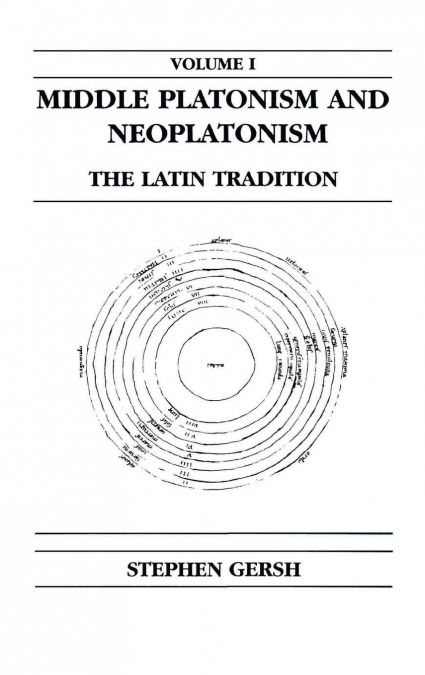
    'It is generally agreed that those types of philosophy that are loosely called ’Platonic’ and ’Neoplatonic’ played a crucial role in the history of European culture during the centuries between antiquity and the Renaissance. However, until now no scholar has attempted to describe the evolution of these forms of thought in a single comprehensive academic study.' So writes Stephe...
  • Middle Platonism and Neoplatonism, Volume 2
    Stephen Gersh
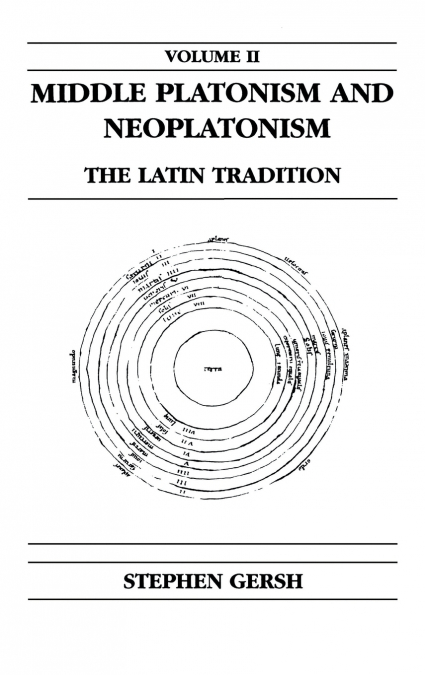
    It is generally agreed that those types of philosophy that are loosely called 'Platonic' and 'Neoplatonic' played a crucial role in the history of European culture during the centuries between antiquity and the Middle Ages. However, until now no scholar has attempted to describe the evolution of these forms of thought in a single comprehensive academic study. Middle Platonism a...
  • Porphyry’s Commentary on Ptolemy’s Harmonics
    Andrew Barker
    ...
    Disponible

    77,17 €

  • The Roots of Platonism
    John Dillon
    ...
    Disponible

    25,29 €

Otros libros del autor

  • Simplicius
    Barrie Fleet
    In Categories chapters 7 and 8 Aristotle considers his third and fourth categories - those of Relative and Quality. Critics of Aristotle had suggested for each of the non-substance categories that they could really be reduced to relatives, so it is important how the category of Relative is defined. Aristotle offers two definitions, and the second, stricter, one is often cited b...
    Disponible

    66,78 €

  • Simplicius
    Barrie Fleet
    Book 2 of the Physics is arguably the best introduction to Aristotle’s ideas, as well as being the most interesting and representative book in the whole of his corpus. It defines nature and distinguishes natural science from mathematics. It introduces the seminal idea of four causes, or four modes of explanation. It defines chance, but rejects a theory of chance and natural se...
    Disponible

    66,85 €

  • Simplicius
    Barrie Fleet
    Book 2 of the Physics is arguably the best introduction to Aristotle’s ideas, as well as being the most interesting and representative book in the whole of his corpus. It defines nature and distinguishes natural science from mathematics. It introduces the seminal idea of four causes, or four modes of explanation. It defines chance, but rejects a theory of chance and natural se...