 Librería Samer Atenea
 Kálamo Books
 Librería Elías (Asturias)
 Librería Kolima (Madrid)
 Librería Proteo (Málaga)
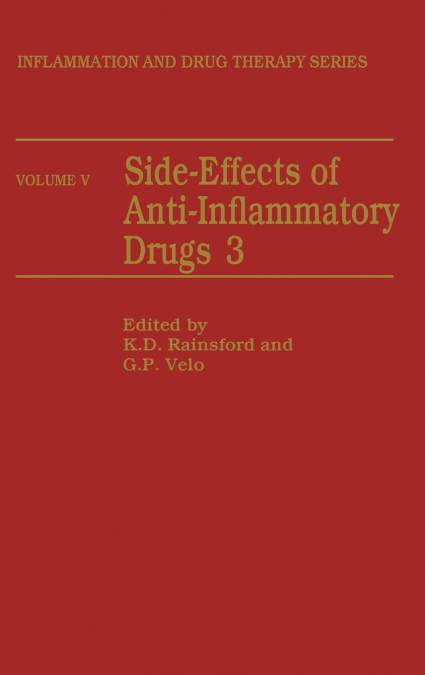
Section I: Epidemiology.- 1 The gastrointestinal toxicity of the non-steroidal anti-inflammatory drugs.- 2 The value of the case-control approach for the evaluation of the risk of upper gastrointestinal bleeding associated with the previous use of non-steroidal anti-inflammatory drugs.- 3 Liver toxicity of antipyretic drugs in conjunction with measles infections.- 4 Non-steroidal anti-inflammatory drugs and hypersensitivity reactions.- 5 What can a spontaneous reporting system teach about side-effects of anti-inflammatory drugs?.- 6 Adverse reactions to NSAIDs: consecutive evaluation of 30 000 patients in rheumatology.- Section II: Gastrointestinal Tract: Clinical Aspects.- 7 The evaluation of acute gastrointestinal toxicity of NSAIDs in phase I clinical trials: a critical appraisal.- 8 The ulcerogenic and anti-haemostatic effects of NSAIDs in the gut.- 9 What role does Helicobacter pylori infection play in NSAID-associated gastric inflammation?.- 10 Endoscopic evaluation of NSAID ulceration.- 11 Food antigen absorption in rheumatoid arthritis: effect of acetylsalicylic acid.- 12 Intestinal mucosal permeability in inflammatory rheumatic diseases.- 13 Comparison of effects on gastrointestinal blood loss and gastric mucosal appearance of piroxicam-?-cyclodextrin, piroxicam and placebo.- Section III: Gastrointestinal Tract: Prevention Of Adverse Effects.- 14 Mechanisms of gastrointestinal ulceration from non-steroidal anti-inflammatory drugs: a basis for use and development of protective agents.- 15 Novel strategies of gastric and duodenal mucosal protection against NSAID injury: role of protease inhibitors, muscle relaxants and growth factors.- 16 The role of misoprostol in preventing NSAID-induced damage to the gastrointestinal tract.- 17 Possible factors involved in the protective effects of interleukin-1 in aspirin- and indomethacin-induced gastric damage.- 18 Prevention and treatment of NSAID-gastroduodenal damage: the role of H2-receptor antagonists.- 19 Omeprazole in the prevention and therapy of gastroduodenal lesions on NSAID therapy.- 20 Sucralfate in the prevention of NSAID-induced gastric ulceration.- 21 Ketotifen - a novel approach to the prevention of damage in the gastrointestinal tract.- Section IV: Hepatotoxicity.- 22 The hepatotoxicity of non-steroidal anti-inflammatory drugs.- 23 Paracetamol (acetaminophen) bioactivation by liver microsomes - its role in hepatotoxicity.- 24 Increased liver toxicity of diclofenac by paracetamol: results and possible mechanisms.- 25 Effects of NSAIDs on liver microsomal mono-oxygenase system and products of oxidative metabolism of arachidonic acid.- 26 Hepatitis due to non-steroidal anti-inflammatory drugs (NSAIDs).- Section V: Nephrotoxicity.- 27 Current status of nephrotoxicity caused by non-steroidal anti-inflammatory drugs.- 28 Are oral prostaglandins effective in preventing nephrotoxicity from NSAIDs and cyclosporin?.- Section VI: Specific Issues Related To Side-Effects.- 29 Aspirin and Reye’s syndrome.- 30 Antirheumatic drug therapy in the elderly.- 31 NSAIDs and human cartilage metabolism.- 32 Non-steroidal anti-inflammatory drugs and the augmented lipoxygenase pathway: conceivable impact on joint conditions.- 33 Therapeutic potential of 5-lipoxygenase inhibitors: the discovery and development of MK-886, a novelmechanism leukotriene inhibitor.- 34 Mechanisms of rash formation and related skin conditions induced by non-steroidal anti-inflammatory drugs.- Section VII: Antirheumatic And Immunoregulatory Agents.- 35 Cyclosporin: clinical efficacy and toxicity in patients with rheumatoid arthritis.- 36 Risk factors and risk-benefit problems in the use of DMARDs.- 37 Gold toxicity: chemical, structural, biological and clinical experimental issues.- Section VIII: Extended Poster Presentations.- 38 A review of interaction studies between non-steroidal anti-inflammatory drugs and HTreceptor antagonists or prostaglandin analogues.- 39 Influence of different anti-inflammatory subs...