
Sex Determination in Fish

Sex Determination in Fish

T. J. Pandian

389,54 €
IVA incluido
Disponible
Editorial:
Taylor & Francis Ltd
Año de edición:
2011
Materia
Biologia, ciencias de la vida
ISBN:
9781578087488
389,54 €
IVA incluido
Disponible

Selecciona una librería:

  • Librería Samer Atenea
  • Librería Aciertas (Toledo)
  • Kálamo Books
  • Librería Perelló (Valencia)
  • Librería Elías (Asturias)
  • Donde los libros
  • Librería Kolima (Madrid)
  • Librería Proteo (Málaga)

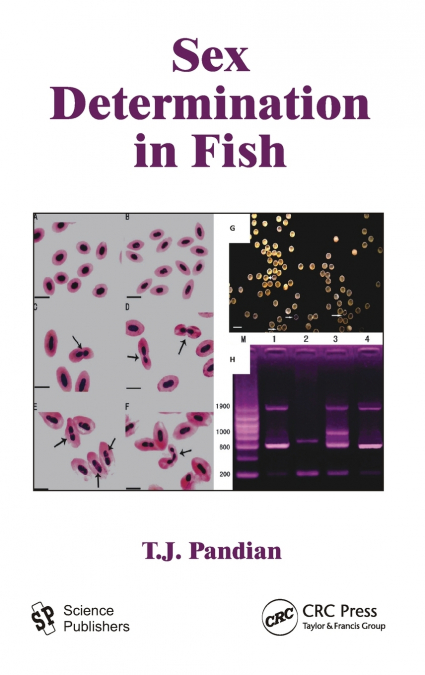
This book is the first to report that research in allogenics/xenogenics has conclusively shown that fishes have retained bisexual potency even after sexual maturity and spermiation. The XY genotype found in the unexpected female phenotypes sired by supermales (Y1Y2) and androgenic males (Y2Y2) points out the need to employ sex specific molecular markers to identify the true genotype of a juvenile, which matures either as a male or female, depending upon the sex of its pair (female or male) and thereby critically assessing the environmental role in sex determination. This book is meant to assist molecular biologists in the search of sex determining gene(s), fishery biologists endeavouring to develop techniques for profitable monosex aquaculture and ecologists interested in conservation of fishes and their genomes.


Artículos relacionados

  • Viral Replication Complexes
    Viruses are obligate intracellular parasites that need to co-opt a living cell’s machinery for replication. At the heart of the viral replication machinery are the nucleic acid polymerases, which are responsible for efficiently copying the viral genome. This process must often be coordinated with other viral processes, including protein translation and viral packaging. The poly...
    Disponible

    99,07 €

  • Advances in Flavivirus Research
    The flaviviruses are composed almost entirely of arthropod-borne viruses, a subset of which are responsible for millions of cases of human disease each year. Among these viruses are dengue virus—a scourge throughout the tropical regions of Asia and the Americas; yellow fever virus—the “original” hemorrhagic fever virus; and the recently emerged Zika virus. While the flaviviruse...
    Disponible

    51,85 €

  • Brain Asymmetry of Structure and/or Function
    Lesley J. Rogers / Lesley JRogers
    This edited book brings together research reports on the asymmetry of brain function in various species, including humans, dogs, birds, lizards and bees. As shown in a wide range of species, and, as we now know, not solely in humans, the left and right sides of the brain process information in different ways and control different responses or patterns of behaviour. Since this d...
    Disponible

    51,71 €

  • Fungal Pigments
    With the impact of globalization in research trends, the search for healthier life styles, the increasing public demand for natural, organic, and ‘clean labelled’ products, as well as the growing global market for natural colorants in economically fast-growing countries all over the world, filamentous fungi started to be investigated as readily available sources of chemically d...
    Disponible

    43,80 €

  • The Epithelialto- Mesenchymal Transition ( EMT ) in Cancer
    Joëlle Roche
    The epithelial-to-mesenchymal transition (EMT) is a highly dynamic process with multiple transitional states, by which epithelial cells can convert into a mesenchymal phenotype. This process involves loss of cellular adhesion and cellular polarity, and an improvement in migratory and invasive properties. It occurs during normal embryonic development, tissue regeneration, organ ...
    Disponible

    67,86 €

  • The Biology and Treatment of Myeloid Leukaemias
    There has been an observed decrease in the global mortality from cancer, mostly atributable to improved, particularly early, detection and prevention. For many carcinomas and leukaemias in adults, once the disease has reached a certain stage there are no therapies that are able to erradicate the cancer cells and cure patients. There has been progress in the treatment of acute m...
    Disponible

    51,85 €

Otros libros del autor

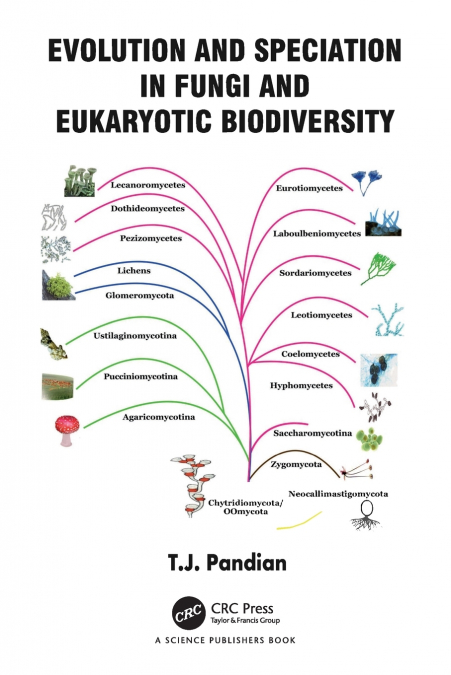
  • Evolution and Speciation in Fungi and Eukaryotic Biodiversity
    T. J. Pandian
    Being sessiles like autotrophic plants and heterotrophics as animals, fungi are fascinating eukaryotes. In them, the need for external digestion has demanded surface expansion and limited tissues to < eight types. To reproduce, 96% fungi engage spores. ...
    Disponible

    94,38 €

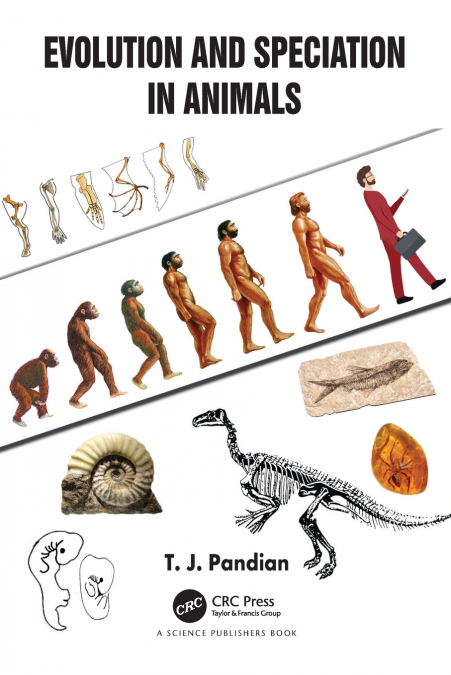
  • Evolution and Speciation in Animals
    T. J. Pandian
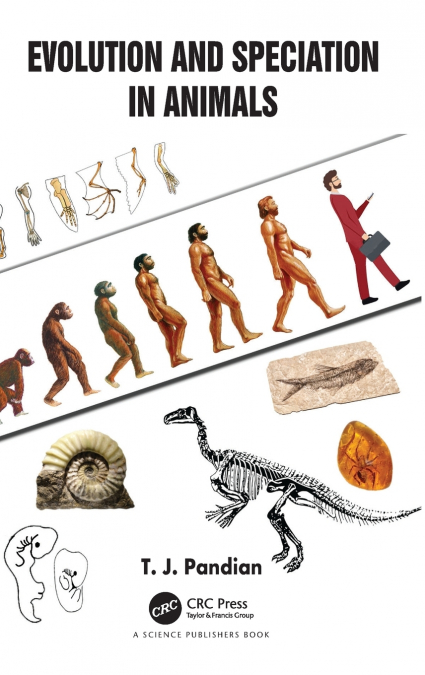
    The relatively more motile major phyletics have evolved more toward species diversity, while the relatively low motile or sessile minor phyletics have gone for more phylum diversity. Interestingly, the non-motile plants and microbes have also moved toward strain/racial diversity within a species rather than species diversity. ...
    Disponible

    120,13 €

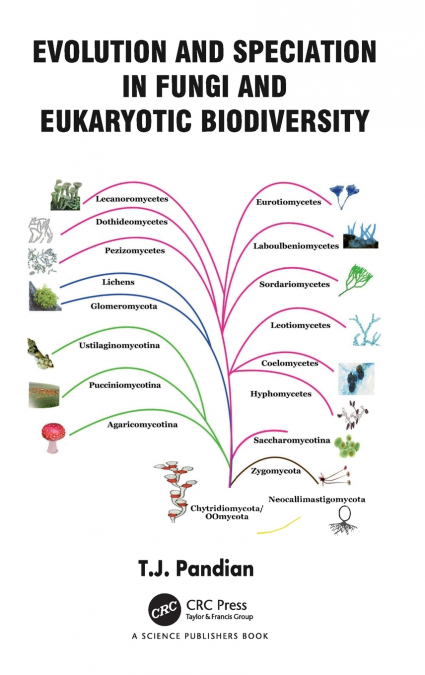
  • Evolution and Speciation in Fungi and Eukaryotic Biodiversity
    T. J. Pandian
    Being sessiles like autotrophic plants and heterotrophics as animals, fungi are fascinating eukaryotes. In them, the need for external digestion has demanded surface expansion and limited tissues to < eight types. To reproduce, 96% fungi engage spores. ...
    Disponible

    256,70 €

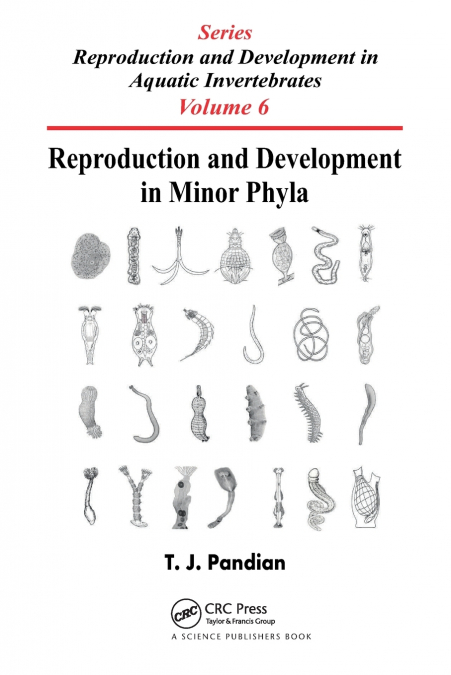
  • Reproduction and Development in Minor Phyla
    T. J. Pandian
    This book brings to light for the first time many interesting features in 25 minor phyletic invertebrates without being constrained by phylogenetic considerations. Relation between coelom type and regeneration is elaborated. ...
    Disponible

    90,50 €

  • Reproduction and Development in Platyhelminthes
    T. J. Pandian
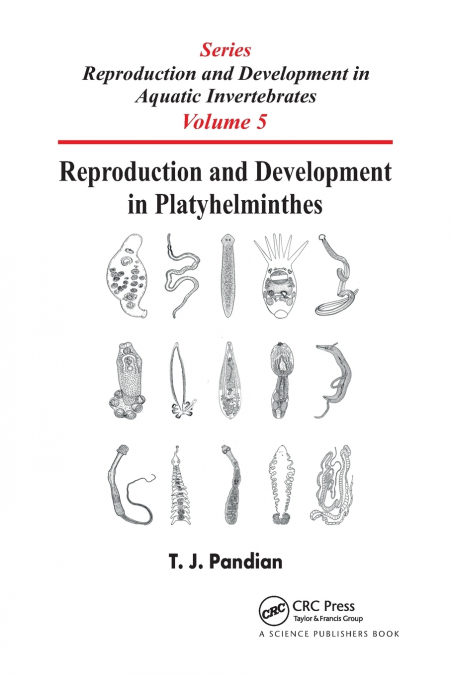
    This book provides a comprehensive synthesis of all aspects of Reproduction and Development in Platyhelminths covering from Acoela in Turbellaria to Taenioidea in Cestoda. It elaborates the life cycle and characteristics of different platyhelminthic taxa. ...
    Disponible

    90,50 €

  • Evolution and Speciation in Animals
    T. J. Pandian
    The relatively more motile major phyletics have evolved more toward species diversity, while the relatively low motile or sessile minor phyletics have gone for more phylum diversity. Interestingly, the non-motile plants and microbes have also moved toward strain/racial diversity within a species rather than species diversity. ...
    Disponible

    301,38 €