 Librería Samer Atenea
 Kálamo Books
 Librería Elías (Asturias)
 Librería Kolima (Madrid)
 Librería Proteo (Málaga)
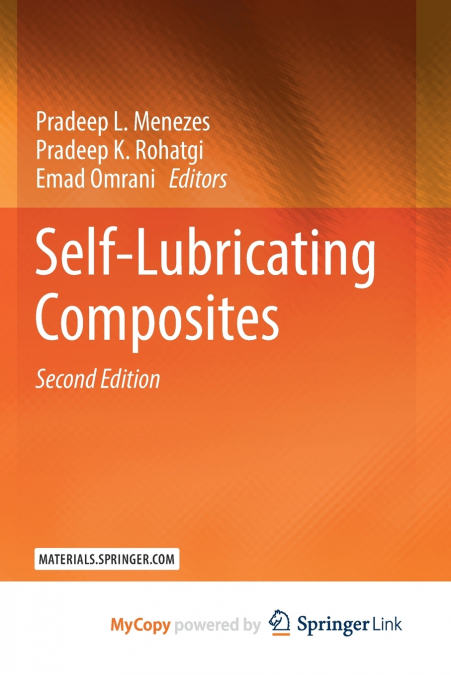
In most tribological applications, liquid or grease based lubricants are used to facilitate the relative motion of solid bodies to minimize friction and wear between interacting surfaces. The challenges for liquid lubricants arise in extreme environmental conditions, such as very high or low temperatures, vacuum, radiation, and extreme contact pressure. At these conditions, solid lubricants may be the alternative choice which can help to decrease friction and wear without incorporating liquid lubricants. Challenges with solid lubricants are to maintain a continuous supply of solid lubricants on the contact surfaces to act as lubricous layer between two sliding surfaces. Such a continuous supply is more easily maintained in the case of liquid lubricants when compared to solid lubricants. The most innovative development to ensure a continuous supply of solid lubricant to the contact surface during sliding is to introduce solid lubricant as reinforcement into the matrix of one of the sliding components. Composite materials are engineered or naturally occurring materials which contain two or more distinct constituents with significantly different chemical, physical and mechanical properties. Composites consist of reinforcement and matrix (metal, polymer and ceramics). Among various reinforcements, recent emerging material, solid lubricant, is found to have many favorable attributes such as good lubrication property. Self‐lubrication is the ability of a material to provide lubrication to the contact surface to decrease friction and wear rate in the absence of an external lubricant by transferring embedded solid lubricants in the composite to the interface. Self-lubricating composites (SLCs) are an important category of engineering materials that are increasingly replacing a number of conventional materials in the automotive, aerospace, and marine industries due to superior tribological properties. In SLCs, solid lubricant materials, including carbonous materials, molybdenum disulfide (MoS2), and hexagonal boron nitride (h-BN) are embedded into the matrices as reinforcements to manufacture a novel material with attractive self-lubricating properties. Several studies have been investigated the tribological properties of self-lubricating materials. This book fills that gap to have a reference book about self-lubricating materials and their properties to help scientists, engineers, and industries. This book discusses mechanisms of self-lubricating materials, self-lubricating properties and the applications for industries. The chapters will be written by authoritative expertise in the field. Additionally, this book will demonstrate fundamental study and most advanced innovations in self-lubricating materials as regards to friction and wear. The chapters also include tribological properties of composites and coatings and some practical applications of self-lubricating materials.