
Self-Determination and Secession

Self-Determination and Secession

Natalija Shikova

47,86 €
IVA incluido
Disponible
Editorial:
Springer Nature B.V.
Año de edición:
2023
Materia
Delito y criminología
ISBN:
9783031343230
47,86 €
IVA incluido
Disponible

Selecciona una librería:

  • Librería Samer Atenea
  • Librería Aciertas (Toledo)
  • Kálamo Books
  • Librería Perelló (Valencia)
  • Librería Elías (Asturias)
  • Donde los libros
  • Librería Kolima (Madrid)
  • Librería Proteo (Málaga)

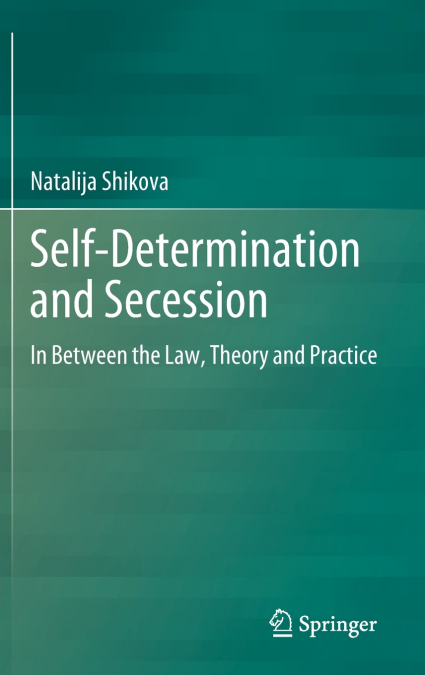
This book offers a comprehensive summary of extant international law scholarship on the topics of self-determination and secession and positions the concepts among present-day theory and relevant practice, illustrated through various ongoing cases and historical examples. The right to self-determination is among the least understood rights within international law. Theoretical dilemmas - as to whether there is a link between self-determination and secession - are nothing new. In essence, self-determination is a much broader concept than secession and obtaining independent statehood. Unilateral secession is not prohibited by international law, but neither is it per se welcomed or accepted in practice. Beyond the context of decolonization, secession claims have long been viewed with disapproval in international law, and lawyers have been extremely skeptical about the issue. Although this is still the case, there are also new trends and opportunities to explore situations in which secession can be accepted, legitimized, or even legally permissible. The yardstick for this is the diplomatic response to secessionism and the growing involvement of the international community in mediation and conflict resolution. Though finding solutions can be difficult, within the existing frame, the ongoing tension between the duty of every society to recognize pluralism and diversity on the one hand, and the inherent desire of every culture - whether majority, minority or indigenous - to protect its values and ensure conformity on the other, must be resolved. The practices and modalities that envisage the internal dimension of the right to self-determination as a right that is exercised within the state borders can offer such opportunities. The appropriate role of the state and the international community is to serve as mediators between competing forces and to set parameters that can transform destructive conflicts into productive political models.


Artículos relacionados

  • Corporate Hacking and Technology-Driven Crime
    In an age when computer crime is growing at a exponential rate and on a global scale, industry and government leaders are increasingly reliant upon answers from the academic and IT Security fields in order to keep cyber crime in check, and be ahead of the 'cyber criminal curve.' Corporate Hacking and Technology-Driven Crime: Social Dynamics and Implications addresses various as...
  • Cybercrime and Cloud Forensics
    Keyun Ruan
    While cloud computing continues to transform developments in information technology services, these advancements have contributed to a rise in cyber attacks; producing an urgent need to extend the applications of investigation processes. Cybercrime and Cloud Forensics: Applications for Investigation Processes presents a collection of research and case studies of applications fo...
  • Speaking Out
    Alan Berman / Berman Alan / Shirleene Robinson
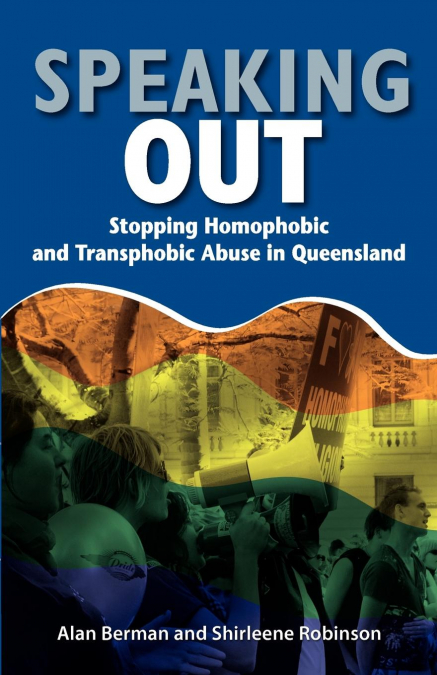
    Based on the largest survey of gay, lesbian, bisexual, intersex, transgender and queer reactions to violence and harassment ever undertaken in Australia, this book gives voice to the many victims who have suffered in the state once recognised as Australia’s most homophobic. It tells of the barriers people face in dealing with the legal system, the reasons why some do not report...
    Disponible

    41,71 €

  • Gangsters and Other Statesmen
    Danilo Mandić
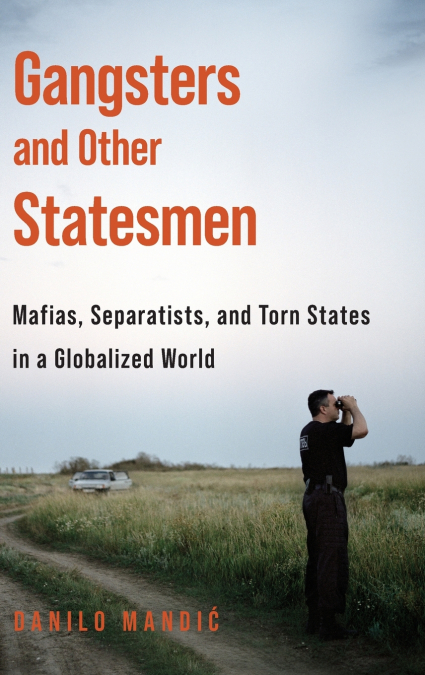
    How global organized crime shapes the politics of borders in modern conflictsSeparatism has been on the rise across the world since the end of the Cold War, dividing countries through political strife, ethnic conflict, and civil war, and redrawing the political map. Gangsters and Other Statesmen examines the role transnational mafias play in the success and failure of separatis...
  • Gangsters and Other Statesmen
    Danilo Mandić
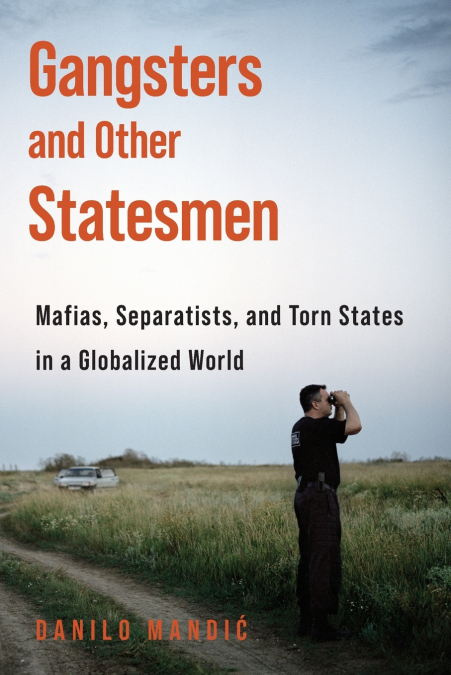
    How global organized crime shapes the politics of borders in modern conflictsSeparatism has been on the rise across the world since the end of the Cold War, dividing countries through political strife, ethnic conflict, and civil war, and redrawing the political map. Gangsters and Other Statesmen examines the role transnational mafias play in the success and failure of separatis...
    Disponible

    45,87 €

  • Mafias on the Move
    Federico Varese
    'A compelling read and an impeccable work of reference.'-John le CarréOrganized crime is spreading like a global virus as mobs take advantage of open borders to establish local franchises at will. That at least is the fear, inspired by stories of Russian mobsters in New York, Chinese triads in London, and Italian mafias throughout the West.As Federico Varese explains in this co...
    Disponible

    45,90 €

Otros libros del autor

  • Self-Determination and Secession
    Natalija Shikova
    This book offers a comprehensive summary of extant international law scholarship on the topics of self-determination and secession and positions the concepts among present-day theory and relevant practice, illustrated through various ongoing cases and historical examples. The right to self-determination is among the least understood rights within international law. Theoretical ...