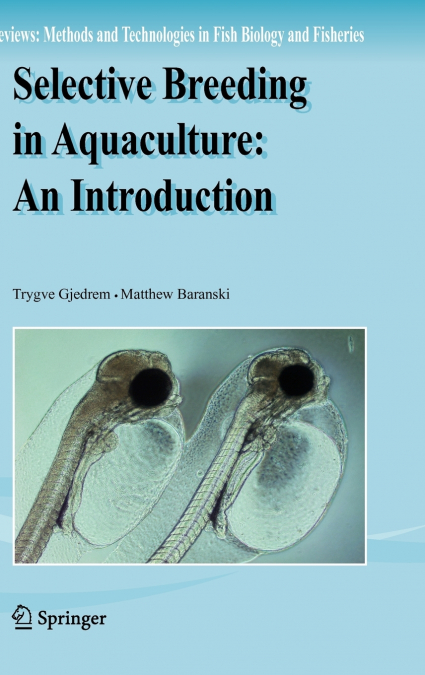
Selective Breeding in Aquaculture

Selective Breeding in Aquaculture

Matthew Baranski / Trygve Gjedrem

243,48 €
IVA incluido
Consulta disponibilidad
Editorial:
Springer Nature B.V.
Año de edición:
2009
Materia
Zoología y ciencias animales
ISBN:
9789048127726

Selecciona una librería:

  • Librería Samer Atenea
  • Librería Aciertas (Toledo)
  • Kálamo Books
  • Librería Perelló (Valencia)
  • Librería Elías (Asturias)
  • Donde los libros
  • Librería Kolima (Madrid)
  • Librería Proteo (Málaga)

The foundation of quantitative genetics theory was developed during the last century and facilitated many successful breeding programs for cultivated plants and t- restrial livestock. The results have been almost universally impressive, and today nearly all agricultural production utilises genetically improved seed and animals. The aquaculture industry can learn a great deal from these experiences, because the basic theory behind selective breeding is the same for all species. The ?rst published selection experiments in aquaculture started in 1920 s to improve disease resistance in ?sh, but it was not before the 1970 s that the ?rst family based breeding program was initiated for Atlantic salmon in Norway by AKVAFORSK. Unfortunately, the subsequent implementation of selective breeding on a wider scale in aquaculture has been slow, and despite the dramatic gains that have been demonstrated in a number of species, less than 10% of world aquaculture production is currently based on improved stocks. For the long-term sustainability of aquaculture production, there is an urgent need to develop and implement e- cient breeding programs for all species under commercial production. The ability for aquaculture to successfully meet the demands of an ever increasing human p- ulation, will rely on genetically improved stocks that utilise feed, water and land resources in an ef?cient way. Technological advances like genome sequences of aquaculture species, and advanced molecular methods means that there are new and exciting prospects for building on these well-established methods into the future.

Artículos relacionados

  • Animaltown
    Urban space constitutes a place where people and animals live together in close proximity with each other, creating changing landscapes of co-existence, conflict, mutual dependencies and exploitation. The medieval animals found in the articles of Animaltown: Beasts in Medieval Urban Space, appear in text and image, as well as archaeological find materials in the form of butcher...
    Disponible

    109,24 €

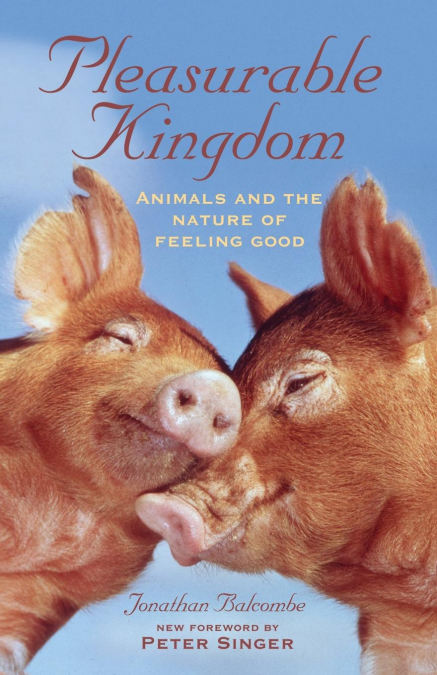
  • Pleasurable Kingdom
    Jonathan Balcombe
    Pleasurable Kingdom presents new evidence that animals--like humans--enjoy themselves. From birds to baboons, insects to iguanas, animals feel good thanks to play, sex, touch, food, anticipation, comfort, aesthetics, and more. Combining rigorous evidence, elegant argument and amusing anecdotes, leading animal behavior researcher Jonathan Balcombe shows that the possibility of p...
    Disponible

    18,96 €

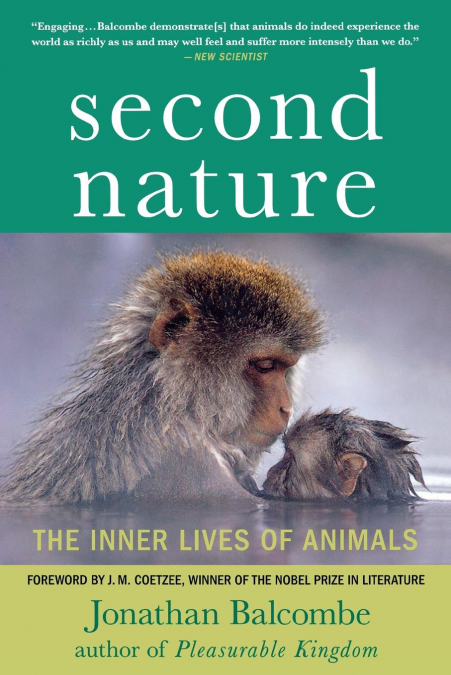
  • SECOND NATURE
    Jonathan Balcombe
    ...
    Disponible

    16,52 €

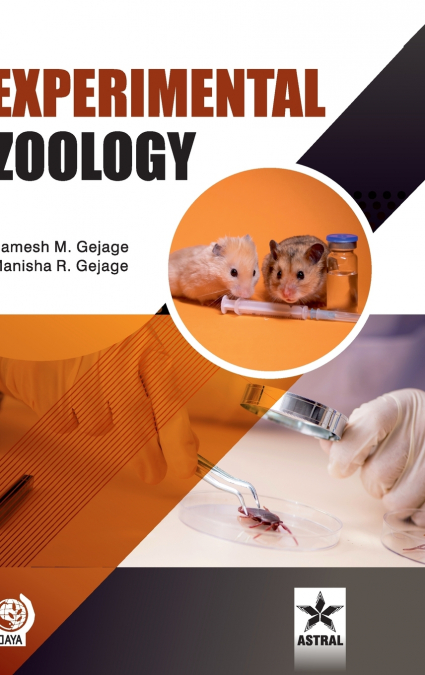
  • Experimental Zoology
    Manisha R Gejage / Ramesh M Gejage
    The goal of the book is to present the practical knowledge of Zoology. Animal diversity, venomous and non-venomous snakes, study of birds, brain of fowl and hyoid apparatus, sclerotic plates, pecten and collumella of fowl, scales of fishes, biochemical tests, activity of salivary amylase, estimation of total protein and lipid, DNA isolation and estimation of uric acid are given...
  • TOXICOLOGY
    M A SUBRAMANIAN
    In an era defined by burgeoning human populations, rampant industrialization, cutting-edge technological progress, and expanding urban landscapes, the integrity of our natural environment faces unprecedented challenges. The relentless march of progress has ushered in a flood of chemicals, seeping into the very fabric of our ecosystems and posing insidious threats to biological ...
    Disponible

    23,69 €

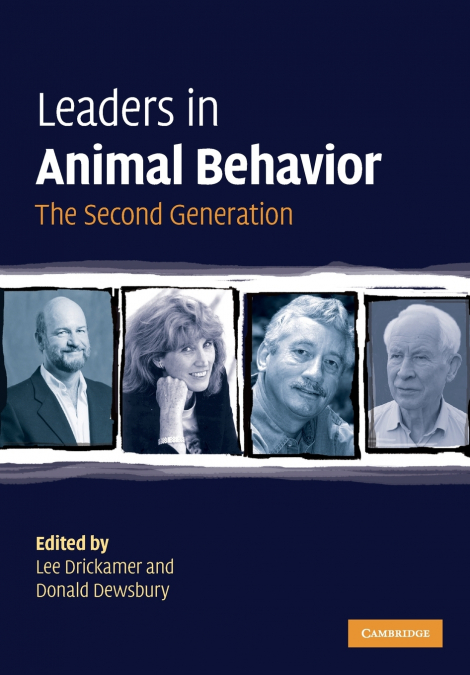
  • Leaders in Animal Behavior
    Donald Dewsbury / Lee Drickamer
    ...
    Disponible

    64,68 €

Otros libros del autor

  • Selective Breeding in Aquaculture
    Matthew Baranski / Trygve Gjedrem
    The foundation of quantitative genetics theory was developed during the last century and facilitated many successful breeding programs for cultivated plants and t- restrial livestock. The results have been almost universally impressive, and today nearly all agricultural production utilises genetically improved seed and animals. The aquaculture industry can learn a great deal fr...
    Disponible

    244,84 €