Librería Samer Atenea
 Kálamo Books
 Librería Elías (Asturias)
 Librería Kolima (Madrid)
 Librería Proteo (Málaga)
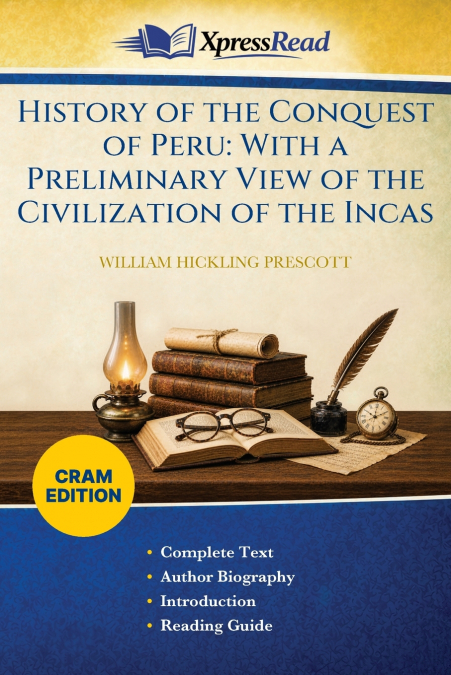
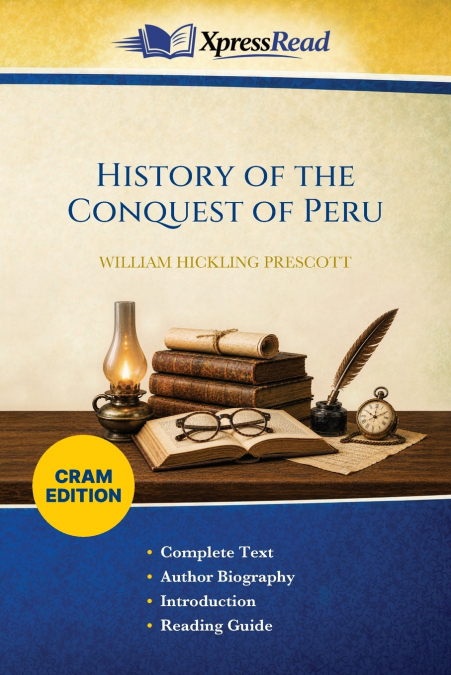
This volume contains selections from William Hickling Prescott’s monumental histories: 'Ferdinand and Isabella,' 'The Conquest of Mexico,' and 'The Conquest of Peru.' Prescott, a master of narrative history, brings to life the dramatic events and complex personalities of these pivotal periods. Readers will encounter the Catholic Monarchs, Ferdinand and Isabella, whose reign saw the unification of Spain and the sponsorship of Columbus’s voyages. Prescott vividly recounts the Spanish conquest of the Aztec and Inca empires, detailing the clash of cultures, the strategies of the conquistadors, and the tragic fates of Montezuma and Atahualpa. Prescott’s work is valued for its meticulous research, engaging prose, and balanced judgments. These selections offer a compelling introduction to Prescott’s historical vision and the enduring significance of these events.This work has been selected by scholars as being culturally important, and is part of the knowledge base of civilization as we know it. This work was reproduced from the original artifact, and remains as true to the original work as possible. Therefore, you will see the original copyright references, library stamps (as most of these works have been housed in our most important libraries around the world), and other notations in the work.This work is in the public domain in the United States of America, and possibly other nations. Within the United States, you may freely copy and distribute this work, as no entity (individual or corporate) has a copyright on the body of the work.As a reproduction of a historical artifact, this work may contain missing or blurred pages, poor pictures, errant marks, etc. Scholars believe, and we concur, that this work is important enough to be preserved, reproduced, and made generally available to the public. We appreciate your support of the preservation process, and thank you for being an important part of keeping this knowledge alive and relevant.