
Inicio > Tecnología, ingeniería, agricultura > Agricultura y explotación agropecuaria > Secondary Metabolites of Plant Growth Promoting Rhizomicroorganisms
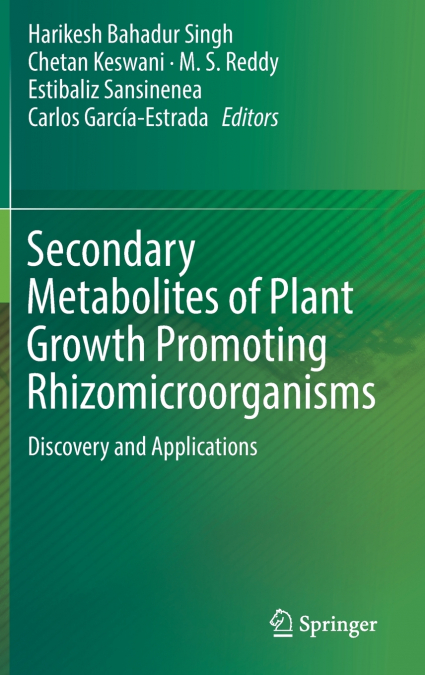
Secondary Metabolites of Plant Growth Promoting Rhizomicroorganisms

Secondary Metabolites of Plant Growth Promoting Rhizomicroorganisms


135,35 €
IVA incluido
Consulta disponibilidad
Editorial:
Springer Nature B.V.
Año de edición:
2019
Materia
Agricultura y explotación agropecuaria
ISBN:
9789811358616

Selecciona una librería:

  • Librería Samer Atenea
  • Librería Aciertas (Toledo)
  • Kálamo Books
  • Librería Perelló (Valencia)
  • Librería Elías (Asturias)
  • Donde los libros
  • Librería Kolima (Madrid)
  • Librería Proteo (Málaga)

Recent changes in the pattern of agricultural practices from use of hazardous pesticides to natural (organic) cultivation has brought into focus the use of agriculturally important microorganisms for carrying out analogous functions. The reputation of plant growth promoting rhizomicroorganisms (PGPRs) is due to their antagonistic mechanisms against most of the fungal and bacterial phytopathogens. The biocontrol potential of agriculturally important microorganisms is mostly attributed to their bioactive secondary metabolites. However, low shelf life of many potential agriculturally important microorganisms impairs their use in agriculture and adoption by farmers. The focal theme of this book is to highlight the potential of employing biosynthesized secondary metabolites (SMs) from agriculturally important microorganisms for management of notorious phytopathogens, as a substitute of the currently available whole organism formulations and also as alternatives to hazardous synthetic pesticides. Accordingly, we have incorporated a comprehensive rundown of sections which particularly examine the SMs synthesized, secreted and induced by various agriculturally important microorganisms and their applications in agriculture.  Section 1 includes discussion on biosynthesized antimicrobial secondary metabolites from fungal biocontrol agents. This section will cover the various issues such as development of formulation of secondary metabolites, genomic basis of metabolic diversity, metabolomic profiling of fungal biocontrol agents, novel classes of antimicrobial peptides. The section 1 will also cover the role of these secondary metabolites in antagonist-host interaction and application of biosynthesized antimicrobial secondary metabolites for management of plant diseases.  Section 2 will discuss the biosynthesized secondary metabolites from bacterial PGPRs, strain dependent effects on plant metabolome profile, bio-prospecting various isolates of bacterial PGPRs for potential secondary metabolites and non-target effects of PGPR on microbial community structure and functions. Section 3 encompasses synthesis of antimicrobial secondary metabolites from beneficial endophytes, bio-prospecting medicinal and aromatic hosts and effect of endophytic SMs on plants under biotic and biotic stress conditions.  
Artículos relacionados

  • Australia and the Origins of Agriculture
    Rupert Gerritsen
    In this work the author explores issues of the origin of agriculture in Australia such as the “failure” of agriculture to develop indigenously, and its “failure” to diffuse into Australia, despite contact with Indonesian (Macassan) agriculturalists or New Guinean horticulturalists. Although not always explicitly stated or recognised, significant differences probably exist in th...
    Disponible

    106,78 €

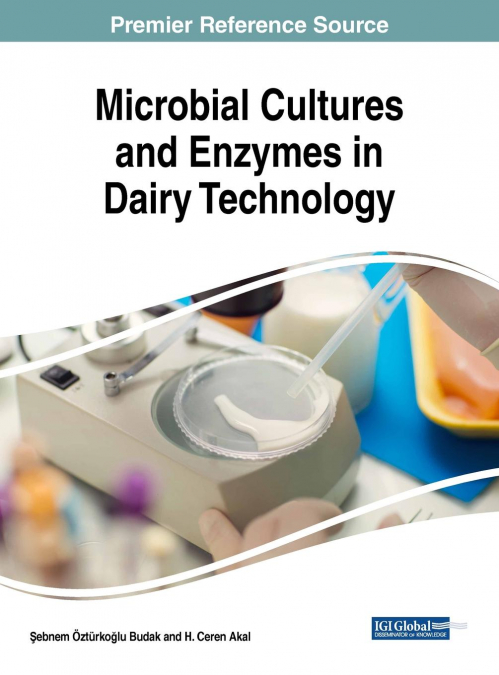
  • Microbial Cultures and Enzymes in Dairy Technology
    Microorganisms are an integral part of the fermentation process in food products and help to improve sensory and textural properties of the products. As such, it is vital to explore the current uses of microorganisms in the dairy industry. Microbial Cultures and Enzymes in Dairy Technology is a critical scholarly resource that explores multidisciplinary uses of cultures and enz...
  • Elements of Farm Power and Machinery
    S K Gupta
    Farm mechanization has played a vital role in increasing production, productivity and profitability of farm enterprise. It is mainly attributed to timeliness in farm operations and reduction in application of various inputs through their precise metering, application and higher use efficiencies. Being one of the most important elements of modern agriculture, farm power and mach...
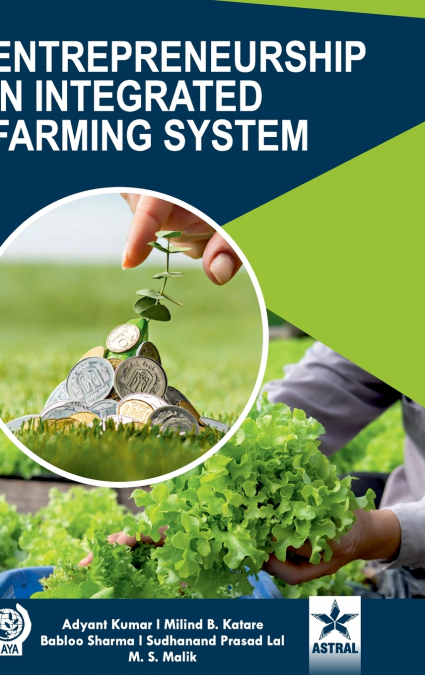
  • Entrepreneurship in Integrated Farming System
    The book deals with the essential information regarding entrepreneurial development of integrated farming system models throughout the country, where agriculture and allied components are extensively presented under the same umbrella in a sustainable way. This book will be of immense use in imparting knowledge on diversified and suitable IFS models based research findings and p...
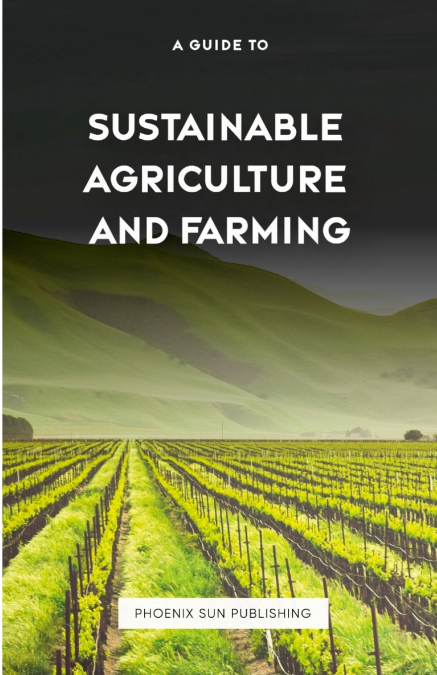
  • The Guide to Sustainable Agriculture and Farming
    PS Publishing
    'The Guide to Sustainable Agriculture and Farming' is an essential resource for anyone interested in sustainable and regenerative farming practices. From understanding the environmental and social impacts of conventional agriculture to exploring innovative solutions for sustainable farming, this book offers a comprehensive and inspiring guide to creating a healthier and more su...
    Disponible

    14,06 €

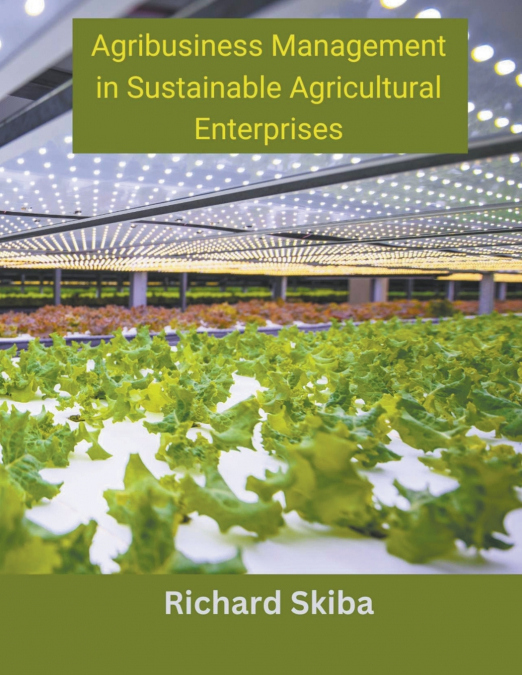
  • Agribusiness Management in Sustainable Agricultural Enterprises
    Richard Skiba
    This book provides a comprehensive overview of sustainable agriculture practices and strategies aimed at improving land use, implementing renewable energy and recycling systems, managing climate risks, developing workplace policies for sustainability, and applying effective agribusiness management practices.Part 1 introduces various approaches to sustainable agriculture, includ...
    Disponible

    30,41 €