Second Age of Computer Science

Second Age of Computer Science

Subrata Dasgupta

76,70 €
IVA incluido
Consulta disponibilidad
Editorial:
Oxford University Press
Año de edición:
2018
Materia
Historia de la ciencia
ISBN:
9780190843861

Selecciona una librería:

  • Librería Samer Atenea
  • Librería Aciertas (Toledo)
  • Kálamo Books
  • Librería Perelló (Valencia)
  • Librería Elías (Asturias)
  • Donde los libros
  • Librería Kolima (Madrid)
  • Librería Proteo (Málaga)

By the end of the 1960s, a new discipline named computer science had come into being. A new scientific paradigm--the ’computational paradigm’--was in place, suggesting that computer science had reached a certain level of maturity. Yet as a science it was still precociously young. New forces, some technological, some socio-economic, some cognitive impinged upon it, the outcome of which was that new kinds of computational problems arose over the next two decades. Indeed, by the beginning of the 1990’s the structure of the computational paradigm looked markedly different in many important respects from how it was at the end of the 1960s. Author Subrata Dasgupta named the two decades from 1970 to 1990 as the second age of computer science to distinguish it from the preceding genesis of the science and the age of the Internet/World Wide Web that followed. This book describes the evolution of computer science in this second age in the form of seven overlapping, intermingling, parallel histories that unfold concurrently in the course of the two decades. Certain themes characteristic of this second age thread through this narrative: the desire for a genuine science of computing; the realization that computing is as much a human experience as it is a technological one; the search for a unified theory of intelligence spanning machines and mind; the desire to liberate the computational mind from the shackles of sequentiality; and, most ambitiously, a quest to subvert the very core of the computational paradigm itself. We see how the computer scientists of the second age address these desires and challenges, in what manner they succeed or fail and how, along the way, the shape of computational paradigm was altered. And to complete this history, the author asks and seeks to answer the question of how computer science shows evidence of progress over the course of its second age.
Artículos relacionados

  • GRAVITY
    BRIAN CLEGG
    ...
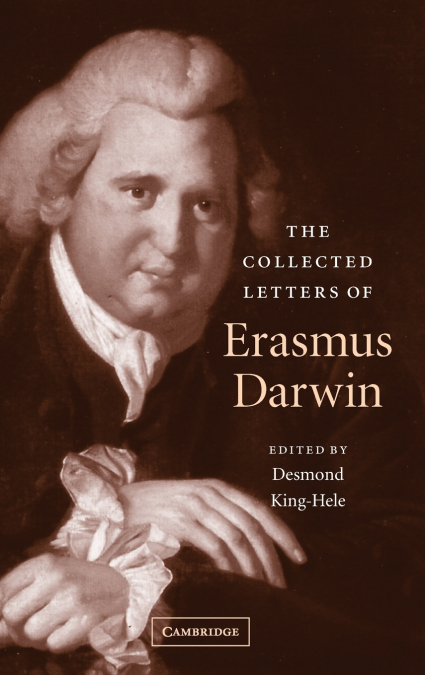
  • Collected Letters of Erasmus Darwin
    Erasmus Darwin
    ...
  • System
    Clifford Siskin
    ...
    Disponible

    23,67 €

  • The Science of Roman History
    Walter Scheidel
    How the latest cutting-edge science offers a fuller picture of life in Rome and antiquityThis groundbreaking book provides the first comprehensive look at how the latest advances in the sciences are transforming our understanding of ancient Roman history. Walter Scheidel brings together leading historians, anthropologists, and geneticists at the cutting edge of their fields, wh...
    Disponible

    36,21 €

  • Scouting and Scoring
    Christopher J. Phillips
    An in-depth look at the intersection of judgment and statistics in baseballScouting and scoring are considered fundamentally different ways of ascertaining value in baseball. Scouting seems to rely on experience and intuition, scoring on performance metrics and statistics. In Scouting and Scoring, Christopher Phillips rejects these simplistic divisions. He shows how both scouts...
    Disponible

    26,38 €

  • Osservazioni intorno alle vipere
    Francesco Redi
    Redi, con l’aiuto di una penna affilata, rompe gli schemi del suo tempo, sfidando le tradizione aristotelica e ponendo delle solide basi per la nascita della biologia sperimentale. In un connubio di rigore scientifico e eloquenza poetica, l’autore ci conduce attraverso un intricato labirinto di miti e leggende, illuminando la verità con la luce della ragione.  ...
    Disponible

    20,42 €

Otros libros del autor

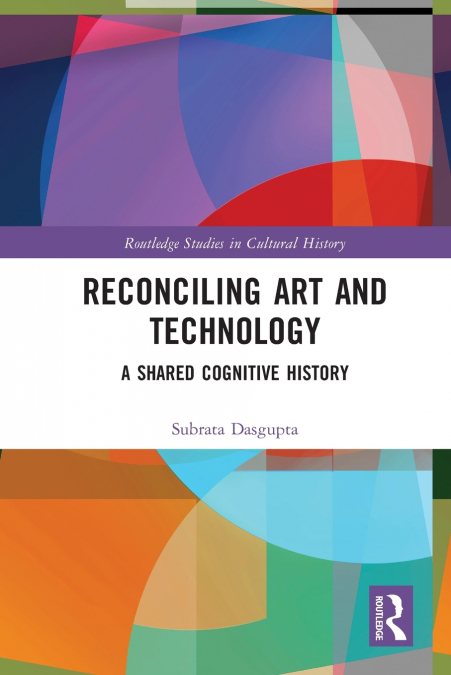
  • Reconciling Art and Technology
    Subrata Dasgupta
    This book examines two venerable cultures, art and technology, and uses the young ’interdiscipline’ of cognitive history combined with case studies of both ancient and modern artifacts to explore, and unveil, some of the bridges by which this reconciliation of two seemingly distant and oppositional cultures can be affected. ...
    Disponible

    75,87 €

  • Reconciling Art and Technology
    Subrata DasGupta
    This book examines two venerable cultures, art and technology, and uses the young ’interdiscipline’ of cognitive history combined with case studies of both ancient and modern artifacts to explore, and unveil, some of the bridges by which this reconciliation of two seemingly distant and oppositional cultures can be affected. ...
  • The Renaissance Considered as a Creative Phenomenon
    Subrata Dasgupta
    By using the fresh investigative language of cognitive history, a symbiosis of the methods of cognitive science and historical inquiry, this book departs from almost all previous approaches to Renaissance studies. ...
  • The Renaissance Considered as a Creative Phenomenon
    Subrata Dasgupta
    By using the fresh investigative language of cognitive history, a symbiosis of the methods of cognitive science and historical inquiry, this book departs from almost all previous approaches to Renaissance studies. ...
    Disponible

    74,15 €

  • A Cognitive-Historical Approach to Creativity
    Subrata Dasgupta
    A Cognitive Historical Approach to Creativity explores the idea that creativity is both a cognitive phenomenon and a historical process. ...
  • A Cognitive-Historical Approach to Creativity
    Subrata Dasgupta
    A Cognitive Historical Approach to Creativity explores the idea that creativity is both a cognitive phenomenon and a historical process. ...
    Disponible

    82,49 €