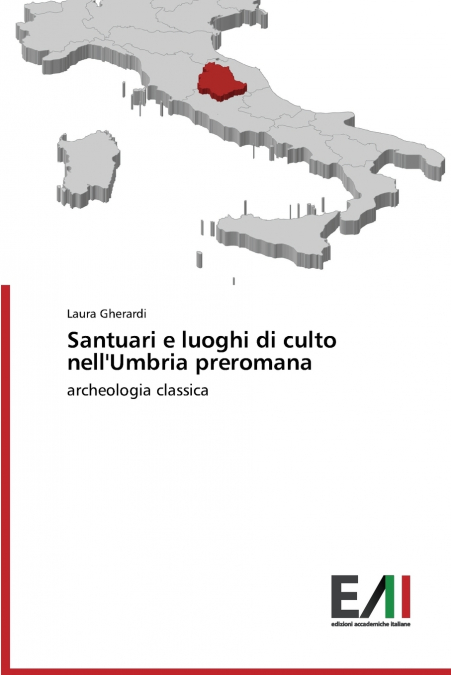

Santuari e luoghi di culto nell’Umbria preromana

Santuari e luoghi di culto nell’Umbria preromana

Gherardi Laura

56,23 €
IVA incluido
Disponible
Editorial:
KS OmniScriptum Publishing
Año de edición:
2014
Materia
Filosofía occidental: antigua, hasta c. 500
ISBN:
9783639657371
56,23 €
IVA incluido
Disponible

Selecciona una librería:

  • Librería Samer Atenea
  • Librería Aciertas (Toledo)
  • Kálamo Books
  • Librería Perelló (Valencia)
  • Librería Elías (Asturias)
  • Donde los libros
  • Librería Kolima (Madrid)
  • Librería Proteo (Málaga)

In questo lavoro sono stati presi in considerazione i confini del popolo di età preromana seguendo gli stessi anche per il periodo di sovrapposizione e della successiva conquista romana. L’arco cronologico analizzato parte dal V sec. a.C., periodo che coincide con i primi sviluppi in senso urbano delle principali comunità umbre; secondo passo importante è la concessione della cittadinanza romana, a tutto il popolo umbro, nel 90 a.C. che sancisce il definitivo ingresso della regione nello stato romano; fino alla pax augustea che destruttura definitivamente l’unità politica del popolo umbro e ne reinventa una nuova. L’indagine si è svolta tramite uno studio capillare di tutti i luoghi di culto indipendentemente dalla categoria e dal periodo di frequentazione, non tralasciando lo studio delle principali città e del popolo che vi si sviluppa. Si è reso necessario suddividere il lavoro per aree topografiche. Sono stati analizzati anche quattro luoghi di culto in zone limitrofe. È stato infine fatto un lavoro di rielaborazione e di sintesi di tutto il materiale raccolto in cui si è cercato di intravvedere le caratteristiche cultuali di questo popolo ed eventuali divinità venerate.
Artículos relacionados

  • The Nature of Things
    Lucretius Lucretius
    De rerum natura (On the Nature of Things) is a 1st century BC didactic poem by the Roman poet and philosopher Lucretius with the goal of explaining Epicurean philosophy to a Roman audience. Lucretius presents the principles of atomism; the nature of the mind and soul; explanations of sensation and thought; the development of the world and its phenomena; and explains a variety o...
  • Pompeii
    Fergus Mason
    Pompeii was one of most advanced cities of its time; it had a complex water system, gymnasium, and an amphitheater. Despite it's advancements, there was one thing it wasn't ready for: Mount Vesuvius—the volcano that led to its ultimate doom.  The 79 AD eruption of Mount Vesuvius was one of the worst disasters in all of European history. In a near instant, over 15,000 p...
    Disponible

    10,36 €

  • Middle Platonism and Neoplatonism, Volume 1
    Stephen Gersh
    'It is generally agreed that those types of philosophy that are loosely called ’Platonic’ and ’Neoplatonic’ played a crucial role in the history of European culture during the centuries between antiquity and the Renaissance. However, until now no scholar has attempted to describe the evolution of these forms of thought in a single comprehensive academic study.' So writes Stephe...
  • Middle Platonism and Neoplatonism, Volume 2
    Stephen Gersh
    It is generally agreed that those types of philosophy that are loosely called 'Platonic' and 'Neoplatonic' played a crucial role in the history of European culture during the centuries between antiquity and the Middle Ages. However, until now no scholar has attempted to describe the evolution of these forms of thought in a single comprehensive academic study. Middle Platonism a...
  • Porphyry’s Commentary on Ptolemy’s Harmonics
    Andrew Barker
    ...
    Disponible

    77,17 €

  • The Roots of Platonism
    John Dillon
    ...
    Disponible

    25,29 €