Rum Running and the Roaring Twenties

Rum Running and the Roaring Twenties

Philip P. Mason / Philip PMason

54,07 €
IVA incluido
Consulta disponibilidad
Editorial:
Wayne State University Press
Año de edición:
1995
Materia
Historia de América
ISBN:
9780814325834

Selecciona una librería:

  • Librería Samer Atenea
  • Librería Aciertas (Toledo)
  • Kálamo Books
  • Librería Perelló (Valencia)
  • Librería Elías (Asturias)
  • Donde los libros
  • Librería Kolima (Madrid)
  • Librería Proteo (Málaga)

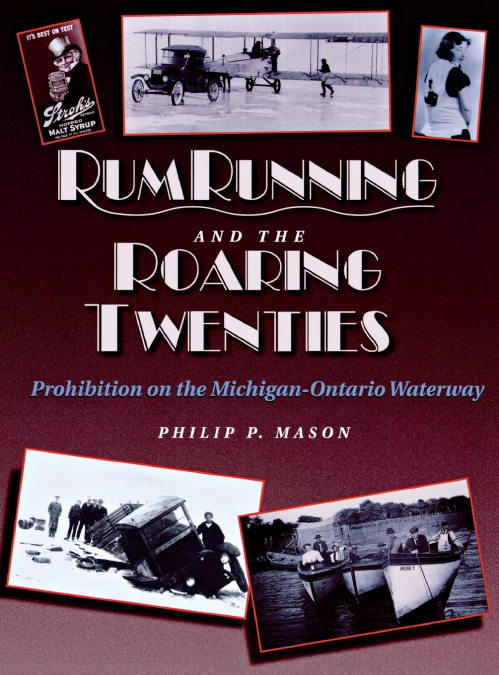
On January 17, 1920, the Eighteenth Amendment took effect in the United States, prohibiting the manufacture, sale, use, or importation of alcoholic beverages except for scientific and medicinal purposes. Church and business leaders, temperance advocates, and state and national officials predicted that a tranquil new era was about to begin-an era when prisons would be empty, police forces could be drastically cut, and workers would be more productive, spending time with their families rather than in saloons.As Rumrunning and the Roaring Twenties illustrates, peace and tranquillity and abstinence never arrived. The Prohibition experiment failed dismally in the United States, and nowhere worse than in Michigan. The state's close proximity and easy access to Canada, where large amounts of liquor were manufactured, made it a major center for the smuggling and sale of illegal alcohol. Although federal, state, and local law enforcement agencies attempted to stop the flow of liquor into Michigan and its widespread sale and use in blind pigs, joints, speakeasies, and exclusive clubs and restaurants, an astounding seventy-five percent of all illegal liquor brought into the United Stateswas transported across the Detroit River from Canada, especially the thirty-mile stretch from Lake Erie to the St. Clair River. In fact, the city's two major industries during most of the 1920s were the manufacture of automobiles and the distribution of Canadian liquor.Using police and court records, newspaper accounts, and interviews with those who lived during the time, Philip P. Mason has constructed a fascinating history of life in Michigan during Prohibition. He regales readers with stories of the bungled efforts by officials at every level to control the smuggling and sale of illegal alcohol. Most entertaining are the hundreds of photos capturing the essence of the era: the creative smuggling efforts undertaken by citizens of all walks of life-the poor, middle class, and affluent, upstanding citizens and organized criminals and gang members.The smugglers concocted both practical and ingenious methods to transport liquor into the state. Boats of all sizes were used, from small rowboats to powerful river crafts that could easily outrun police boats. Jalopies, trucks, airplanes, and railroad freight cars also carried large amounts of alcohol across the border. Clever smugglers rigged electronically controlled torpedoes to cross the river, laid pipes underwater and pumped alcohol into a bottling facility in Detroit, and concealed contraband in every conceivable device-hot water bottles, chest protectors, false breasts, hollowed out eggs and loaves of bread, picnic baskets, shopping bags, and baby carriages.By 1928 Prohibition was so obviously flawed and controversial that it became a major issue in the presidential campaign. In 1933, with the support of President Franklin Roosevelt, Michigan's governor William Comstock, and other leaders, the Twenty-first Amendment was passed, repealing Prohibition. Michigan was the first state to ratify the amendment on April 10, 1933, and soon the Detroit River was returned to pleasure boats and fishing and commercial vessels whose holds no longer carried illegal liquor.

Artículos relacionados

  • Pan-Africanism and Education
    Kenneth J. King / Kenneth JKing
    This is an analysis of the complex links between Black America and Africa in the period of 1880 to 1945. It examines an extended white attempt to pattern politics and education in colonial Africa upon the example of the U.S. South. This export of United States race relations to Africa was resisted by Black intellectuals in the United States and many of the early nationalists in...
    Disponible

    24,60 €

  • The Native American Cookbook Recipes From Native American Tribes
    G.W. Mullins
    Light Of The Moon Publishing along with Author G.W. Mullins and Illustrator / Artist C.L. Hause have joined together to explore Native American Indian Cooking.  More than just a cookbook, this Native American recipe collection offers a look into a forgotten past.  'The Native American Cookbook Recipes From Native American Tribes,' offers a large collection of recipes from and i...
    Disponible

    24,56 €

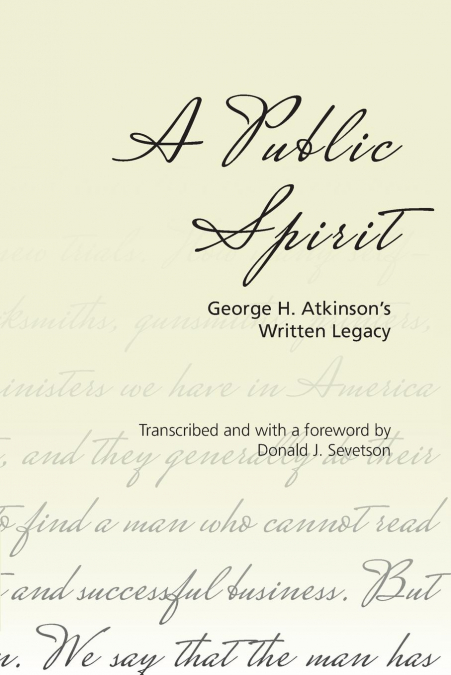
  • A Public Spirit
    George H. Atkinson
    George Henry Atkinson (1819-89) was a son of New England who arrived in the Oregon Territory in 1848, sent by the American Home Missionary Society. Although his commission from the Society specified that his work was to be ecclesiastical and educational, he took an approach to that assignment which went well beyond his mandate. Well-informed and energetic, he made an impact on ...
    Disponible

    10,45 €

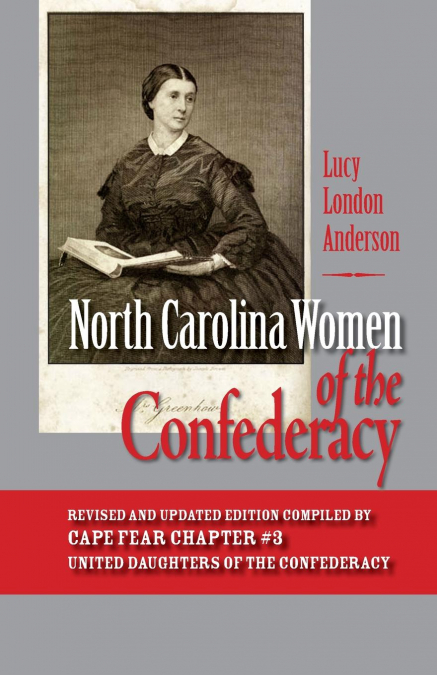
  • North Carolina Women of the Confederacy
    Lucy London Anderson
    Long out of print, this volume of recollections, stories, and verse provides a glimpse of women's lives on the home front-and sometimes in the thick of battle-during the War between the States. Nearly fifty years after the American Civil War, Lucy Worth London Anderson (Mrs. John Huske Anderson) of Fayetteville, N.C., compiled one of the first memorial collections honoring the...
    Disponible

    17,20 €

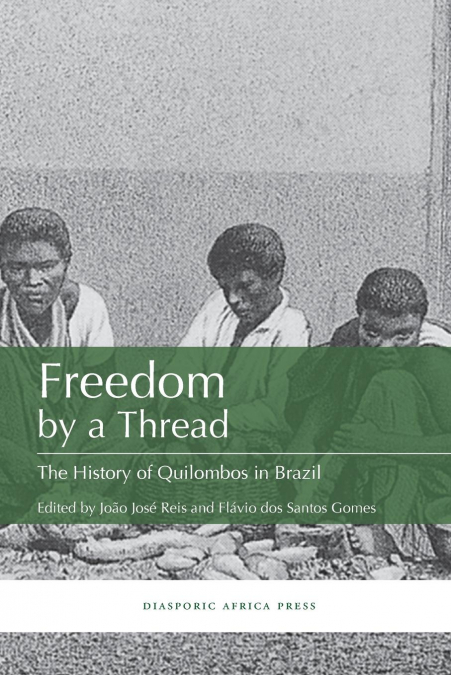
  • Freedom by a Thread
    Freedom by a Thread: The History of Quilombos in Brazil brings together some of the best scholars in the world working on the history of quilombos (maroon societies) in Brazil from a variety of perspectives and approaches. Over 40 percent of the total volume of captive Africans arrived in Brazil during a 400-year period of legal and contraband transatlantic slaving. If slavery ...
    Disponible

    36,71 €

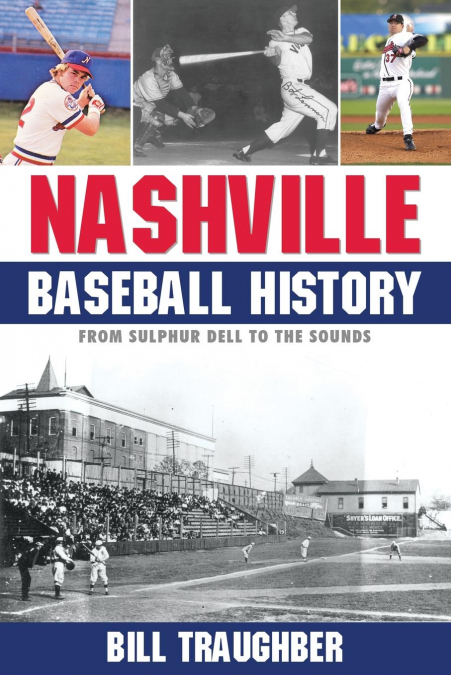
  • Nashville Baseball History
    Bill Traughber
    Nashville is a Big League city despite never having been home to a major league team. From the Civil War era, to star-studded exhibitions, to outstanding Negro Leagues teams, to some of the great minor league franchises of all time, few cities have as rich a baseball tradition as Nashville, Tennessee.Nashville sports historian Bill Traughber, who has been writing about baseball...
    Disponible

    13,15 €

Otros libros del autor

  • Tracy W. McGregor
    Philip P. Mason / Philip PMason
    In the turbulent era from 1890 to the late 1930s, Detroit emerged as a leading industrial and urban center and endured the crushing social and economic challenges of the Great Depression. It was during these years that Tracy W. McGregor, with the assistance of his wife, Katherine Whitney McGregor, established himself as a philanthropist and community leader. Though public build...