 Librería Samer Atenea
 Kálamo Books
 Librería Elías (Asturias)
 Librería Kolima (Madrid)
 Librería Proteo (Málaga)
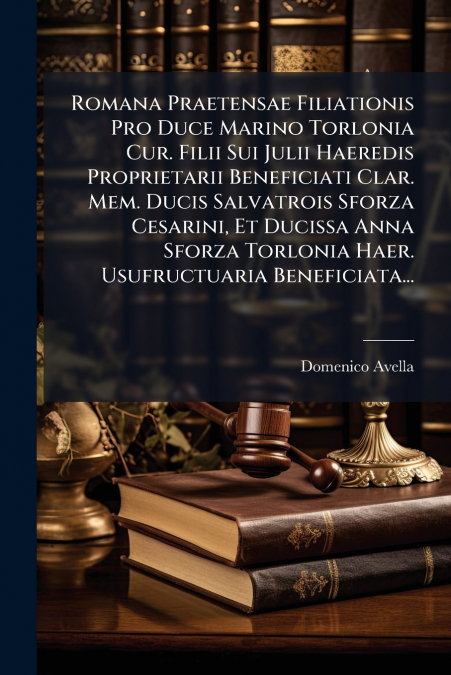
Romana Praetensae Filiationis Pro Duce Marino Torlonia Cur. Filii Sui Julii Haeredis Proprietarii Beneficiati Clar. Mem. Ducis Salvatrois Sforza Cesarini, Et Ducissa Anna Sforza Torlonia Haer. Usufructuaria Beneficiata... presents a detailed legal argument pertaining to the Torlonia family’s lineage and inheritance rights. Authored by Domenico Avella, this historical legal document delves into the complexities of filiation and property ownership within the context of Italian nobility. The book likely contains intricate details regarding the legal battles and claims surrounding the estate of Duke Marino Torlonia, involving his son Giulio and the influential Sforza Cesarini family. This work offers valuable insights into the legal practices and social structures of the time, appealing to historians, legal scholars, and those interested in genealogical research and the history of Italian aristocratic families.This work has been selected by scholars as being culturally important, and is part of the knowledge base of civilization as we know it. This work was reproduced from the original artifact, and remains as true to the original work as possible. Therefore, you will see the original copyright references, library stamps (as most of these works have been housed in our most important libraries around the world), and other notations in the work.This work is in the public domain in the United States of America, and possibly other nations. Within the United States, you may freely copy and distribute this work, as no entity (individual or corporate) has a copyright on the body of the work.As a reproduction of a historical artifact, this work may contain missing or blurred pages, poor pictures, errant marks, etc. Scholars believe, and we concur, that this work is important enough to be preserved, reproduced, and made generally available to the public. We appreciate your support of the preservation process, and thank you for being an important part of keeping this knowledge alive and relevant.