
Inicio > > Ciencias de la computación > Inteligencia artificial > Robust Speech Recognition in Embedded Systems and PC Applications
Robust Speech Recognition in Embedded Systems and PC Applications

Robust Speech Recognition in Embedded Systems and PC Applications

Jean-Claude Junqua

132,97 €
IVA incluido
Consulta disponibilidad
Editorial:
Springer Nature B.V.
Año de edición:
2000
Materia
Inteligencia artificial
ISBN:
9780792378730

Selecciona una librería:

  • Librería Samer Atenea
  • Librería Aciertas (Toledo)
  • Kálamo Books
  • Librería Perelló (Valencia)
  • Librería Elías (Asturias)
  • Donde los libros
  • Librería Kolima (Madrid)
  • Librería Proteo (Málaga)

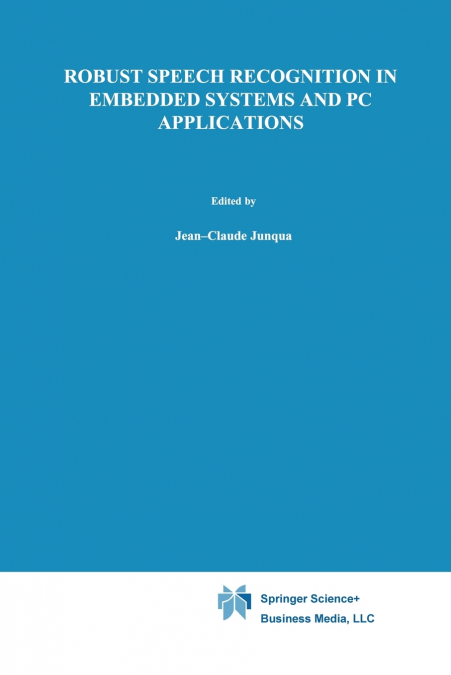
Robust Speech Recognition in Embedded Systems and PC Applications provides a link between the technology and the application worlds. As speech recognition technology is now good enough for a number of applications and the core technology is well established around hidden Markov models many of the differences between systems found in the field are related to implementation variants. We distinguish between embedded systems and PC-based applications. Embedded applications are usually cost sensitive and require very simple and optimized methods to be viable. Robust Speech Recognition in Embedded Systems and PC Applications reviews the problems of robust speech recognition, summarizes the current state of the art of robust speech recognition while providing some perspectives, and goes over the complementary technologies that are necessary to build an application, such as dialog and user interface technologies. Robust Speech Recognition in Embedded Systems and PC Applications is divided into five chapters. The first one reviews the main difficulties encountered in automatic speech recognition when the type of communication is unknown. The second chapter focuses on environment-independent/adaptive speech recognition approaches and on the mainstream methods applicable to noise robust speech recognition. The third chapter discusses several critical technologies that contribute to making an application usable. It also provides some design recommendations on how to design prompts, generate user feedback and develop speech user interfaces. The fourth chapter reviews several techniques that are particularly useful for embedded systems or to decrease computational complexity. It also presents some case studies for embedded applications and PC-based systems. Finally, the fifth chapter provides a future outlook for robust speech recognition, emphasizing the areas that the author sees as the most promising for the future. Robust Speech Recognition in Embedded Systems and PC Applications serves as a valuable reference and although not intended as a formal University textbook, contains some material that can be used for a course at the graduate or undergraduate level. It is a good complement for the book entitled Robustness in Automatic Speech Recognition: Fundamentals and Applications co-authored by the same author.
Artículos relacionados

  • Video Surveillance Techniques and Technologies
    Vesna Zeljkovic
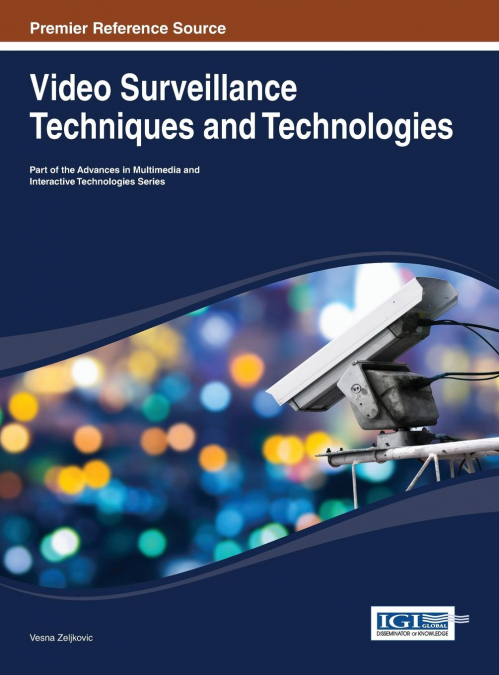
    Security video surveillance systems, such as homeland security and national defense, rely on specific mathematical algorithms in order to run effectively. It is essential for these parameters to be understood in order to design and create a successful system. Video Surveillance Techniques and Technologies presents empirical research and acquired experience on the original solut...
  • Swarm Intelligence for Electric and Electronic Engineering
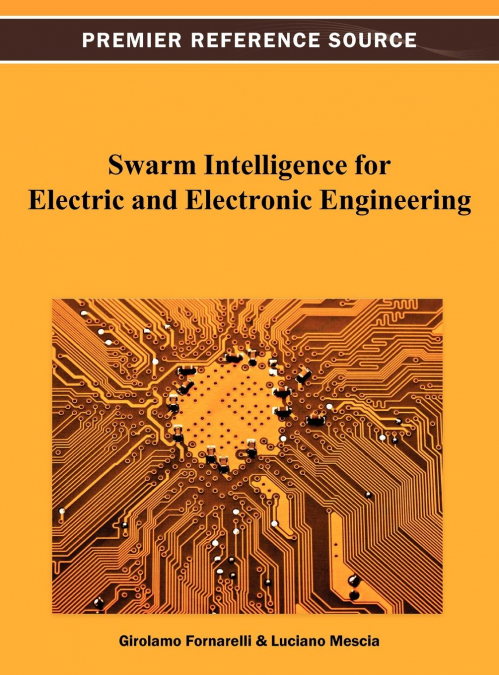
    With growing developments in artificial intelligence and focus on swarm behaviors; algorithms have been utilized in solving a variety of problems in the field of engineering. This approach has been specifically suited to face the challenges in electric and electronic engineering. Swarm Intelligence for Electric and Electronic Engineering provides an exchange of knowledge on the...
  • Multirate Systems
    Gordana Jovanovic-Dolecek
    ...
  • Advanced Instrument Engineering
    Lay-Ekuakille
    Measurement technologies and instrumentation have a multidisciplinary impact in the field of applied sciences. These engineering technologies are necessary in processing information required for renewable energy, biotechnology, power quality, and nanotechnology. Advanced Instrument Engineering: Measurement, Calibration, and Design presents theoretical and practical aspects on t...
  • Linear Systems Theory
    João P. Hespanha
    A fully updated textbook on linear systems theoryLinear systems theory is the cornerstone of control theory and a well-established discipline that focuses on linear differential equations from the perspective of control and estimation. This updated second edition of Linear Systems Theory covers the subject’s key topics in a unique lecture-style format, making the book easy to ...
  • Instrument Transformers
    P.K. Pattanaik
    "Instrument Transformers" serves as an indispensable guide for electrical engineers and professionals navigating the complexities of measuring high-voltage currents and potentials. In the realm of electrical engineering, direct measurement of voltages and currents in the "kilo" or "mega" range presents significant challenges, not only due to the sheer magnitude of these values ...
    Disponible

    39,10 €

Otros libros del autor

  • Robust Speech Recognition in Embedded Systems and PC Applications
    Jean-Claude Junqua
    Robust Speech Recognition in Embedded Systems and PC Applications provides a link between the technology and the application worlds. As speech recognition technology is now good enough for a number of applications and the core technology is well established around hidden Markov models many of the differences between systems found in the field are...
    Disponible

    134,34 €