Ricoeur’s Critical Theory

Ricoeur’s Critical Theory

David M. Kaplan

43,44 €
IVA incluido
Disponible
Editorial:
State University of New York Press
Año de edición:
2003
Materia
Filosofía social y política
ISBN:
9780791456965
43,44 €
IVA incluido
Disponible

Selecciona una librería:

  • Librería Samer Atenea
  • Librería Aciertas (Toledo)
  • Kálamo Books
  • Librería Perelló (Valencia)
  • Librería Elías (Asturias)
  • Donde los libros
  • Librería Kolima (Madrid)
  • Librería Proteo (Málaga)

The first book-length treatment of Paul Ricoeur’s conception of philosophy as critical theory.In Ricoeur’s Critical Theory, David M. Kaplan revisits the Habermas-Gadamer debates to show how Paul Ricoeur’s narrative-hermeneutics and moral-political philosophy provide a superior interpretive, normative, and critical framework. Arguing that Ricoeur’s unique version of critical theory surpasses the hermeneutic philosophy of Gadamer, Kaplan adds a theory of argumentation necessary to criticize false consciousness and distorted communication. He also argues that Ricoeur develops Habermas’s critical theory, adding an imaginative, creative dimension and a concern for community values and ideas of the Good Life. He then shows how Ricoeur’s political philosophy steers a delicate path between liberalism, communitarianism, and socialism. Ricoeur’s version of critical theory not only identifies and criticizes social pathologies, posits Kaplan, but also projects utopian alternatives for personal and social transformation that would counter and heal the effects of unjust societies. The author concludes by applying Ricoeur’s critical theory to three related problems-the politics of identity and recognition, technology, and globalization and democracy-to show how his works add depth, complexity, and practical solutions to these problems.

Artículos relacionados

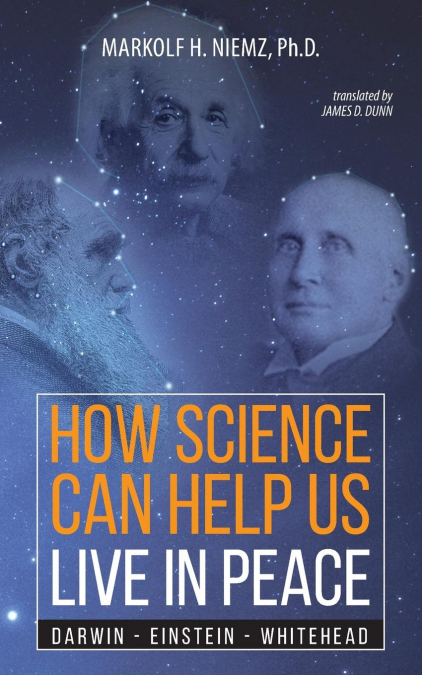
  • How Science Can Help Us Live In Peace
    Markolf H Niemz / James D Dunn
    Award-winning biophysicist Markolf H. Niemz puts into a nutshell what the top 3 scientists on earth have discovered. Charles Darwin: Animal and man are not two. Albert Einstein: Space and time are not two. Alfred N. Whitehead: The world and I are not two. The world we live in is non-dualistic. Nature is crying for peace, but we shut off foreign from native, poor from rich, othe...
    Disponible

    40,00 €

  • Sir George Tressady Vol.-II
    Mrs. Humphry Ward
    ' Sir George Tressady Vol. II' by Mrs. Humphry Ward is a unique that delves into the difficult social and political landscape of overdue nineteenth-century England. Mary Augusta Ward, writing beneath the pseudonym Mrs. Humphry Ward, become a prolific British creator known for her insightful portrayals of cutting-edge society. The narrative revolves across the imperative charact...
    Disponible

    15,20 €

  • Sir George Tressady Vol.-I
    Mrs. Humphry Ward
    'Sir George Tressady Vol. I' by Mrs. Humphry Ward is a unique that delves into the difficult social and political landscape of overdue nineteenth-century England. Mary Augusta Ward, writing beneath the pseudonym Mrs. Humphry Ward, become a prolific British creator known for her insightful portrayals of cutting-edge society. The narrative revolves across the imperative character...
    Disponible

    14,46 €

  • VIGLETS
    Viggo Hansen
    'VIGLETS Two - Ode to Dumbness' seeks to ease widespread global tensions resulting from dumb people, which includes everyone - and is seemingly increasing exponentially. The author gently guides readers into creating personal dumb Viglets - intimate odes, totally unrestricted by archaic rules of grammar - you simply let your emotions on dumbness 'hang out' and get instant relie...
    Disponible

    13,06 €

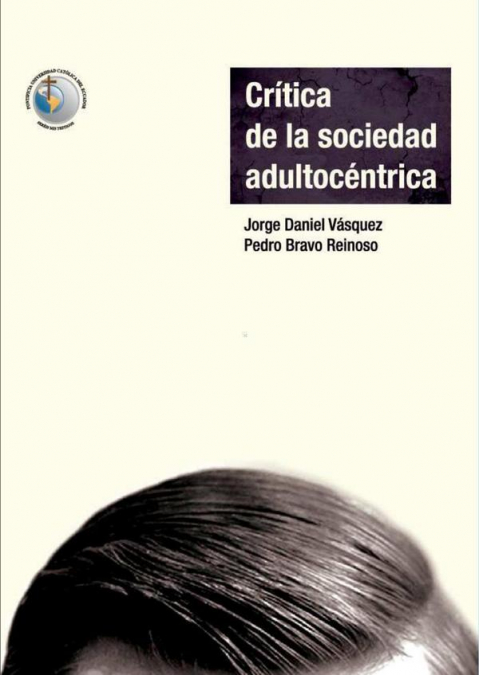
  • Crítica de la sociedad adultocéntrica
    Pedro Bravo Jorge Vásquez
    Crítica de la sociedad adultocéntrica constituye una reflexión sobre el carácter adultocéntrico de la sociedad contemporánea, por medio de la discusión con diversos autores importantes en el debate académico actual replantea perspectivas teóricas claves en la fundamentación de las subjetividades modernas. Para conseguir esto, el libro articula el análisis social recurriendo a l...
    Disponible

    21,32 €

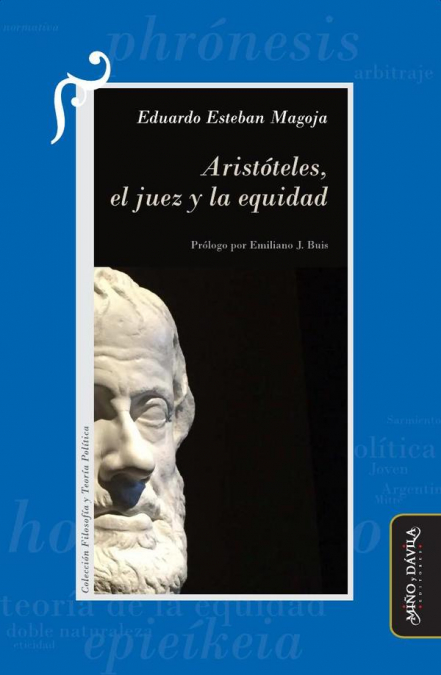
  • Aristóteles, el juez y la equidad
    Eduardo Esteban Magoja / Eduardo Esteban Magoja
    La teoría de la equidad (epieíkeia) de Aristóteles es ese tipo de ideas que atraviesa la historia del pensamiento jurídico y que tiene una indudable incidencia en el quehacer interpretativo judicial. Sin embargo, es susceptible de diversas interpretaciones, resemantizaciones y apropiaciones, incluso por parte de cosmovisiones opuestas. En términos generales, se pueden identific...
    Disponible

    14,04 €