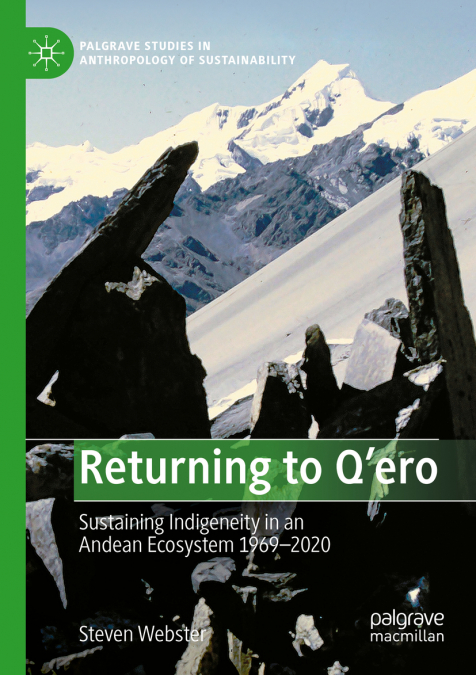
Returning to Q’ero

Returning to Q’ero

Steven Webster

47,51 €
IVA incluido
Disponible
Editorial:
Springer Nature B.V.
Año de edición:
2023
Materia
Antropología social y cultural, etnografía
ISBN:
9783031049736
47,51 €
IVA incluido
Disponible

Selecciona una librería:

  • Librería Samer Atenea
  • Librería Aciertas (Toledo)
  • Kálamo Books
  • Librería Perelló (Valencia)
  • Librería Elías (Asturias)
  • Donde los libros
  • Librería Kolima (Madrid)
  • Librería Proteo (Málaga)

In this book, social anthropologist Steven Webster provides an ethnohistory of sustainability among the indigenous Andean community of Hatun Q’ero since the 1960s. He first revisits his detailed ecological research among the remote Q’ero in the high Andes of Southern Peru in 1969-1970 and 1977. At that time, Q’ero was a community comprised of several hamlets in converging valleys based primarily on alpaca herding at about 4,300 meters, and composed of about 400 persons in about 80 families. He then relies on the few ethnographies by other anthropologists to document changes in Hatun Q’ero by 2020 , spanning 1980-90s when the nation was immersed in agrarian reform followed by virtual civil war between Maoist guerrillas, the government, and the highland peasantry. Through all of these ideological and political-economic developments the sustainability of Q’ero as an integral ecological and social community as well as a famously Incaic cultural tradition becomes a global as well as national issue.  This book argues that while the commercial expansion of ceremonial and shamanist tourism can be seen as extractivist similar to industrial mining, the assertive form of independence characteristic of the Q’eros appears to remain sustainable in the face of both these extractive threats. While the Q’ero community is internally reinforced by their reciprocal relationship with the same non-human forces these forms of extraction seek to exploit, they are externally reinforced by the global as well as national rise of indigeneity movements. Ironically, given the moral force developed in some aspects of shamanist tourism, it can even be argued that it supports environmental sustainability against climate change, globally as well as in Q’ero. This book analyzes the increasing importance of indigeneity in the national politics of Peru as well as the other Andean nations in the last few decades, but it remains to set this form of identity politics in its wider 'intersectional' context of social class and ethnic conflict in the Andes. 
Artículos relacionados

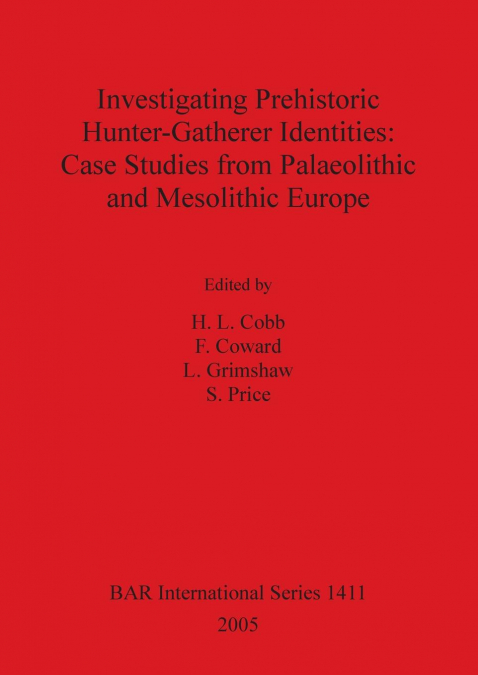
  • Investigating Prehistoric Hunter-Gatherer Identities
    Edited by H. L. Cobb, F. Coward, L. Grimshaw and S. Price.This volume stems from sessions at the 2004 Theoretical Archaeology Conference at Glasgow University, entitled "Hunter-Gatherers in Early Prehistory" and "Hunting for Meaning: Interpretive Approaches to the Mesolithic". The sessions came about as a response to a continuing lack of appreciation of new developments in theo...
    Disponible

    60,70 €

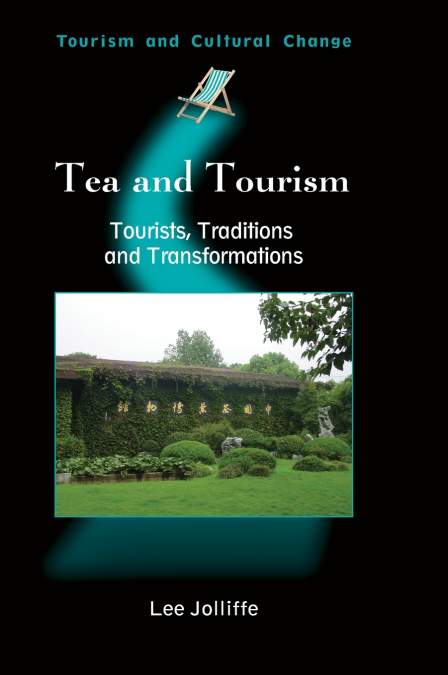
  • Tea and Tourism
    Lee Jolliffe
    The global production, marketing and consumption of tea present a resource for tea-related tourism. Tea and Tourism: Tourists, Traditions and Transformations profiles tea cultures and examines the social, political and developmental contexts of using related traditions for touristic purposes. This volume views tourism related to tea from differing disciplinary perspectives, and...
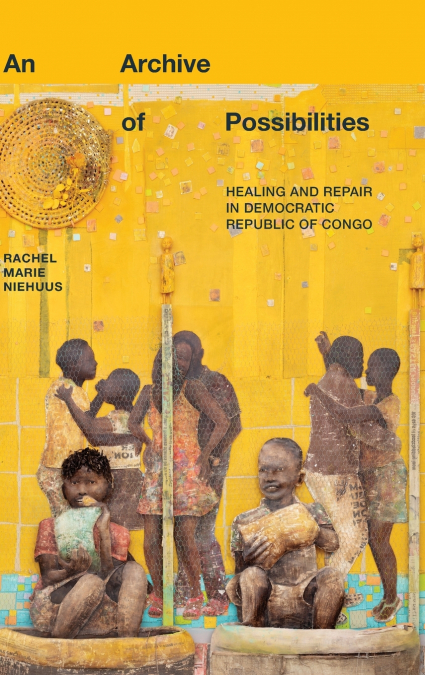
  • An Archive of Possibilities
    Rachel Marie Niehuus
    In An Archive of Possibilities, anthropologist and surgeon Rachel Marie Niehuus explores possibilities of healing and repair in the eastern Democratic Republic of Congo against a backdrop of 250 years of Black displacement, enslavement, death, and chronic war. Niehuus argues that in a context in which violence characterizes everyday life, Congolese have developed innovative and...
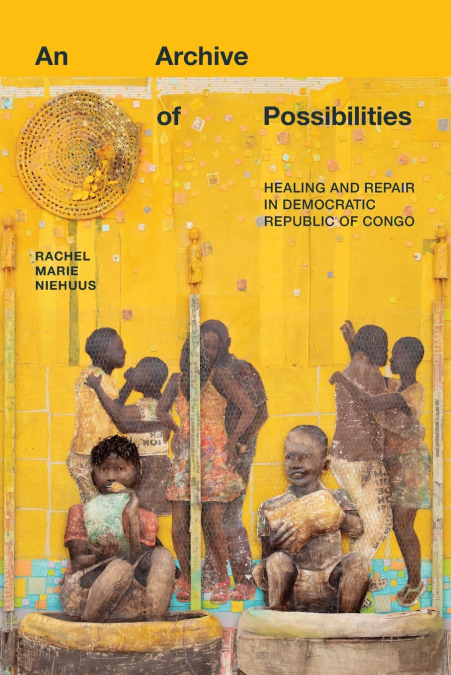
  • An Archive of Possibilities
    Rachel Marie Niehuus
    In An Archive of Possibilities, anthropologist and surgeon Rachel Marie Niehuus explores possibilities of healing and repair in the eastern Democratic Republic of Congo against a backdrop of 250 years of Black displacement, enslavement, death, and chronic war. Niehuus argues that in a context in which violence characterizes everyday life, Congolese have developed innovative and...
    Disponible

    34,38 €

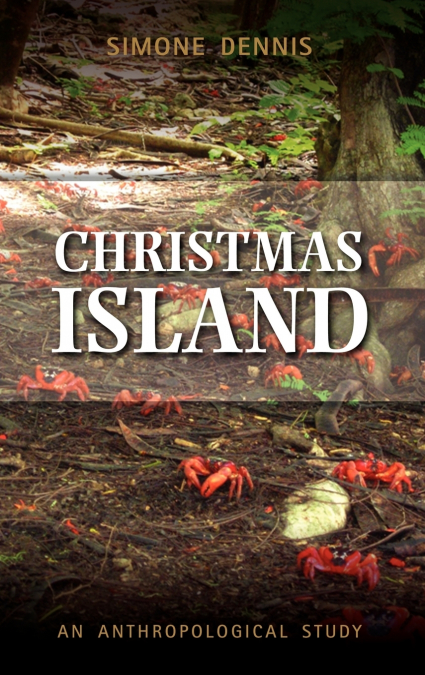
  • Christmas Island
    Simone Dennis
    Christmas Island is a small territory of Australia located in the Indian Ocean. It is home to three main ethnic groups, the smallest of which are European Australians. Christmas Island is also where those who arrive 'illegally' to seek asylum in Australia are accommodated. Christmas Island has played a key role in Australian security, located as it is at the northern extremity ...
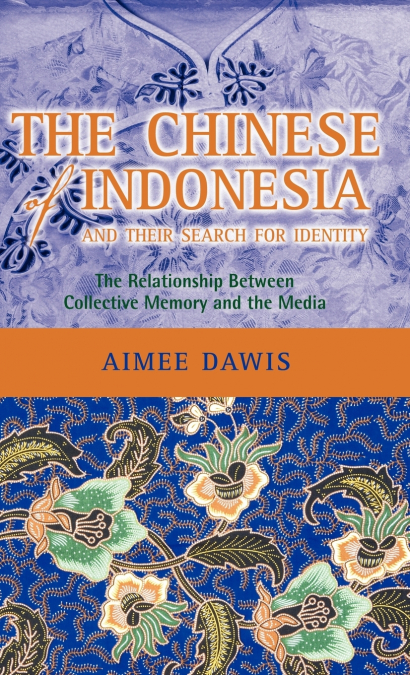
  • The Chinese of Indonesia and Their Search for Identity
    Aimee Dawis
    This book examines how the Indonesian Chinese who were born after 1966 negotiate meanings about their culture and identity through their collective memory of growing up in a restrictive media environment that specifically curtailed Chinese language and culture. The restrictive media environment was the result of a series of policies administered during the Suharto era (1965-199...

Otros libros del autor

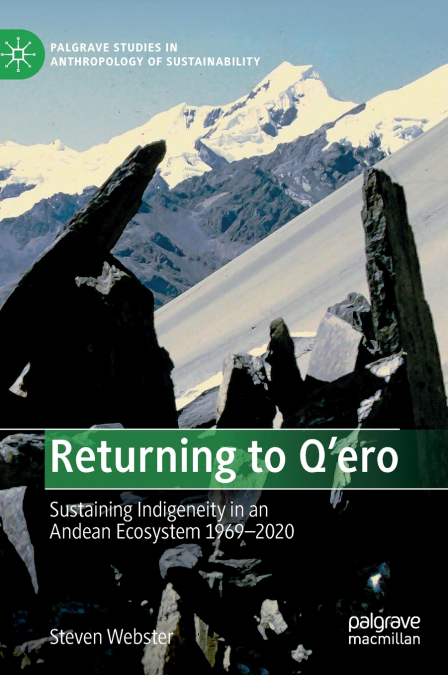
  • Returning to Q’ero
    Steven Webster
    In this book, social anthropologist Steven Webster provides an ethnohistory of sustainability among the indigenous Andean community of Hatun Q’ero since the 1960s. He first revisits his detailed ecological research among the remote Q’ero in the high Andes of Southern Peru in 1969-1970 and 1977. At that time, Q’ero was a community comprised of several hamlets in converging valle...
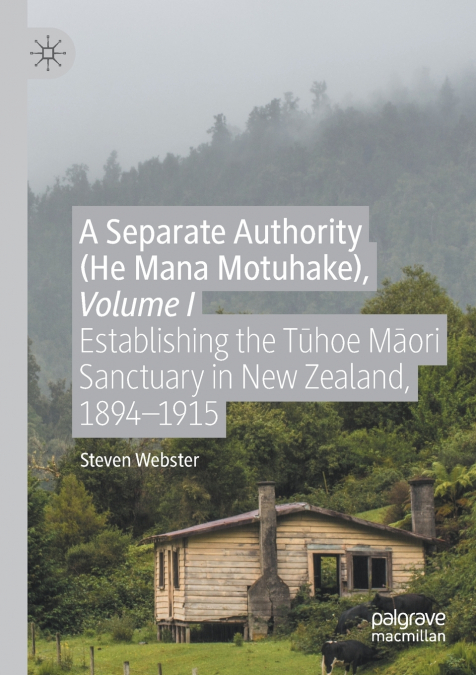
  • A Separate Authority (He Mana Motuhake), Volume I
    Steven Webster
    This book is an ethnohistorical reconstruction of the establishment in New Zealand of a rare case of Maori home-rule over their traditional domain, backed by a special statute and investigated by a Crown commission the majority of whom were Tūhoe leaders. However, by 1913 Tūhoe home-rule over this vast domain was being subverted by the Crown, which by 1926 had obtained three-qu...
    Disponible

    136,79 €

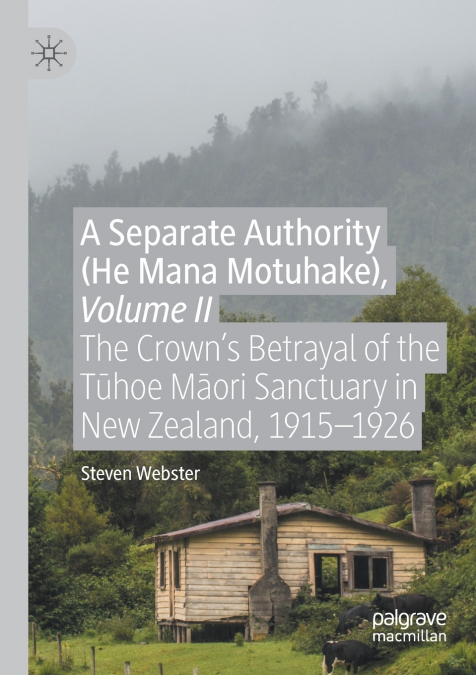
  • A Separate Authority (He Mana Motuhake), Volume II
    Steven Webster
    Following on from Volume I on the formation of the Urewera District Native Reserve, this monograph examines the period from 1908 to 1926, during which time the Crown subverted Tūhoe control of the UDNR, established a mere decade earlier. While Volume I described how the Tūhoe were able to deploy kin-based power to manipulate Crown power as well as confront one another, this vol...
    Disponible

    136,88 €

  • A Separate Authority (He Mana Motuhake), Volume II
    Steven Webster
    Following on from Volume I on the formation of the Urewera District Native Reserve, this monograph examines the period from 1908 to 1926, during which time the Crown subverted Tūhoe control of the UDNR, established a mere decade earlier. While Volume I described how the Tūhoe were able to deploy kin-based power to manipulate Crown power as well as confront one another, this vol...
  • A Separate Authority (He Mana Motuhake), Volume I
    Steven Webster
    This book is an ethnohistorical reconstruction of the establishment in New Zealand of a rare case of Maori home-rule over their traditional domain, backed by a special statute and investigated by a Crown commission the majority of whom were Tūhoe leaders. However, by 1913 Tūhoe home-rule over this vast domain was being subverted by the Crown, which by 1926 had obtained three-qu...