 Librería Samer Atenea
 Kálamo Books
 Librería Elías (Asturias)
 Librería Kolima (Madrid)
 Librería Proteo (Málaga)
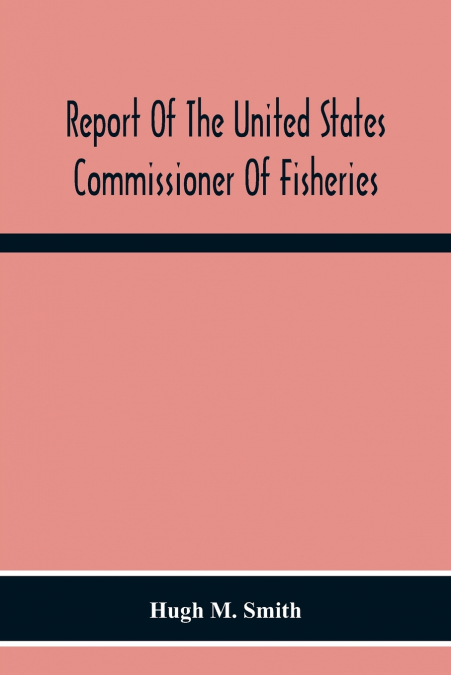
A vital record of American marine affairs from 1917. Essential reading for fisheries scholars. Compiled by Hugh M. Smith, this government fisheries report presents the US fisheries annual report and appendixes as a thorough fisheries research reference, offering official fisheries statistics alongside tables and narrative that together preserve historical fisheries data. Readers interested in early 20th century fisheries and united states fishery history will find regional accounts, stock assessments and policy notes that illuminate contemporary approaches to marine resource management. The appendixes gather administrative returns and supplementary tables that deepen the work’s value as an environmental policy resource. More than archival figures, the report frames debates about conservation, industry and regulation, functioning as an academic historical study and a practical reference for scholars and practitioners.This 1917 government publication is both a primary source for scholars and an accessible window for general readers; casual readers will appreciate its clarity and immediacy, while classic-literature collectors, historians and institutional libraries will prize it as part of any fisheries management collection. Republished by Alpha Editions in a careful modern edition, this volume preserves the spirit of the original while making it effortless to enjoy today - a heritage title prepared for readers and collectors alike. Its historical significance lies in the way it records policy, harvest figures and scientific observations at a pivotal moment in united states fishery history, supplying indispensable material for marine resource management studies and for anyone tracing the evolution of environmental policy. Whether consulted as a technical reference, a piece of national record, or a collectible, this report rewards curiosity with clear data and period perspective, making it a smart choice for academic libraries, environmental historians and collectors of early government publications. It is ideal for course syllabuses, bibliographies and archival holdings, connecting practical statistics to the broader sweep of environmental decision-making and resource stewardship. As part of a fisheries research reference shelf or a fisheries management collection, it remains a readable and trustworthy portal to past practice and present inquiry.