Manuel J. Olascoaga / Manuel JOlascoaga
 Librería Samer Atenea
 Kálamo Books
 Librería Elías (Asturias)
 Librería Kolima (Madrid)
 Librería Proteo (Málaga)
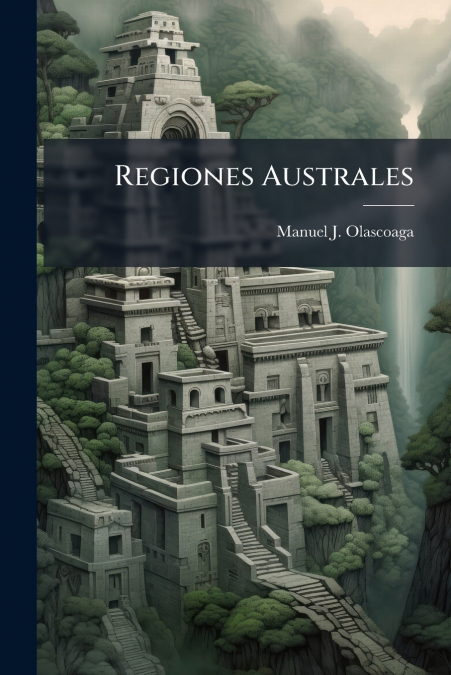
Regiones Australes, subtitled 'Topografía Andina; Ferrocarril Paralelo á Los Andes, Como Fomento De Población Y Seguridad De La Frontera; Complemento Indispensable De La Campaña De 1879,' by Manuel J. Olascoaga, offers a detailed exploration of the southern regions of South America at the turn of the 20th century. This Spanish-language work emphasizes the strategic importance of the Andes region, arguing for the construction of a trans-Andean railway to promote population growth and secure the national frontier. The book frames the railway project as an indispensable complement to the military campaigns of 1879. Olascoaga’s work provides valuable insights into the geopolitical thinking of the era and the ambition to integrate remote territories through ambitious infrastructure projects. It remains a significant historical document for understanding South American development and territorial strategies.This work has been selected by scholars as being culturally important, and is part of the knowledge base of civilization as we know it. This work was reproduced from the original artifact, and remains as true to the original work as possible. Therefore, you will see the original copyright references, library stamps (as most of these works have been housed in our most important libraries around the world), and other notations in the work.This work is in the public domain in the United States of America, and possibly other nations. Within the United States, you may freely copy and distribute this work, as no entity (individual or corporate) has a copyright on the body of the work.As a reproduction of a historical artifact, this work may contain missing or blurred pages, poor pictures, errant marks, etc. Scholars believe, and we concur, that this work is important enough to be preserved, reproduced, and made generally available to the public. We appreciate your support of the preservation process, and thank you for being an important part of keeping this knowledge alive and relevant.