 Librería Samer Atenea
 Kálamo Books
 Librería Elías (Asturias)
 Librería Kolima (Madrid)
 Librería Proteo (Málaga)
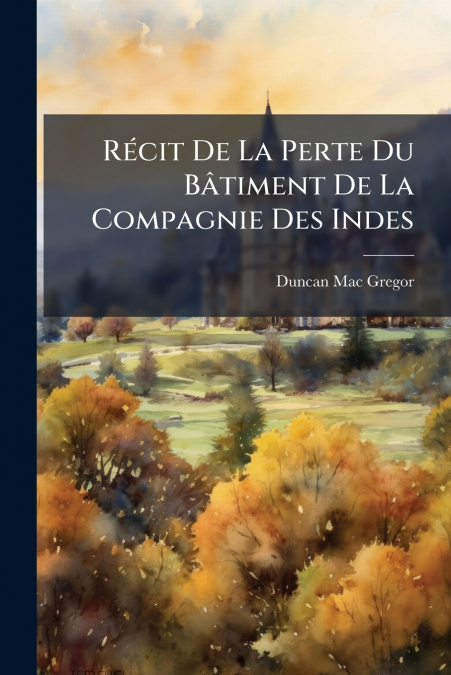
Récit De La Perte Du Bâtiment De La Compagnie Des Indes, Le Kent offers a firsthand account of the dramatic loss of the Kent, a vessel belonging to the East India Company. Written by one of the officers who survived the disaster, Duncan Mac Gregor, this narrative plunges readers into the harrowing experience of the ship’s destruction. The author recounts the events leading up to the catastrophe, the desperate struggle for survival, and the aftermath of the shipwreck. This historical document provides valuable insights into the perils of maritime travel in the 18th century and the challenges faced by those who sailed the seas. Mac Gregor’s detailed descriptions bring to life the courage and resilience of the passengers and crew as they confronted unimaginable adversity. This compelling narrative stands as a testament to the human spirit in the face of tragedy and offers a unique perspective on a significant event in maritime history.This work has been selected by scholars as being culturally important, and is part of the knowledge base of civilization as we know it. This work was reproduced from the original artifact, and remains as true to the original work as possible. Therefore, you will see the original copyright references, library stamps (as most of these works have been housed in our most important libraries around the world), and other notations in the work.This work is in the public domain in the United States of America, and possibly other nations. Within the United States, you may freely copy and distribute this work, as no entity (individual or corporate) has a copyright on the body of the work.As a reproduction of a historical artifact, this work may contain missing or blurred pages, poor pictures, errant marks, etc. Scholars believe, and we concur, that this work is important enough to be preserved, reproduced, and made generally available to the public. We appreciate your support of the preservation process, and thank you for being an important part of keeping this knowledge alive and relevant.