
Purposeful Pathogens

Purposeful Pathogens

Colton Martens

15,50 €
IVA incluido
Disponible
Editorial:
Outskirts Press
Año de edición:
2021
Materia
Biologia, ciencias de la vida
ISBN:
9781977245069
15,50 €
IVA incluido
Disponible

Selecciona una librería:

  • Librería Samer Atenea
  • Librería Aciertas (Toledo)
  • Kálamo Books
  • Librería Perelló (Valencia)
  • Librería Elías (Asturias)
  • Donde los libros
  • Librería Kolima (Madrid)
  • Librería Proteo (Málaga)

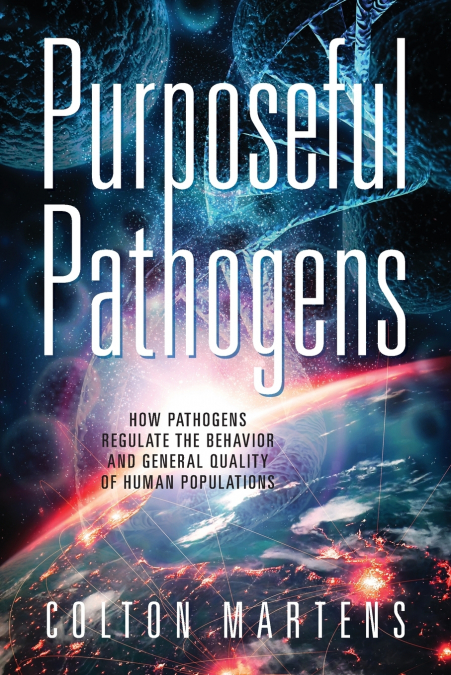
Lifestyle influences infectious disease:This book examines the relationship between lifestyle and infectious disease. Infectious diseases are highly variable in terms of how they affect different individuals, and this book makes the case that differences in lifestyle underlie this variation. More specifically, factors such as poor diet, lack of exercise, poor sleep habits, psychological stress, and exposure to pollution are known to increase one’s susceptibility to infection and to increase disease severity. Conversely, healthy lifestyle elements confer disease resistance. Each of the abovementioned lifestyle factors is discussed in detail as it pertains to infectious disease, and the scientific literature on each topic is thoroughly evaluated. The general mechanisms through which these factors alter susceptibility to infection are also considered. Mechanisms include damaging the immune system, damaging barrier defenses (like the skin or lining of the intestine), activating dormant viruses, driving the evolution of more virulent viral strains, and creating cellular microenvironments conducive to infection.  Human-environment interactions influence infectious disease:The book also contains a discussion of how human-based damage to the natural environment has promoted the emergence of new infectious diseases. When natural ecosystems are stressed, they undergo alterations in their species composition and species relationships in order to reach a new state of stability. This process also involves the alteration of host-pathogen relationships, which increases the chance that new infectious diseases will enter into human populations from natural reservoirs. By driving widespread extinction, deforestation, pollution, etc., humanity is widely perturbing host-pathogen relationships, and this likely contributes to the increasing rate of disease emergence. Humanity is also creating artificial environments that can increase the burden of infectious disease. Urban environments can make ideal homes for disease-carrying organisms like rodents or bats. Artificialized agricultural settings also put humans in close contact with densely packed animals, which has resulted in many livestock-to-human infectious disease outbreaks in recent decades. Finally, our overcrowded living centers coupled with globalized trade and travel have allowed rapid disease transmission, and this allows localized outbreaks to quickly become global threats. These examples highlight the contribution of artificialization to infectious disease.Overall thesis and conclusions:The central thesis of this book is that infectious diseases are controlled by many modifiable factors, and that we must change our behavior as a society and as individuals if we are to maximize our resistance to these diseases. Additionally, it appears that the behaviors that promote infectious disease also cause many other societal problems. Thus, it is possible that infectious diseases actually serve a valuable role of deterring destructive behaviors and purging society of offenders. Pathogens may thus be purposeful. This book is intended largely for infectious disease experts. Most sections are quite technical, but there is a generalized summary at the end of each chapter for lay people.

Artículos relacionados

  • Viral Replication Complexes
    Viruses are obligate intracellular parasites that need to co-opt a living cell’s machinery for replication. At the heart of the viral replication machinery are the nucleic acid polymerases, which are responsible for efficiently copying the viral genome. This process must often be coordinated with other viral processes, including protein translation and viral packaging. The poly...
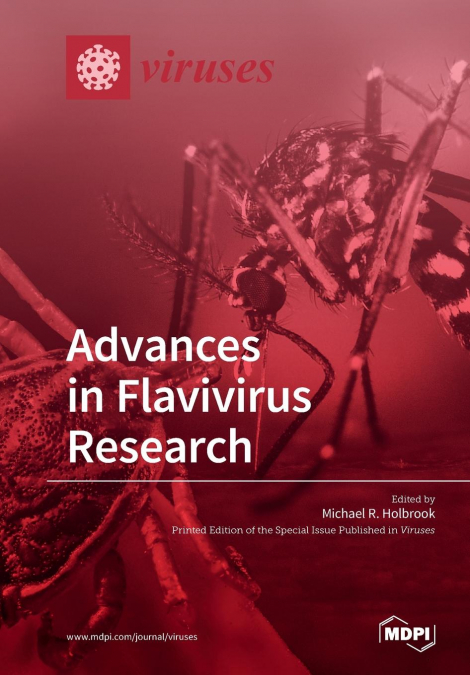
  • Advances in Flavivirus Research
    The flaviviruses are composed almost entirely of arthropod-borne viruses, a subset of which are responsible for millions of cases of human disease each year. Among these viruses are dengue virus—a scourge throughout the tropical regions of Asia and the Americas; yellow fever virus—the “original” hemorrhagic fever virus; and the recently emerged Zika virus. While the flaviviruse...
    Disponible

    51,85 €

  • Brain Asymmetry of Structure and/or Function
    Lesley J. Rogers / Lesley JRogers
    This edited book brings together research reports on the asymmetry of brain function in various species, including humans, dogs, birds, lizards and bees. As shown in a wide range of species, and, as we now know, not solely in humans, the left and right sides of the brain process information in different ways and control different responses or patterns of behaviour. Since this d...
    Disponible

    51,71 €

  • Fungal Pigments
    With the impact of globalization in research trends, the search for healthier life styles, the increasing public demand for natural, organic, and ‘clean labelled’ products, as well as the growing global market for natural colorants in economically fast-growing countries all over the world, filamentous fungi started to be investigated as readily available sources of chemically d...
    Disponible

    43,80 €

  • The Epithelialto- Mesenchymal Transition ( EMT ) in Cancer
    Joëlle Roche
    The epithelial-to-mesenchymal transition (EMT) is a highly dynamic process with multiple transitional states, by which epithelial cells can convert into a mesenchymal phenotype. This process involves loss of cellular adhesion and cellular polarity, and an improvement in migratory and invasive properties. It occurs during normal embryonic development, tissue regeneration, organ ...
    Disponible

    67,86 €

  • The Biology and Treatment of Myeloid Leukaemias
    There has been an observed decrease in the global mortality from cancer, mostly atributable to improved, particularly early, detection and prevention. For many carcinomas and leukaemias in adults, once the disease has reached a certain stage there are no therapies that are able to erradicate the cancer cells and cure patients. There has been progress in the treatment of acute m...
    Disponible

    51,85 €

Otros libros del autor

  • Science is Not Great
    Colton Martens
    Science Is Not GreatThroughout the COVID-19 pandemic, politicians repeatedly appealed to 'the science' to justify tyrannical policies, and much of the population passively complied. Such compliance stemmed from a deep, religious reverence for science in which people see science as an infallible god. But is science really that great, or is it doing more harm than good? In Scienc...
    Disponible

    24,89 €