Punishment

Punishment


71,26 €
IVA incluido
Disponible
Editorial:
Princeton University Press
Año de edición:
1994
Materia
Filosofía social y política
ISBN:
9780691029559
71,26 €
IVA incluido
Disponible

Selecciona una librería:

  • Librería Samer Atenea
  • Librería Aciertas (Toledo)
  • Kálamo Books
  • Librería Perelló (Valencia)
  • Librería Elías (Asturias)
  • Donde los libros
  • Librería Kolima (Madrid)
  • Librería Proteo (Málaga)

The problem of justifying legal punishment has been at the heart of legal and social philosophy from the very earliest recorded philosophical texts. However, despite several hundred years of debate, philosophers have not reached agreement about how legal punishment can be morally justified. That is the central issue addressed by the contributors to this volume. All of the essays collected here have been published in the highly respected journal Philosophy & Public Affairs. Taken together, they offer not only significant proposals for improving established theories of punishment and compelling arguments against long-held positions, but also ori-ginal and important answers to the question, 'How is punishment to be justified?' Part I of this collection, 'Justifications of Punishment,' examines how any practice of punishment can be morally justified. Contributors include Jeffrie G. Murphy, Alan H. Goldman, Warren Quinn, C. S. Nino, and Jean Hampton. The papers in Part II, 'Problems of Punishment,' address more specific issues arising in established theories. The authors are Martha C. Nussbaum, Michael Davis, and A. John Simmons. In the final section, 'Capital Punishment,' contributors discuss the justifiability of capital punishment, one of the most debated philosophical topics of this century. Essayists include David A. Conway, Jeffrey H. Reiman, Stephen Nathanson, and Ernest van den Haag.

Artículos relacionados

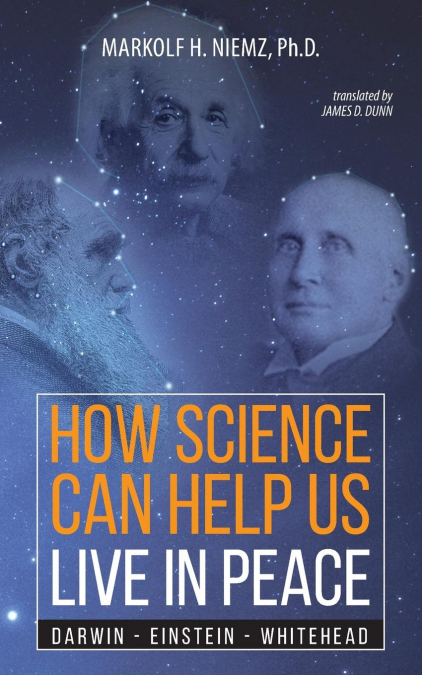
  • How Science Can Help Us Live In Peace
    Markolf H Niemz / James D Dunn
    Award-winning biophysicist Markolf H. Niemz puts into a nutshell what the top 3 scientists on earth have discovered. Charles Darwin: Animal and man are not two. Albert Einstein: Space and time are not two. Alfred N. Whitehead: The world and I are not two. The world we live in is non-dualistic. Nature is crying for peace, but we shut off foreign from native, poor from rich, othe...
    Disponible

    40,00 €

  • Sir George Tressady Vol.-II
    Mrs. Humphry Ward
    ' Sir George Tressady Vol. II' by Mrs. Humphry Ward is a unique that delves into the difficult social and political landscape of overdue nineteenth-century England. Mary Augusta Ward, writing beneath the pseudonym Mrs. Humphry Ward, become a prolific British creator known for her insightful portrayals of cutting-edge society. The narrative revolves across the imperative charact...
    Disponible

    15,20 €

  • Sir George Tressady Vol.-I
    Mrs. Humphry Ward
    'Sir George Tressady Vol. I' by Mrs. Humphry Ward is a unique that delves into the difficult social and political landscape of overdue nineteenth-century England. Mary Augusta Ward, writing beneath the pseudonym Mrs. Humphry Ward, become a prolific British creator known for her insightful portrayals of cutting-edge society. The narrative revolves across the imperative character...
    Disponible

    14,46 €

  • VIGLETS
    Viggo Hansen
    'VIGLETS Two - Ode to Dumbness' seeks to ease widespread global tensions resulting from dumb people, which includes everyone - and is seemingly increasing exponentially. The author gently guides readers into creating personal dumb Viglets - intimate odes, totally unrestricted by archaic rules of grammar - you simply let your emotions on dumbness 'hang out' and get instant relie...
    Disponible

    13,06 €

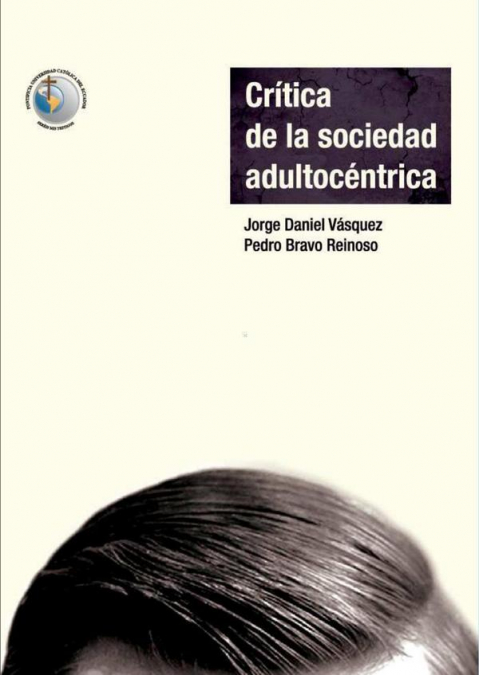
  • Crítica de la sociedad adultocéntrica
    Pedro Bravo Jorge Vásquez
    Crítica de la sociedad adultocéntrica constituye una reflexión sobre el carácter adultocéntrico de la sociedad contemporánea, por medio de la discusión con diversos autores importantes en el debate académico actual replantea perspectivas teóricas claves en la fundamentación de las subjetividades modernas. Para conseguir esto, el libro articula el análisis social recurriendo a l...
    Disponible

    20,80 €

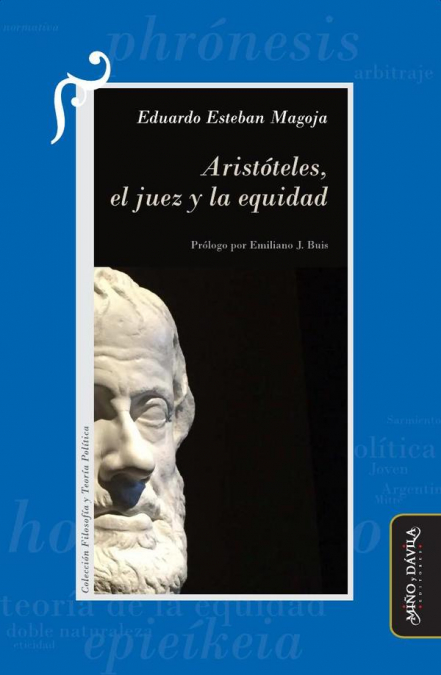
  • Aristóteles, el juez y la equidad
    Eduardo Esteban Magoja / Eduardo Esteban Magoja
    La teoría de la equidad (epieíkeia) de Aristóteles es ese tipo de ideas que atraviesa la historia del pensamiento jurídico y que tiene una indudable incidencia en el quehacer interpretativo judicial. Sin embargo, es susceptible de diversas interpretaciones, resemantizaciones y apropiaciones, incluso por parte de cosmovisiones opuestas. En términos generales, se pueden identific...
    Disponible

    14,04 €