Inicio > > Redes y comunicaciones informáticas > Protocolo de encaminhamento para redes comutadas de bolso
Protocolo de encaminhamento para redes comutadas de bolso

Protocolo de encaminhamento para redes comutadas de bolso

Amitabha Chakrabarty / Khadija Rasul / Ratna R. Sarkar

47,33 €
IVA incluido
Disponible
Editorial:
KS OmniScriptum Publishing
Año de edición:
2024
Materia
Redes y comunicaciones informáticas
ISBN:
9786208290627
47,33 €
IVA incluido
Disponible

Selecciona una librería:

  • Librería Samer Atenea
  • Librería Aciertas (Toledo)
  • Kálamo Books
  • Librería Perelló (Valencia)
  • Librería Elías (Asturias)
  • Donde los libros
  • Librería Kolima (Madrid)
  • Librería Proteo (Málaga)

Desde o início da Internet, o Protocolo de Controlo de Transmissão/Protocolo Internet (TCP/IP) é o protocolo de rede mais utilizado. Durante anos, sabemos que a Internet tem conseguido ligar dispositivos de comunicação em todo o mundo. O TCP/IP desempenha o papel mais importante para alcançar este objetivo de forma eficaz. O princípio básico da transferência de dados de extremo a extremo baseia-se no TCP/IP. Mas quando a conetividade de extremo a extremo é interrompida ou intermitente, o TCP/IP pode não funcionar corretamente com fiabilidade e, em muitos casos, pode falhar completamente a transferência de dados da origem para o destino. Este problema ocorre principalmente em zonas remotas ou aldeias que não dispõem de infra-estruturas básicas de apoio à Internet. Nestas circunstâncias, as redes de comunicação sem fios, que são independentes da conetividade de extremo a extremo entre nós, podem proporcionar melhores resultados. Uma dessas soluções é a Pocket Switched Network (PSN). Trata-se de uma área de investigação relativamente nova que pode funcionar corretamente sem infra-estruturas específicas. A PSN é independente da conetividade de extremo a extremo entre os seres humanos e pode proporcionar melhores resultados em ambientes extremos que o TCP/IP não consegue suportar.

Artículos relacionados

  • Next Generation Search Engines
    Recent technological progress in computer science, Web technologies, and the constantly evolving information available on the Internet has drastically changed the landscape of search and access to information. Current search engines employ advanced techniques involving machine learning, social networks, and semantic analysis. Next Generation Search Engines: Advanced Models for ...
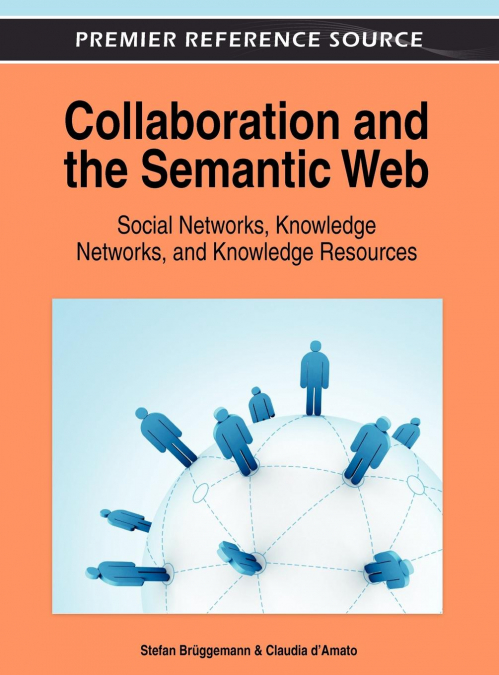
  • Collaboration and the Semantic Web
    Collaborative working has been increasingly viewed as a good practice for organizations to achieve efficiency. Organizations that work well in collaboration may have access to new sources of funding, deliver new, improved, and more integrated services, make savings on shared costs, and exchange knowledge, information and expertise. Collaboration and the Semantic Web: Social Net...
  • Resource Allocation in Next-Generation Broadband Wireless Access Networks
    With the growing popularity of wireless networks in recent years, the need to increase network capacity and efficiency has become more prominent in society. This has led to the development and implementation of heterogeneous networks. Resource Allocation in Next-Generation Broadband Wireless Access Networks is a comprehensive reference source for the latest scholarly research o...
  • Advanced Topics in Information Technology Standards and Standardization Research, Volume 1
    Kai Jakobs
    ...
  • Data Warehouses and OLAP
    ...
  • Selected Readings on Database Technologies and Applications
    Terry Halpin
    Education and research in the field of database technology can prove problematic without the proper resources and tools on the most relevant issues, trends, and advancements. Selected Readings on Database Technologies and Applications supplements course instruction and student research with quality chapters focused on key issues concerning the development, design, and analysis ...

Otros libros del autor

  • Routing-Protokoll für Pocket-Switched-Netzwerke
    Amitabha Chakrabarty / Khadija Rasul / Ratna R. Sarkar
    Seit den Anfängen des Internets ist das Transmission Control Protocol/Internet Protocol (TCP/IP) das am häufigsten verwendete Netzwerkprotokoll. Seit Jahren wissen wir, dass das Internet erfolgreich Kommunikationsgeräte weltweit miteinander verbindet. TCP/IP spielt dabei die wichtigste Rolle, um dies effektiv zu erreichen. Das Grundprinzip für die End-to-End-Datenübertragung ba...
    Disponible

    47,40 €

  • Protocollo di routing per reti a commutazione tascabile
    Amitabha Chakrabarty / Khadija Rasul / Ratna R. Sarkar
    Fin dall’inizio di Internet, il Transmission Control Protocol/Internet Protocol (TCP/IP) è il protocollo di rete più utilizzato. Da anni, sappiamo che Internet collega con successo i dispositivi di comunicazione in tutto il mondo. Il TCP/IP svolge il ruolo più importante per raggiungere questo obiettivo in modo efficace. Il principio di base per il trasferimento di dati end-to-...
    Disponible

    47,33 €

  • Protokół routingu dla kieszonkowych sieci przełączanych
    Amitabha Chakrabarty / Khadija Rasul / Ratna R. Sarkar
    Od początku istnienia Internetu, Transmission Control Protocol/Internet Protocol (TCP/IP) jest najczęściej używanym protokołem sieciowym. Od lat wiemy, że Internet z powodzeniem łączy komunikujące się urządzenia na całym świecie. TCP/IP odgrywa najważniejszą rolę w skutecznym osiągnięciu tego celu. Podstawowa zasada przesyłania danych od końca do końca opiera się na protokole T...
    Disponible

    47,40 €

  • Protocole de routage pour les réseaux à commutation de poche
    Amitabha Chakrabarty / Khadija Rasul / Ratna R. Sarkar
    Depuis les débuts d’Internet, le protocole de contrôle de transmission/protocole Internet (TCP/IP) est le protocole réseau le plus utilisé. Depuis des années, nous savons qu’Internet relie avec succès des dispositifs de communication dans le monde entier. Le protocole TCP/IP joue un rôle essentiel dans la réalisation de cet objectif. Le principe de base du transfert de données ...
    Disponible

    47,33 €