Inicio > Tecnología, ingeniería, agricultura > > Química industrial > Projeto e estimativa de custos da unidade de produção de etileno a partir de nafta
Projeto e estimativa de custos da unidade de produção de etileno a partir de nafta

Projeto e estimativa de custos da unidade de produção de etileno a partir de nafta

Aref Shahi / Hamed Aghaee / Maziar Heidari

140,63 €
IVA incluido
Disponible
Editorial:
KS OmniScriptum Publishing
Año de edición:
2026
Materia
Química industrial
ISBN:
9786208000516
140,63 €
IVA incluido
Disponible

Selecciona una librería:

  • Librería Samer Atenea
  • Kálamo Books
  • Librería Elías (Asturias)
  • Librería Kolima (Madrid)
  • Librería Proteo (Málaga)

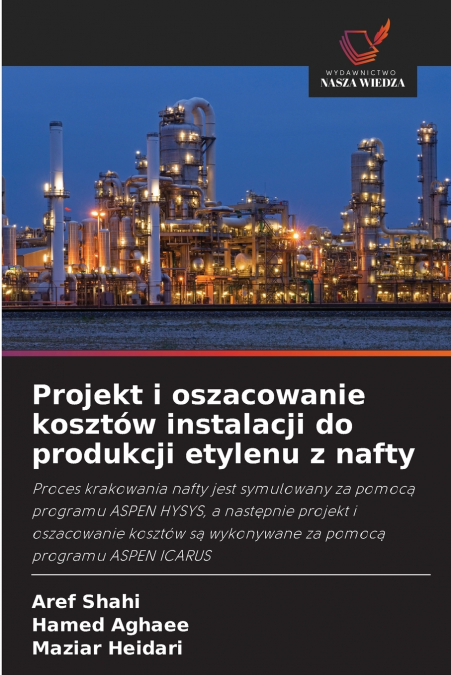
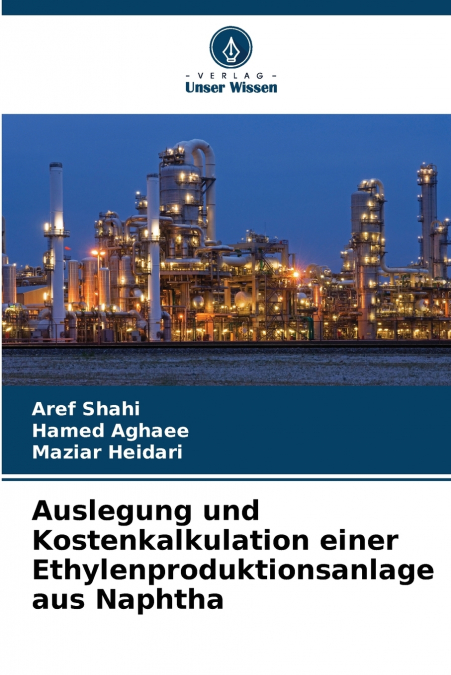
O etileno é amplamente utilizado na indústria química, e a sua produção mundial (mais de 109 milhões de toneladas em 2006) excede a de qualquer outro composto orgânico. Comercialmente, o etileno é obtido por (1) craqueamento térmico de hidrocarbonetos, tais como etano, propano, butano, nafta, querosene, gasóleo, petróleo bruto, etc., (2) craqueamento autotérmico (oxidação parcial) dos hidrocarbonetos acima, (3) recuperação a partir de gases residuais de refinarias, (4) recuperação a partir de gás de coque e (5) desidratação catalítica de álcool etílico ou éter etílico. O processo de craqueamento térmico é o processo mais interessante para a produção comercial de etileno. Neste projeto, estuda-se a produção de etileno a partir de nafta. A nafta, uma importante matéria-prima para a produção de etileno, é um conjunto de produtos intermediários líquidos de hidrocarbonetos do refino de petróleo. É uma mistura de hidrocarbonetos com ponto de ebulição entre 30 e 200 ºC. É alimentada ao forno de craqueamento de nafta. Em seguida, o gás craqueado é alimentado ao fraccionador de gasolina, onde separa o óleo de resfriamento como produto de fundo e a gasolina craqueada e os componentes mais leves como produtos de cabeça.
Artículos relacionados

  • Quantitative Structure-Activity Relationships in Drug Design, Predictive Toxicology, and Risk Assessment
    Kunal Roy
    Quantitative structure-activity relationships (QSARs) represent predictive models derived from the application of statistical tools correlating biological activity or other properties of chemicals with descriptors representative of molecular structure and/or property. Quantitative Structure-Activity Relationships in Drug Design, Predictive Toxicology, and Risk Assessment discus...
  • Chemical Compound Structures and the Higher Dimension of Molecules
    Gennadiy Vladimirovich Zhizhin
    Originally, scientists believed that molecules were three-dimensional; however, studies have proven that geometric dimensions are continuous. Therefore, molecules are able to have higher dimensions which influences how they interact with other molecules leading to advances in various fields including nanomedicine, nanotoxicology and quantum biology. Chemical Compound Structures...
  • CHEMICAL THERMODYNAMICS, 2ND EDITION
    Byung Chan Eu / BYUNG CHAN EU & MAZEN AL-GHOUL / EU BYUNG CHAN / Mazen Al-Ghoul
    This book enables the reader to learn, in a single volume, equilibrium and nonequilibrium thermodynamics as well as generalized forms of hydrodynamics for linear and nonlinear processes applied to various hydrodynamic flow processes — including chemical oscillation phenomena and pattern formations, shock wave phenomena, sound wave propagations, and Liesegang pattern formation, ...
  • CARBOHYDRATE CHEMISTRY
    ALEN RAIMO / Raimo Alen
     This book presents a comprehensive approach to the versatile and fascinating field of carbohydrate chemistry. It covers, besides the colorful historical perspective within the utilization of carbohydrates and their derivatives, all modern aspects on their properties, nomenclature, uses, and natural occurrence as such or as residues in a variety of biologically active molecules...
  • Recent Developments in Geopolymers and Alkali-Activated Materials
    Sujeong Lee
    We are compiling and publishing a collection of the latest research papers in the fields of Geopolymer and Alkali-Activated Materials (AAM). This compilation includes eight original research and two review papers covering a diverse range of topics, including various raw materials, manufacturing processes, and applications in the realms of Geopolymer and AAM. The publication aim...
  • Introduction to Chemical Engineering Fluid Mechanics
    William M. Deen
    ...

Otros libros del autor

  • Conception et estimation des coûts d’une unité de production d’éthylène à partir de naphta
    Aref Shahi / Hamed Aghaee / Maziar Heidari
    L’éthylène est largement utilisé dans l’industrie chimique, et sa production mondiale (plus de 109 millions de tonnes en 2006) dépasse celle de tout autre composé organique. Commercialement, l’éthylène est obtenu par (1) craquage thermique d’hydrocarbures tels que l’éthane, le propane, le butane, le naphta, kérosène, gazole, pétrole brut, etc., (2) du craquage autothermique (ox...
    Disponible

    140,63 €

  • Progettazione e stima dei costi dell’unità di produzione di etilene dalla nafta
    Aref Shahi / Hamed Aghaee / Maziar Heidari
    L’etilene è ampiamente utilizzato nell’industria chimica e la sua produzione mondiale (oltre 109 milioni di tonnellate nel 2006) supera quella di qualsiasi altro composto organico. A livello commerciale, l’etilene si ottiene tramite (1) cracking termico di idrocarburi quali etano, propano, butano, nafta, cherosene, gasolio, petrolio greggio, ecc., (2) dal cracking autotermico (...
    Disponible

    140,63 €

  • Projekt i oszacowanie kosztów instalacji do produkcji etylenu z nafty
    Aref Shahi / Hamed Aghaee / Maziar Heidari
    Etylen jest szeroko stosowany w przemyśle chemicznym, a jego światowa produkcja (ponad 109 milionów ton w 2006 r.) przewyższa produkcję jakiegokolwiek innego związku organicznego. Komercyjnie etylen uzyskuje się poprzez (1) termiczny kraking węglowodorów, takich jak etan, propan, butan, nafta, nafty, oleju napędowego, ropy naftowej itp., (2) autotermicznego krakowania (częściow...
    Disponible

    140,63 €

  • Auslegung und Kostenkalkulation einer Ethylenproduktionsanlage aus Naphtha
    Aref Shahi / Hamed Aghaee / Maziar Heidari
    Ethylen wird in der chemischen Industrie häufig verwendet, und seine weltweite Produktion (über 109 Millionen Tonnen im Jahr 2006) übersteigt die aller anderen organischen Verbindungen. Kommerziell wird Ethylen gewonnen durch (1) thermisches Cracken von Kohlenwasserstoffen wie Ethan, Propan, Butan, Naphtha, Kerosin, Gasöl, Rohöl usw., (2) durch autothermes Cracken (partielle Ox...
    Disponible

    140,63 €

  • Design & Cost Estimation of Ethylene Production Unit From Naphta
    Aref Shahi / Hamed Aghaee / Maziar Heidari
    Ethylene is widely used in chemical industry, and its worldwide production(over 109 million tonnes in 2006) exceeds that of any other organic compound. Commercially ethylene is obtained by(1)thermal cracking of hydrocarbons such as ethane, propane, butane, naphtha, kerosene, gasoil, crude oil,etc,(2) auto thermic cracking (partial oxidation) of the above hydrocarbons,(3)recover...
    Disponible

    91,02 €