Inicio > Sociedad y ciencias sociales > Educación pedagogía > Project-Based Second and Foreign Language Education
Project-Based Second and Foreign Language Education

Project-Based Second and Foreign Language Education


149,43 €
IVA incluido
Consulta disponibilidad
Editorial:
Emerald Publishing Ltd
Año de edición:
2006
Materia
Educación pedagogía
ISBN:
9781593115067

Selecciona una librería:

  • Librería Samer Atenea
  • Librería Aciertas (Toledo)
  • Kálamo Books
  • Librería Perelló (Valencia)
  • Librería Elías (Asturias)
  • Donde los libros
  • Librería Kolima (Madrid)
  • Librería Proteo (Málaga)

Dewey’s idea of Project-based Learning (PBL) was introduced into the field of second language education nearly two decades ago as a wayto reflect the principles of student-centered teaching (Hedge, 1993). Since then, PBL has also become a popular language and literacyactivity at various levels and in various contexts (see Beckett, 1999; Fried-Booth, 2002; Levis & Levis, 2003; Kobayashi, 2003; Luongo-Orlando, 2001; Mohan & Beckett, 2003; Weinstein, 2004). For example, it has been applied to teach various ESL and EFL skills around theworld (e.g., Fried-Booth, 2002). More recently, PBL has been heralded as the most appropriate approach to teaching content-based secondlanguage education (Bunch, et al., 2001; Stoller, 1997), English for specific purposes (Fried-Booth, 2002), community-based languagesocialization (Weinstien, 2004), and critical and higher order thinking as well as problem-solving skills urged by the National ResearchCouncil (1999). Despite this emphasis, there is a severe shortage of empirical research on PBL and research-based frameworks and modelsbased on sound theoretical guidance in general and second and foreign language education in particular (Thomas, 2000). Also missing fromthe second and foreign language education literature is systematic discussion of PBL work that brings together representative work,identifying obvious gaps, and guiding the field toward future directions. This, first of its kind, volume bridges these obvious gaps throughthe original work of international scholars from Canada, Israel, Japan, Singapore, and the US.
Artículos relacionados

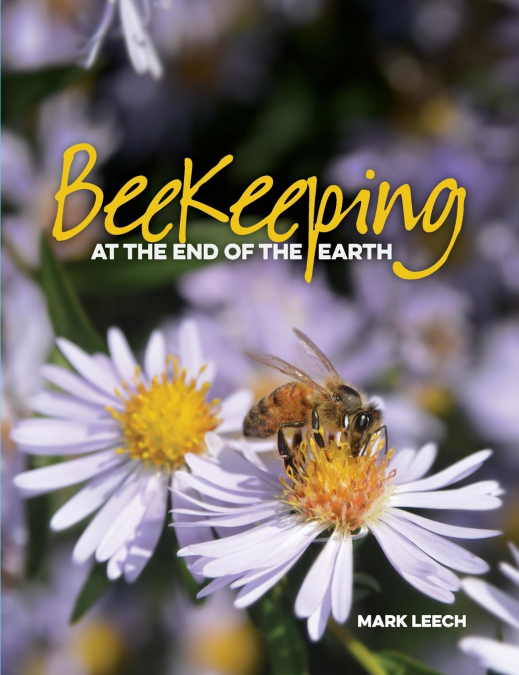
  • Beekeeping At The End Of The Earth
    Mark David Leech
    Beekeeping at the End of the Earth, an essential read for learning about beekeeping in a cool temperate climate with a focus on Tasmania our island home.  One hundred beekeepers one hundred different ways to keep bees.Beekeeping At The End Of The Earth is a practical insight into cool climate beekeeping with a focus on Tasmania, our island home.Richly illustrated with unique di...
    Disponible

    45,16 €

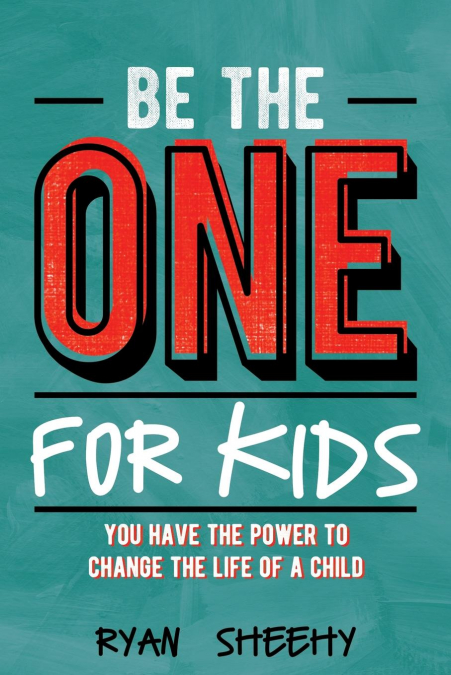
  • Be the One for Kids
    Ryan Sheehy
    One person can make a difference.That person can be you. “I want to show others that one person can make the difference in a child’s life. I want all educators, parents, coaches, and everyone in between to know they have power to Be the One for Kids.” —Ryan Sheehy If you ever feel like you’re all alone or think that no one gets you, just imagine how your students feel. Kids wan...
    Disponible

    27,99 €

  • Handbook of Research on E-Learning Standards and Interoperability
    As the e-learning industry continues to expand and the methods and tools necessary to create and maintain content and infrastructure applications become more complicated, there is an inherent need for these applications to interoperate and exchange data in order to better support the needs of learners and educators. Handbook of Research on E-Learning Standards and Interoperabil...
  • Teaching in the Knowledge Society
    Antonio Cartelli
    ...
  • Enhancing Learning Through Human Computer Interaction
    Elspeth McKay
    ...
  • Learning Objects for Instruction
    Pamela Taylor Northrup
    ...