Pragmatism

Pragmatism

William James

16,39 €
IVA incluido
Disponible
Editorial:
Bibliotech Press
Año de edición:
2013
Materia
Filosofía social y política
ISBN:
9781618951038
16,39 €
IVA incluido
Disponible

Selecciona una librería:

  • Librería Samer Atenea
  • Librería Aciertas (Toledo)
  • Kálamo Books
  • Librería Perelló (Valencia)
  • Librería Elías (Asturias)
  • Donde los libros
  • Librería Kolima (Madrid)
  • Librería Proteo (Málaga)

William James explains the pragmatic method and its consequences, advocating its usefulness in understanding what we take to be true belief. Pragmatism holds that to have a belief is to have certain rules for action. Any and every notion has its own set of practical consequences. The meaning of a thought is said to be whatever course of action necessarily follow from it. In metaphysical disputes between false and true notions, the dispute must be settled by considering the practical consequences of the two notions. Any two notions that can be shown to have identical practical consequences are shown to be identical notions. Writes James, 'Whenever a dispute is serious, we ought to be able to show some practical difference that must follow from one side or the other’s being right.' To have a clear and complete conception of an object is equivalent to considering the practical, empirical effects and properties of the object, and the conduct it will produce. James credits Charles Peirce for introducing this way of thinking about belief. James writes that it was Peirce’s notion that 'To attain perfect clearness in our thoughts of an object, then, we need only consider what conceivable effects of a practical kind the object may involve- what sensations we are to expect from it, and what reactions we must prepare,' and that further, 'to develop a thought’s meaning, we need only determine what conduct it is fitted to produce: that conduct is for us its sole significance.'

Artículos relacionados

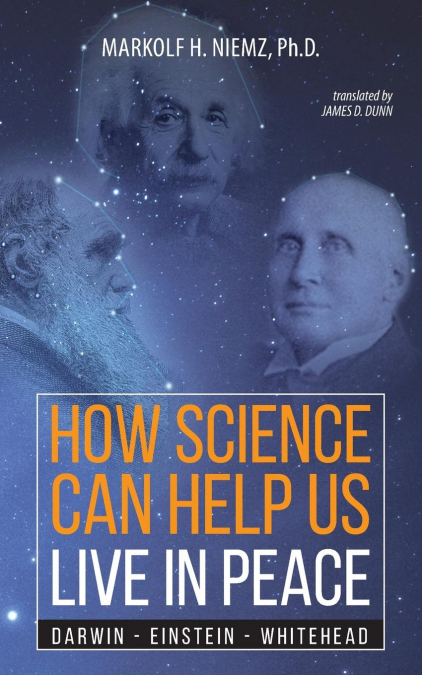
  • How Science Can Help Us Live In Peace
    Markolf H Niemz / James D Dunn
    Award-winning biophysicist Markolf H. Niemz puts into a nutshell what the top 3 scientists on earth have discovered. Charles Darwin: Animal and man are not two. Albert Einstein: Space and time are not two. Alfred N. Whitehead: The world and I are not two. The world we live in is non-dualistic. Nature is crying for peace, but we shut off foreign from native, poor from rich, othe...
    Disponible

    40,00 €

  • Sir George Tressady Vol.-II
    Mrs. Humphry Ward
    ' Sir George Tressady Vol. II' by Mrs. Humphry Ward is a unique that delves into the difficult social and political landscape of overdue nineteenth-century England. Mary Augusta Ward, writing beneath the pseudonym Mrs. Humphry Ward, become a prolific British creator known for her insightful portrayals of cutting-edge society. The narrative revolves across the imperative charact...
    Disponible

    15,20 €

  • Sir George Tressady Vol.-I
    Mrs. Humphry Ward
    'Sir George Tressady Vol. I' by Mrs. Humphry Ward is a unique that delves into the difficult social and political landscape of overdue nineteenth-century England. Mary Augusta Ward, writing beneath the pseudonym Mrs. Humphry Ward, become a prolific British creator known for her insightful portrayals of cutting-edge society. The narrative revolves across the imperative character...
    Disponible

    14,46 €

  • VIGLETS
    Viggo Hansen
    'VIGLETS Two - Ode to Dumbness' seeks to ease widespread global tensions resulting from dumb people, which includes everyone - and is seemingly increasing exponentially. The author gently guides readers into creating personal dumb Viglets - intimate odes, totally unrestricted by archaic rules of grammar - you simply let your emotions on dumbness 'hang out' and get instant relie...
    Disponible

    13,06 €

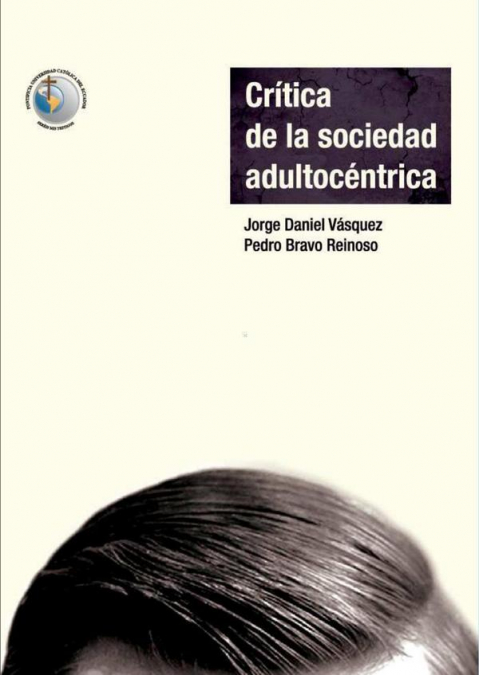
  • Crítica de la sociedad adultocéntrica
    Pedro Bravo Jorge Vásquez
    Crítica de la sociedad adultocéntrica constituye una reflexión sobre el carácter adultocéntrico de la sociedad contemporánea, por medio de la discusión con diversos autores importantes en el debate académico actual replantea perspectivas teóricas claves en la fundamentación de las subjetividades modernas. Para conseguir esto, el libro articula el análisis social recurriendo a l...
    Disponible

    20,80 €

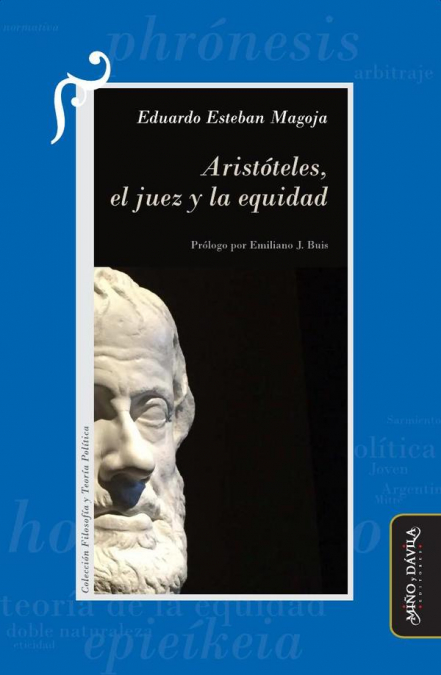
  • Aristóteles, el juez y la equidad
    Eduardo Esteban Magoja / Eduardo Esteban Magoja
    La teoría de la equidad (epieíkeia) de Aristóteles es ese tipo de ideas que atraviesa la historia del pensamiento jurídico y que tiene una indudable incidencia en el quehacer interpretativo judicial. Sin embargo, es susceptible de diversas interpretaciones, resemantizaciones y apropiaciones, incluso por parte de cosmovisiones opuestas. En términos generales, se pueden identific...
    Disponible

    14,04 €

Otros libros del autor

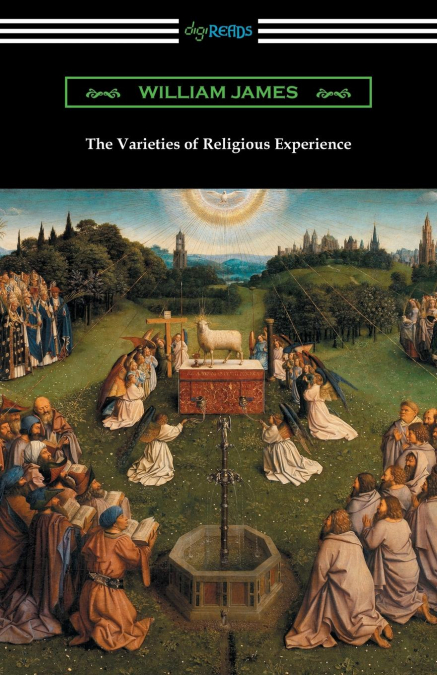
  • The Varieties of Religious Experience
    William James
    First published in 1902, “The Varieties of Religious Experience” is William James’ philosophical and psychological examination of the nature of religion in human civilization. Based on James’s own Gifford Lectures given at the University of Edinburgh in Scotland between 1901 and 1902, James argues that “Scientific theories are organically conditioned just as much as religious e...
    Disponible

    15,59 €

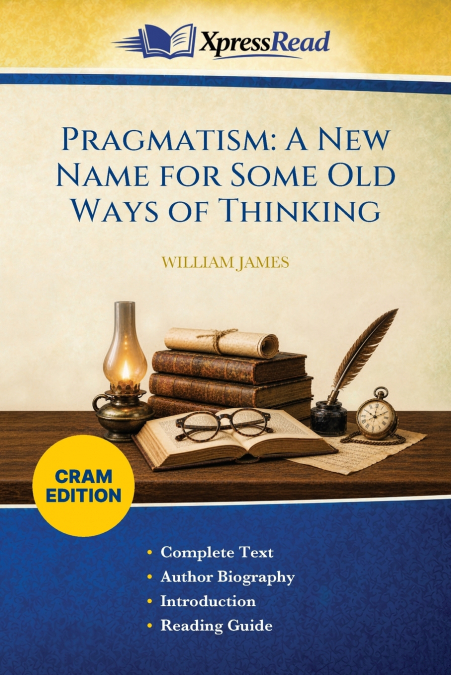
  • Pragmatism
    William James
    Pragmatism (1907) by William James presents a philosophy that judges ideas by their practical consequences rather than by abstract principles. James argues that the meaning and truth of any belief lie in how it works in real life-whether it helps us navigate experience, solve problems, or make sense of the world.He challenges rigid, absolutist systems of philosophy and defends ...
    Disponible

    14,18 €

  • Pragmatism
    William James
    Pragmatism (1907) by William James presents a philosophy that judges ideas by their practical consequences rather than by abstract principles. James argues that the meaning and truth of any belief lie in how it works in real life-whether it helps us navigate experience, solve problems, or make sense of the world.He challenges rigid, absolutist systems of philosophy and defends ...
  • The Principles of Psychology
    William James
    In The Principles of Psychology, Vol. II, William James continues his masterful inquiry into the workings of the human mind. With depth and clarity, he examines will, belief, attention, and the self-offering a profound synthesis of philosophy and science that remains a cornerstone of psychological thought. ...
    Disponible

    26,72 €

  • The Principles of Psychology
    William James
    In The Principles of Psychology, Vol. I, William James lays the foundation for modern psychology. Blending philosophy and science, he explores consciousness, habit, and emotion with vivid insight and human warmth. A landmark work that reshaped how we understand the mind and the stream of thought itself. ...
    Disponible

    27,98 €

  • A Pluralistic Universe
    William James
    A Pluralistic Universe by William James argues for a reality composed of many interacting, independent perspectives rather than a single, unified whole. James challenges the dominant monistic views of his time, advocating for a more nuanced understanding of experience that embraces the diversity and complexity of the world.James critiques philosophical systems that attempt to r...
    Disponible

    18,80 €