Inicio > Matemáticas y ciencia > Biologia, ciencias de la vida > Potentiel d’invasion et biologie de Cyprinus carpio (carpe commune)
Potentiel d’invasion et biologie de Cyprinus carpio (carpe commune)

Potentiel d’invasion et biologie de Cyprinus carpio (carpe commune)

A. Gopesh / Amitabh Chandra Dwivedi / Ravindra Kumar Pathak

131,19 €
IVA incluido
Disponible
Editorial:
KS OmniScriptum Publishing
Año de edición:
2026
Materia
Biologia, ciencias de la vida
ISBN:
9786209798382
131,19 €
IVA incluido
Disponible

Selecciona una librería:

  • Librería Samer Atenea
  • Kálamo Books
  • Librería Elías (Asturias)
  • Librería Kolima (Madrid)
  • Librería Proteo (Málaga)

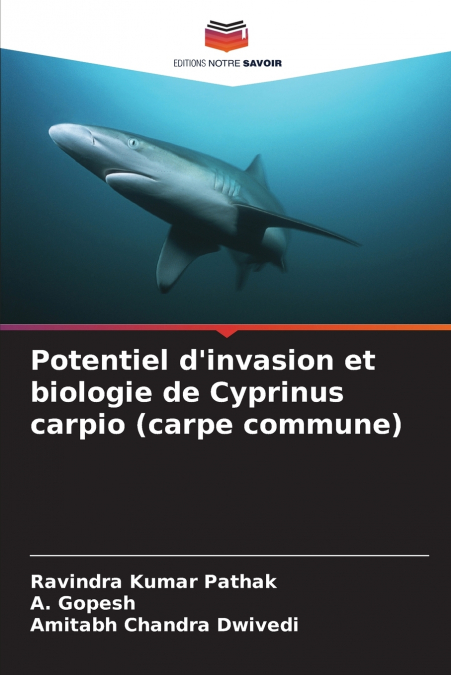
Cyprinus carpio a été introduit en Inde entre 1939 et 1957 à des fins aquacoles et représente plus de 7,17 % de la production totale de poissons d’eau douce. C. carpio a contribué davantage dans la rivière Yamuna que dans le Gange en termes de débarquements. La présente étude a montré que le taux de croissance était plus élevé dans la Yamuna que dans le Gange à Allahabad. Au cours des deux premières années, la croissance enregistrée était respectivement de 20,69 cm et 8,36 cm dans la Yamuna et de 19,03 cm et 7,46 cm dans le Gange. Des poissons âgés de 0+ à 13+ ont été enregistrés dans la Yamuna, tandis que des poissons âgés de 0+ à 11+ ont été trouvés dans le Gange. Les poissons âgés de 0+ à 2+ ont été fortement exploités dans la Yamuna (50,51 %) par rapport au Gange (45,52 %). Le rapport de sexe de C. carpio var. communis était très proche du rapport de sexe attendu (1:1) dans les fleuves Gange et Yamuna. En conclusion, on peut affirmer que C. carpio est un puissant envahisseur dans les fleuves Gange et Yamuna à Allahabad, en Inde.

Artículos relacionados

  • Viral Replication Complexes
    Viruses are obligate intracellular parasites that need to co-opt a living cell’s machinery for replication. At the heart of the viral replication machinery are the nucleic acid polymerases, which are responsible for efficiently copying the viral genome. This process must often be coordinated with other viral processes, including protein translation and viral packaging. The poly...
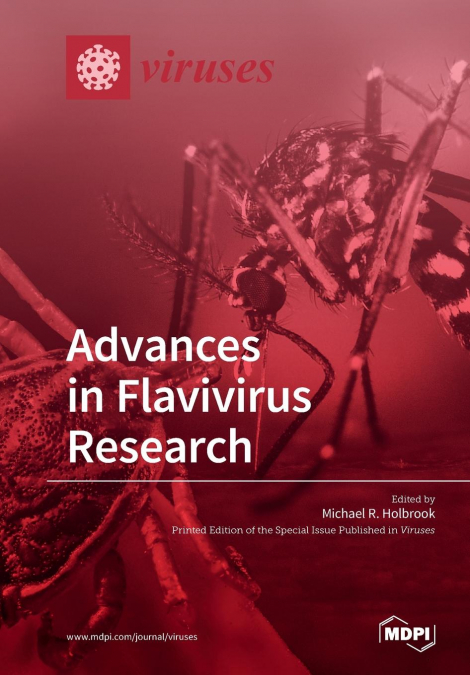
  • Advances in Flavivirus Research
    The flaviviruses are composed almost entirely of arthropod-borne viruses, a subset of which are responsible for millions of cases of human disease each year. Among these viruses are dengue virus—a scourge throughout the tropical regions of Asia and the Americas; yellow fever virus—the “original” hemorrhagic fever virus; and the recently emerged Zika virus. While the flaviviruse...
    Disponible

    51,85 €

  • Brain Asymmetry of Structure and/or Function
    Lesley J. Rogers / Lesley JRogers
    This edited book brings together research reports on the asymmetry of brain function in various species, including humans, dogs, birds, lizards and bees. As shown in a wide range of species, and, as we now know, not solely in humans, the left and right sides of the brain process information in different ways and control different responses or patterns of behaviour. Since this d...
    Disponible

    51,71 €

  • Fungal Pigments
    With the impact of globalization in research trends, the search for healthier life styles, the increasing public demand for natural, organic, and ‘clean labelled’ products, as well as the growing global market for natural colorants in economically fast-growing countries all over the world, filamentous fungi started to be investigated as readily available sources of chemically d...
    Disponible

    43,80 €

  • The Epithelialto- Mesenchymal Transition ( EMT ) in Cancer
    Joëlle Roche
    The epithelial-to-mesenchymal transition (EMT) is a highly dynamic process with multiple transitional states, by which epithelial cells can convert into a mesenchymal phenotype. This process involves loss of cellular adhesion and cellular polarity, and an improvement in migratory and invasive properties. It occurs during normal embryonic development, tissue regeneration, organ ...
    Disponible

    67,86 €

  • The Biology and Treatment of Myeloid Leukaemias
    There has been an observed decrease in the global mortality from cancer, mostly atributable to improved, particularly early, detection and prevention. For many carcinomas and leukaemias in adults, once the disease has reached a certain stage there are no therapies that are able to erradicate the cancer cells and cure patients. There has been progress in the treatment of acute m...
    Disponible

    51,85 €

Otros libros del autor

  • Potenziale invasivo e biologia del Cyprinus carpio (carpa comune)
    A. Gopesh / Amitabh Chandra Dwivedi / Ravindra Kumar Pathak
    Il Cyprinus carpio è stato introdotto in India tra il 1939 e il 1957 a fini di acquacoltura e contribuisce per oltre il 7,17% alla produzione ittica totale interna. Il C. carpio ha dato il contributo maggiore nel fiume Yamuna rispetto al fiume Gange in termini di sbarchi. La presente indagine ha indicato che il tasso di crescita era più elevato nel fiume Yamuna rispetto al fium...
    Disponible

    132,51 €

  • Potencjał inwazyjny i biologia Cyprinus carpio (karp pospolity)
    A. Gopesh / Amitabh Chandra Dwivedi / Ravindra Kumar Pathak
    Cyprinus carpio został wprowadzony do Indii w latach 1939-1957 w celach akwakultury i stanowi ponad 7,17% całkowitej produkcji ryb śródlądowych. W porównaniu z rzeką Ganges, największy udział C. carpio miał w scenariuszu połowów w rzece Jamuna. Obecne badania wykazały, że tempo wzrostu było wyższe w rzece Jamuna w porównaniu z rzeką Ganges w Allahabadzie. W ciągu pierwszych dwó...
    Disponible

    132,52 €

  • Potencial invasivo e biologia do Cyprinus carpio (carpa comum)
    A. Gopesh / Amitabh Chandra Dwivedi / Ravindra Kumar Pathak
    O Cyprinus carpio foi introduzido na Índia entre 1939 e 1957 para fins de aquicultura e contribui com mais de 7,17% da produção total de peixes em águas interiores. O C. carpio teve maior contribuição no rio Yamuna em comparação com o rio Ganges em termos de desembarque. A presente investigação indicou que a taxa de crescimento foi maior no rio Yamuna em comparação com o rio Ga...
    Disponible

    132,51 €

  • Invasionspotenzial und Biologie von Cyprinus carpio (Karpfen)
    A. Gopesh / Amitabh Chandra Dwivedi / Ravindra Kumar Pathak
    Cyprinus carpio wurde zwischen 1939 und 1957 zu Aquakulturzwecken in Indien eingeführt und trägt mehr als 7,17 % zur gesamten Binnenfischproduktion bei. Im Vergleich zum Ganges trug C. carpio im Yamuna-Fluss am meisten zur Fangmenge bei. Die vorliegende Untersuchung ergab, dass die Wachstumsrate im Yamuna-Fluss höher war als im Ganges-Fluss bei Allahabad. In den ersten beiden J...
    Disponible

    132,48 €