
Inicio > Matemáticas y ciencia > Biologia, ciencias de la vida > Phytochemical and Biological Study of Calycotome villosa
Phytochemical and Biological Study of Calycotome villosa

Phytochemical and Biological Study of Calycotome villosa

Oulaya Zerfaoui

66,79 €
IVA incluido
Disponible
Editorial:
KS OmniScriptum Publishing
Año de edición:
2026
Materia
Biologia, ciencias de la vida
ISBN:
9786209520242
66,79 €
IVA incluido
Disponible

Selecciona una librería:

  • Librería Samer Atenea
  • Librería Aciertas (Toledo)
  • Kálamo Books
  • Librería Perelló (Valencia)
  • Librería Elías (Asturias)
  • Donde los libros
  • Librería Kolima (Madrid)
  • Librería Proteo (Málaga)

Algeria covers an area of 2,381,741 km² and is the largest country in Africa. Algeria is bordered to the north by the Mediterranean Sea, to the south by Mali and Niger, to the west by Morocco, Western Sahara, and Mauritania, and to the east by Tunisia and Libya. The Seraïdi region, located 13 km west of Annaba, has remarkable floral biodiversity, with cryptogamic, herbaceous, shrubby, and arboreal strata. This floral assemblage includes various species of pharmaceutical interest. Calycotome (Calycotome villosa), commonly known as El-guendoul, belongs to the Fabaceae family and is a species rich in secondary metabolites, which are the active ingredients in many medicines. Among the pharmacological properties of this species are hypotensive, diuretic, and vasodilatory activity. This study seeks to evaluate the antimicrobial and antifungal potential of its methanolic extract and to assess the link between these properties and the polyphenolic compound content. Thus, phytochemical screening was carried out on the aerial part of the plant, namely the leaves.
Artículos relacionados

  • Viral Replication Complexes
    Viruses are obligate intracellular parasites that need to co-opt a living cell’s machinery for replication. At the heart of the viral replication machinery are the nucleic acid polymerases, which are responsible for efficiently copying the viral genome. This process must often be coordinated with other viral processes, including protein translation and viral packaging. The poly...
  • Advances in Flavivirus Research
    The flaviviruses are composed almost entirely of arthropod-borne viruses, a subset of which are responsible for millions of cases of human disease each year. Among these viruses are dengue virus—a scourge throughout the tropical regions of Asia and the Americas; yellow fever virus—the “original” hemorrhagic fever virus; and the recently emerged Zika virus. While the flaviviruse...
    Disponible

    51,85 €

  • Brain Asymmetry of Structure and/or Function
    Lesley J. Rogers / Lesley JRogers
    This edited book brings together research reports on the asymmetry of brain function in various species, including humans, dogs, birds, lizards and bees. As shown in a wide range of species, and, as we now know, not solely in humans, the left and right sides of the brain process information in different ways and control different responses or patterns of behaviour. Since this d...
    Disponible

    51,71 €

  • Fungal Pigments
    With the impact of globalization in research trends, the search for healthier life styles, the increasing public demand for natural, organic, and ‘clean labelled’ products, as well as the growing global market for natural colorants in economically fast-growing countries all over the world, filamentous fungi started to be investigated as readily available sources of chemically d...
    Disponible

    43,80 €

  • The Epithelialto- Mesenchymal Transition ( EMT ) in Cancer
    Joëlle Roche
    The epithelial-to-mesenchymal transition (EMT) is a highly dynamic process with multiple transitional states, by which epithelial cells can convert into a mesenchymal phenotype. This process involves loss of cellular adhesion and cellular polarity, and an improvement in migratory and invasive properties. It occurs during normal embryonic development, tissue regeneration, organ ...
    Disponible

    67,86 €

  • The Biology and Treatment of Myeloid Leukaemias
    There has been an observed decrease in the global mortality from cancer, mostly atributable to improved, particularly early, detection and prevention. For many carcinomas and leukaemias in adults, once the disease has reached a certain stage there are no therapies that are able to erradicate the cancer cells and cure patients. There has been progress in the treatment of acute m...
    Disponible

    51,85 €

Otros libros del autor

  • Badania fitochemiczne i biologiczne Calycotome villosa
    Oulaya Zerfaoui
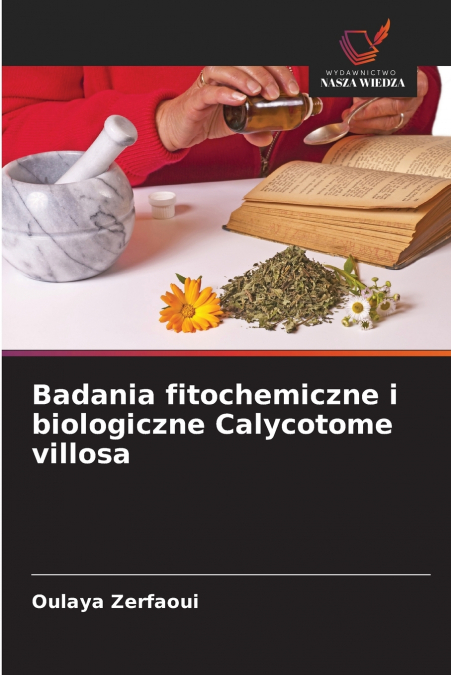
    Algieria zajmuje powierzchnię 2 381 741 km² i jest największym krajem Afryki. Algieria graniczy od północy z Morzem Śródziemnym, od południa z Mali i Nigrem, od zachodu z Marokiem, Saharą Zachodnią i Mauretanią, a od wschodu z Tunezją i Libią. Region Seraïdi, położony 13 km na zachód od Annaby, charakteryzuje się niezwykłą różnorodnością flory, w której występują kryptogamy, ro...
    Disponible

    66,79 €

  • Studio fitochimico e biologico della Calycotome villosa
    Oulaya Zerfaoui
    L’Algeria copre una superficie di 2.381.741 km² ed è il paese più grande dell’Africa. L’Algeria confina a nord con il Mar Mediterraneo, a sud con il Mali e il Niger, a ovest con il Marocco, il Sahara occidentale e la Mauritania e a est con la Tunisia e la Libia. La regione di Seraïdi, situata a 13 km a ovest di Annaba, presenta una notevole biodiversità floristica dove si trova...
    Disponible

    66,79 €

  • Phytochemische und biologische Untersuchung von Calycotome villosa
    Oulaya Zerfaoui
    Algerien hat eine Fläche von 2.381.741 km² und ist das größte Land Afrikas. Algerien grenzt im Norden an das Mittelmeer, im Süden an Mali und Niger, im Westen an Marokko, die Westsahara und Mauretanien und im Osten an Tunesien und Libyen. Die Region Seraïdi, 13 km westlich von Annaba gelegen, weist eine bemerkenswerte floristische Biodiversität auf, in der kryptogamische, kraut...
    Disponible

    66,79 €

  • Estudo fitoquímico e biológico da Calycotome villosa
    Oulaya Zerfaoui
    A Argélia cobre uma área de 2.381.741 km² e é o maior país de África. A Argélia é limitada a norte pelo Mar Mediterrâneo, a sul pelo Mali e pelo Níger, a oeste por Marrocos, pelo Saara Ocidental e pela Mauritânia e a leste pela Tunísia e pela Líbia. A região de Seraïdi, situada a 13 km a oeste de Annaba, apresenta uma biodiversidade florística notável, onde se encontram estrato...
    Disponible

    66,79 €