
Physical Principles in Chemoreception

Physical Principles in Chemoreception

Frederik Wiegel

66,98 €
IVA incluido
Disponible
Editorial:
Springer Nature B.V.
Año de edición:
1991
Materia
Zoología y ciencias animales
ISBN:
9783540543190
66,98 €
IVA incluido
Disponible

Selecciona una librería:

  • Librería Samer Atenea
  • Librería Aciertas (Toledo)
  • Kálamo Books
  • Librería Perelló (Valencia)
  • Librería Elías (Asturias)
  • Donde los libros
  • Librería Kolima (Madrid)
  • Librería Proteo (Málaga)

Is it not sheer foolishness to try to apply the methods of theoretical physics to biological structures? Physics flowered because it limited itself to the study of very simple systems; on the other hand, the essence of 'living things' seems to have to do with the extreme intricacy of their structure. Is it a hopeless endeavour to attempt to bring the two together, or should one try nevertheless? Most of my colleagues in theoretical physics feel one should not waste one’s time and stick to 'the good old hydrogen atom', but some of them feel one should try anyhow. This minority point of view was shared by Bohr in the thirties, Schrödinger in the fourties, Delbrück in the fifties and sixties, PurceIl in the seventies, etc. The theory of chemoreception represents only a very small part of this immense scientific question. Its study was started by Delbriick and others in the fifties. I was introduced to these problems by Charles DeLisi, during a visit to the National Institutes of Health in the summer of 1980. During the following decade I had the pleasure to collaborate with George Bell, Byron Goldstein, Alan Perelson and others at the Los Alamos National Laboratory. We studied a wide variety of questions, some of them relevant to the theory of chemoreception. I am grateful to them, both for the pleasure which our joint research always gives to me, as weIl as for their friendship and hospitality.

Artículos relacionados

  • Animaltown
    Urban space constitutes a place where people and animals live together in close proximity with each other, creating changing landscapes of co-existence, conflict, mutual dependencies and exploitation. The medieval animals found in the articles of Animaltown: Beasts in Medieval Urban Space, appear in text and image, as well as archaeological find materials in the form of butcher...
    Disponible

    109,24 €

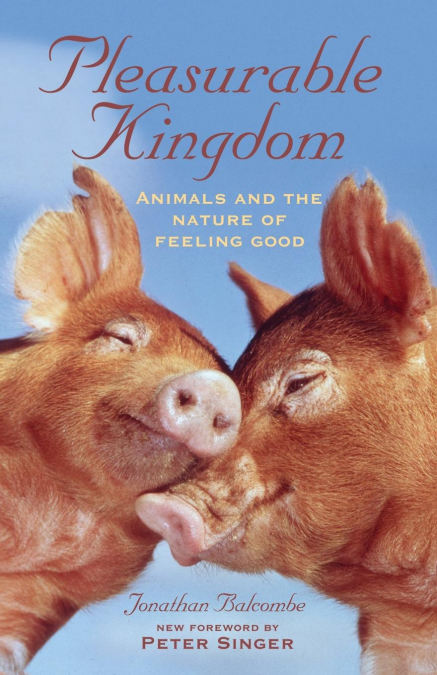
  • Pleasurable Kingdom
    Jonathan Balcombe
    Pleasurable Kingdom presents new evidence that animals--like humans--enjoy themselves. From birds to baboons, insects to iguanas, animals feel good thanks to play, sex, touch, food, anticipation, comfort, aesthetics, and more. Combining rigorous evidence, elegant argument and amusing anecdotes, leading animal behavior researcher Jonathan Balcombe shows that the possibility of p...
    Disponible

    18,96 €

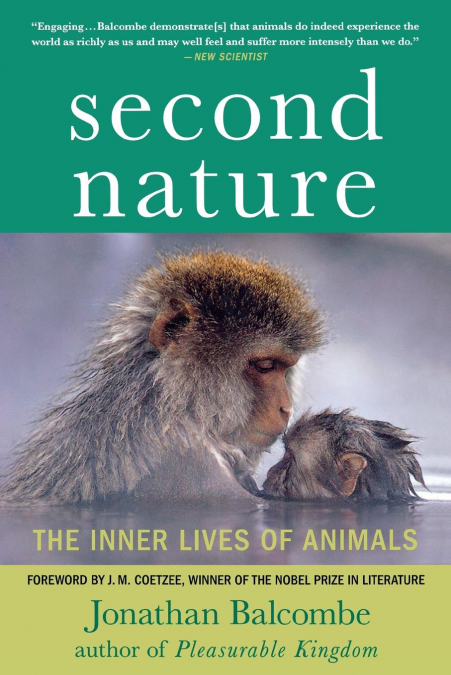
  • SECOND NATURE
    Jonathan Balcombe
    ...
    Disponible

    16,52 €

  • Experimental Zoology
    Manisha R Gejage / Ramesh M Gejage
    The goal of the book is to present the practical knowledge of Zoology. Animal diversity, venomous and non-venomous snakes, study of birds, brain of fowl and hyoid apparatus, sclerotic plates, pecten and collumella of fowl, scales of fishes, biochemical tests, activity of salivary amylase, estimation of total protein and lipid, DNA isolation and estimation of uric acid are given...
  • TOXICOLOGY
    M A SUBRAMANIAN
    In an era defined by burgeoning human populations, rampant industrialization, cutting-edge technological progress, and expanding urban landscapes, the integrity of our natural environment faces unprecedented challenges. The relentless march of progress has ushered in a flood of chemicals, seeping into the very fabric of our ecosystems and posing insidious threats to biological ...
    Disponible

    23,69 €

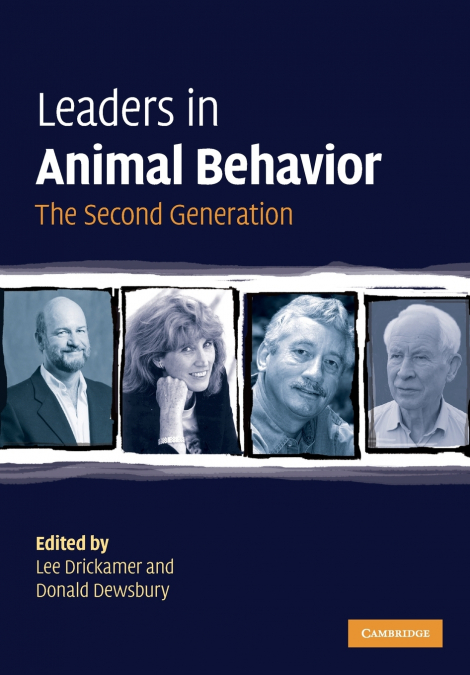
  • Leaders in Animal Behavior
    Donald Dewsbury / Lee Drickamer
    ...
    Disponible

    64,68 €