 Librería Samer Atenea
 Kálamo Books
 Librería Elías (Asturias)
 Librería Kolima (Madrid)
 Librería Proteo (Málaga)
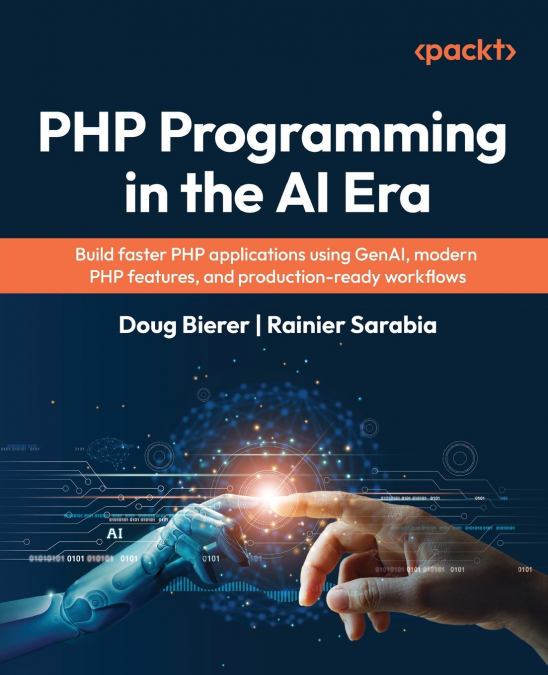
Accelerate PHP performance with AI by generating, refining, and optimizing code using modern patterns, async workflows, and secure designKey Features:- Use Generative AI to write, optimize, and debug PHP 8 code in real-world scenarios- Build high-performance applications using JIT, OPcache, Fibers, and async programming- Implement robust encryption, CAPTCHA, session protection, and test-driven development with AI assistanceBook Description:PHP offers several powerful features, but many developers struggle to apply them effectively in real-world applications while maintaining performance, security, and code quality. This book addresses that challenge by combining modern PHP practices with generative AI to help you build faster and more reliably.You will work through hands-on recipes that show how to design, generate, and refine PHP 8 applications using AI alongside proven engineering techniques. From writing clean object-oriented code and designing scalable architectures to automating repetitive tasks, you will learn how to use AI as a development aid without losing control over quality.As you progress, you will optimize applications using OPcache, JIT, and async programming, while applying secure coding practices and modern design patterns. The book also explores real-world use cases, including REST APIs, microservices, WebSocket applications, and database-driven systems, helping you translate concepts into production-ready solutions.You will also learn how to modernize legacy PHP codebases, validate AI-generated code, and integrate testing workflows to improve reliability and maintainability. Additionally, you will understand how to enhance PHP websites by making API calls to GenAI platforms.By the end of this book, you will be able to combine PHP and generative AI effectively to build secure, high-performance applications ready for real-world deployment.What You Will Learn:- Use GenAI prompts to generate, refactor, and optimize PHP classes and functions- Create high-performance apps using JIT, OPcache, and async programming- Build secure web apps with session protection, encryption, CAPTCHA, and token-based forms- Work with databases using AI-generated queries and caching strategies- Design scalable systems with OOP, design patterns, and microservices- Develop REST APIs, WebSockets, and real-time applications using AI assistance- Apply test-driven development with AI-generated acceptance criteria and automated testsWho this book is for:This book is for PHP developers who already understand the basics of PHP, including variables, functions, and object-oriented programming, and have worked with earlier versions of PHP. It’s aimed at developers who want to use generative AI tools to improve their day-to-day development workflow and build applications faster.Readers will learn through practical, real-world examples as they explore modern PHP features. The book is ideal for developers who want to leverage AI-powered coding tools while still maintaining control over the quality, security, and reliability of the code.Table of Contents- Building a Foundation- Using PHP 8 High Performance Features- Working with PHP Functional Programming- Working with PHP Object-Oriented Programming- Interacting with a Database- Building Scalable Forms- Making AI-Assisted Web Services and WebSockets Requests- Working with Date/Time and International Aspects- Implementing Test-Driven Development in a Feature- Looking at Advanced Algorithms- Implementing Software Design Patterns- Improving Web Security