
’Philoponus’

’Philoponus’

W. Charlton

206,56 €
IVA incluido
Consulta disponibilidad
Editorial:
Bloomsbury Publishing plc
Año de edición:
2000
Materia
Filosofía occidental: antigua, hasta c. 500
ISBN:
9780715628980

Selecciona una librería:

  • Librería Samer Atenea
  • Librería Aciertas (Toledo)
  • Kálamo Books
  • Librería Perelló (Valencia)
  • Librería Elías (Asturias)
  • Donde los libros
  • Librería Kolima (Madrid)
  • Librería Proteo (Málaga)

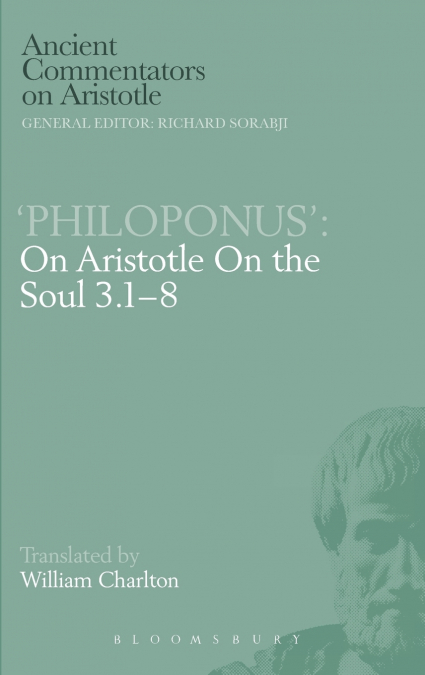
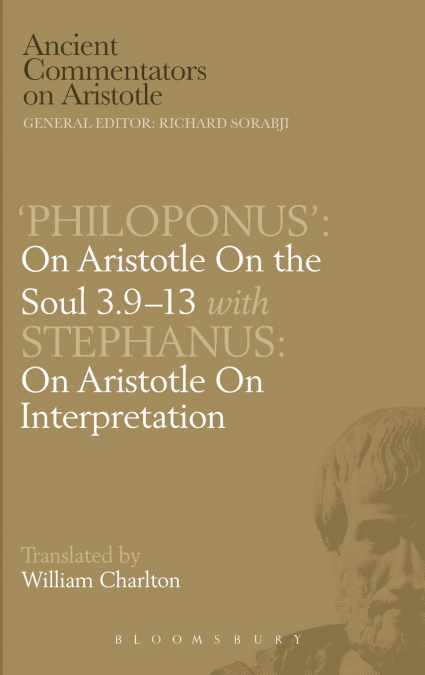
The earlier part of the commentary by ’Philoponus’ on Aristotle’s On the Soul is translated by William Charlton in another volume in the series. This volume includes the latter part of the commentary along with a translation of Stephanus’ commentary on Aristotle ’s On Interpretation. It thus enables readers to assess for themselves Charlton’s view that the commentary once ascribed to Philoponus should in fact be ascribed to Stephanus. The two treatises of Aristotle here commented on are very different from each other. In On Interpretation Aristotle studies the logic of opposed pairs of statements. It is in this context that Aristotle discusses the nature of language and the implications for determinism of opposed predictions about a future occurrence, such as a sea-battle. And Stephanus, like his predecessor Ammonius, brings in other deterministic arguments not considered by Aristotle (’The Reaper’ and the argument from God’s foreknowledge). In On the Soul 3.9-13, Aristotle introduces a theory of action and motivation and sums up the role of perception in animal life. Despite the differences in subject matter between the two texts, Charlton is able to make a good case for Stephanus’ authorship of both commentaries. He also sees Stephanus as preserving what was valuable from Ammonius’ earlier commentary On Interpretation, while bringing to bear the virtue of greater concision. At the same time, Stephanus reveals his Christian affiliations, in contrast to Ammonius, his pagan predecessor.

Artículos relacionados

  • The Nature of Things
    Lucretius Lucretius
    De rerum natura (On the Nature of Things) is a 1st century BC didactic poem by the Roman poet and philosopher Lucretius with the goal of explaining Epicurean philosophy to a Roman audience. Lucretius presents the principles of atomism; the nature of the mind and soul; explanations of sensation and thought; the development of the world and its phenomena; and explains a variety o...
  • Pompeii
    Fergus Mason
    Pompeii was one of most advanced cities of its time; it had a complex water system, gymnasium, and an amphitheater. Despite it's advancements, there was one thing it wasn't ready for: Mount Vesuvius—the volcano that led to its ultimate doom.  The 79 AD eruption of Mount Vesuvius was one of the worst disasters in all of European history. In a near instant, over 15,000 p...
    Disponible

    10,36 €

  • Middle Platonism and Neoplatonism, Volume 1
    Stephen Gersh
    'It is generally agreed that those types of philosophy that are loosely called ’Platonic’ and ’Neoplatonic’ played a crucial role in the history of European culture during the centuries between antiquity and the Renaissance. However, until now no scholar has attempted to describe the evolution of these forms of thought in a single comprehensive academic study.' So writes Stephe...
  • Middle Platonism and Neoplatonism, Volume 2
    Stephen Gersh
    It is generally agreed that those types of philosophy that are loosely called 'Platonic' and 'Neoplatonic' played a crucial role in the history of European culture during the centuries between antiquity and the Middle Ages. However, until now no scholar has attempted to describe the evolution of these forms of thought in a single comprehensive academic study. Middle Platonism a...
  • Porphyry’s Commentary on Ptolemy’s Harmonics
    Andrew Barker
    ...
    Disponible

    77,17 €

  • The Roots of Platonism
    John Dillon
    ...
    Disponible

    25,29 €

Otros libros del autor

  • Aesthetics
    W. Charlton
    First published in 1970. What is a work of art? What is the status of things in pictures and books? How are we to distinguish and ascertain the meaning of a literary work at various levels? This book is intended both to introduce the reader to classic philosophical accounts of art and beauty, and to bring out the significance for aesthetics of recent developments in philosophy....
    Disponible

    65,67 €

  • Aesthetics
    W. Charlton
    First published in 1970. What is a work of art? What is the status of things in pictures and books? How are we to distinguish and ascertain the meaning of a literary work at various levels? This book is intended both to introduce the reader to classic philosophical accounts of art and beauty, and to bring out the significance for aesthetics of recent developments in philosophy....
  • ’Philoponus’
    W. Charlton
    In On the Soul 3.1-8, Aristotle first discusses the functions common to all five senses, such as self-awareness, and then moves on to Imagination and Intellect. This commentary on Aristotle’s text has traditionally been ascribed to Philoponus, but William Charlton argues here that it should be ascribed to a later commentator, Stephanus. (The quotation marks used around his name...
    Disponible

    66,88 €

  • ’Philoponus’
    W. Charlton
    The earlier part of the commentary by ’Philoponus’ on Aristotle’s On the Soul is translated by William Charlton in another volume in the series. This volume includes the latter part of the commentary along with a translation of Stephanus’ commentary on Aristotle ’s On Interpretation. It thus enables readers to assess for themselves Charlton’s view that the commentary once ascr...
    Disponible

    66,76 €

  • ’Philoponus’
    W. Charlton
    In On the Soul 3.1-8, Aristotle first discusses the functions common to all five senses, such as self-awareness, and then moves on to Imagination and Intellect. This commentary on Aristotle’s text has traditionally been ascribed to Philoponus, but William Charlton argues here that it should be ascribed to a later commentator, Stephanus. (The quotation marks used around his name...